Longevity guide · Updated 2026
Blood Panels Worth Tracking Annually: The Markers That Matter as We Age
A practical guide to annual blood work for longevity — why panels matter more with age, which metabolic and cardiovascular markers earn a yearly slot, and how clinician labs, membership panels, and Amazon at-home kits compare.
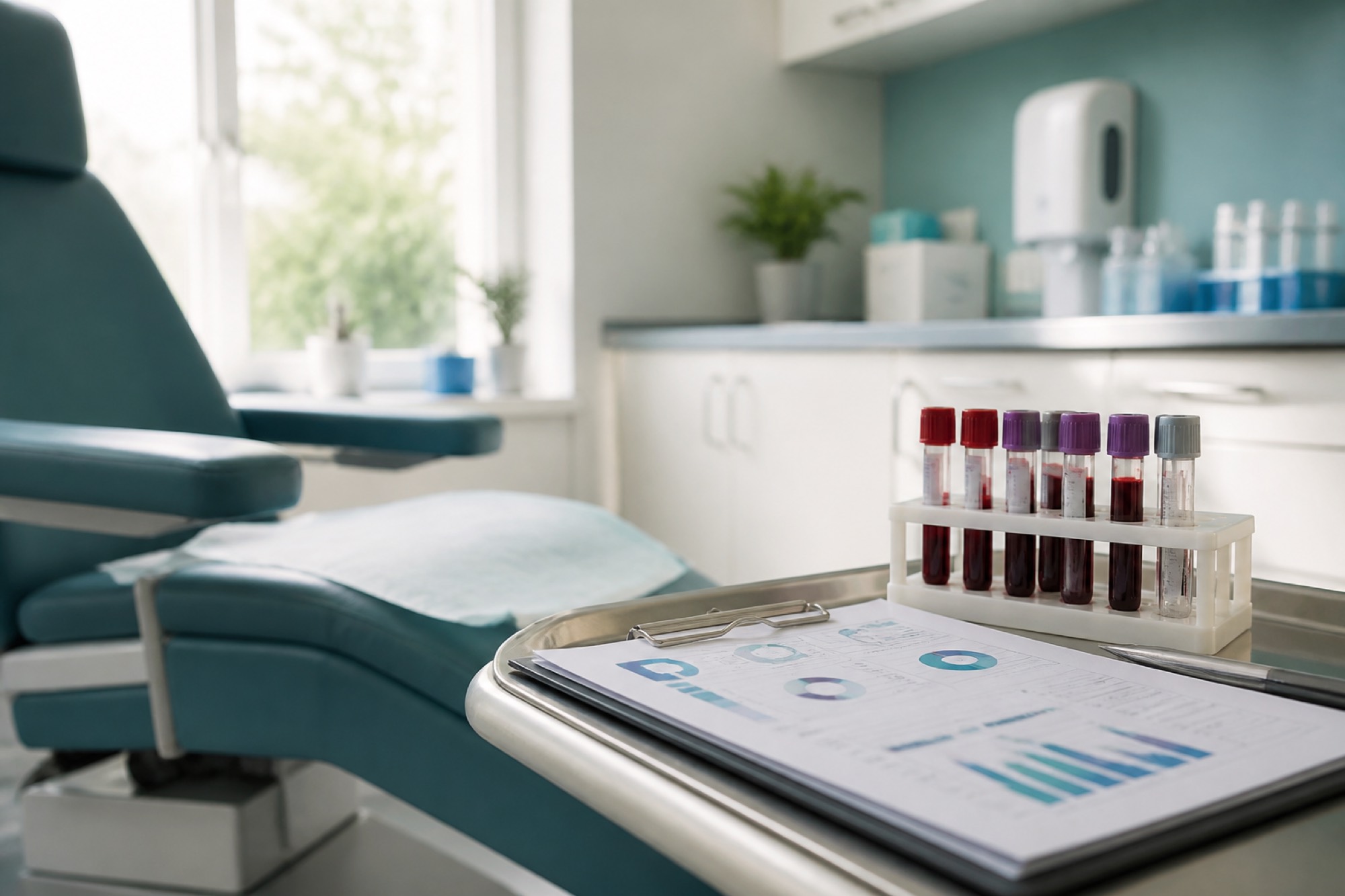
Blood work is one of the few longevity tools that gets more valuable with age. Arteries accumulate silent risk. Glucose regulation drifts. Kidneys, liver, thyroid, and blood counts change slowly enough that you can miss a decade of signal if you only test when something hurts. An annual panel is not hypochondria. It is a cheap longitudinal record — if you pick markers that matter and actually act on them.
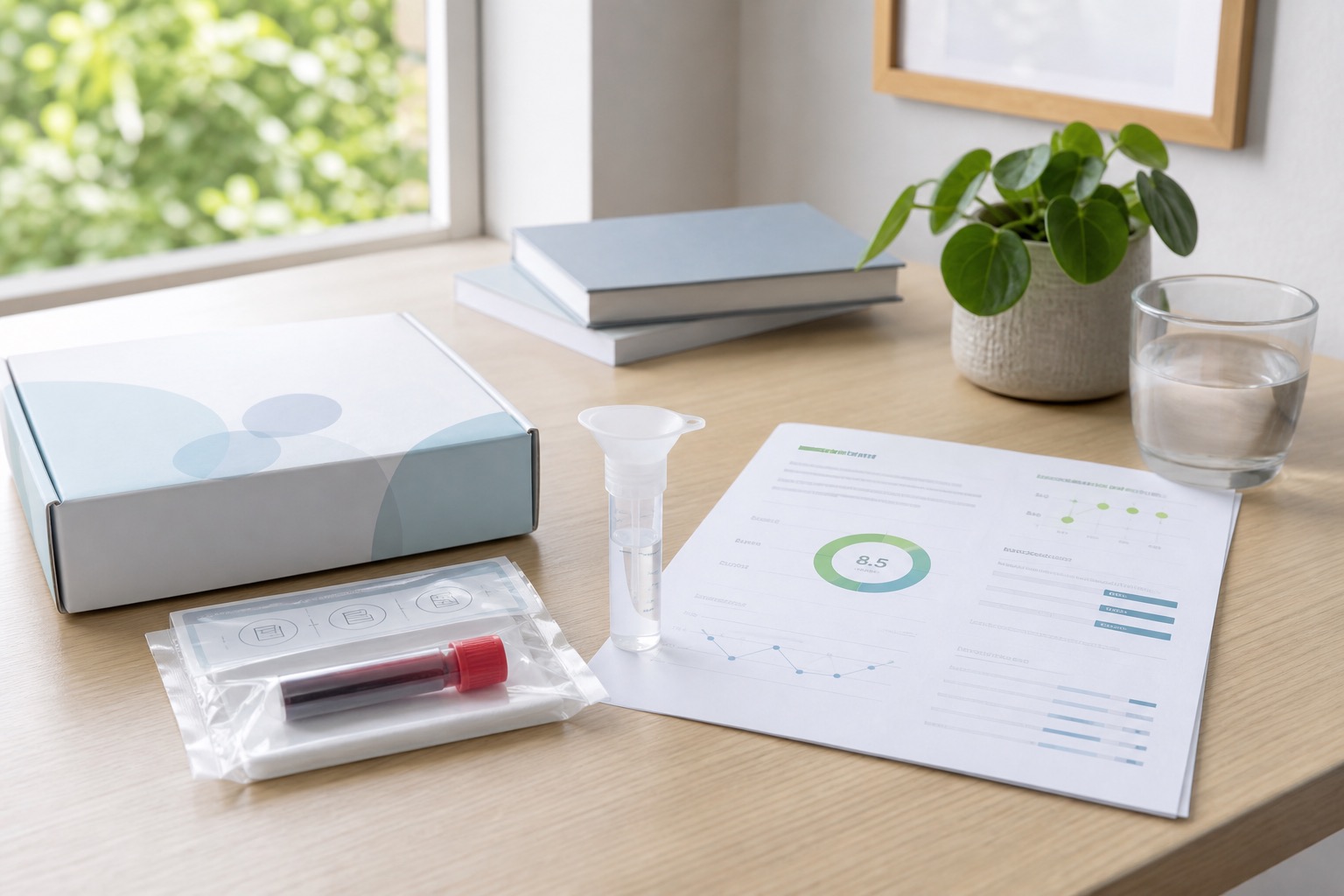
This guide starts with why annual labs matter as we age, then builds a practical marker shortlist, then compares eleven ways to get the work done: clinician-ordered labs, membership panels (Function, Everlywell 360, InsideTracker), DIY Quest/Labcorp ordering, and Amazon-accessible Everlywell kits for lipids, A1c, vitamin D/inflammation, and hormones. Related measurement context: DEXA, Visceral Fat, and Body Composition, VO2 Max as a Longevity Biomarker, and Biological Age Tests Explained.
Overview: blood panels as an aging instrument
Think of annual labs as three jobs stacked together:
- Screen for conditions with silent early phases (dysglycemia, dyslipidemia, thyroid disease, anemia, kidney decline).
- Trend markers that respond to training, sleep, alcohol, weight, and medication.
- Decide — escalate to imaging, prescriptions, or watchful waiting with a clinician who owns the plan.
Consumer kits excel at jobs 1 and 2 when logistics are the blocker. They fail job 3 if the PDF never leaves your downloads folder. Membership panels excel at breadth and trends. Primary care still wins when insurance, prescriptions, and longitudinal relationships matter.
Key takeaways
- Best default: clinician-ordered annual labs with an explicit ask for ApoB (when CV risk matters), HbA1c, and a full lipid panel.
- Best broad cash-pay membership: Function Health-class coverage for twice-yearly depth.
- Best recommendation UX: InsideTracker Ultimate when you want “what to change” more than maximum marker count.
- Best Amazon cardiometabolic bridge: Everlywell Heart Health (lipids + A1c).
- Best cheap Amazon singles: HbA1c or lipids kits between fuller draws.
- Panel breadth in the table: 1 = focused add-on, 2 = multi-marker kit, 3 = broad annual/membership/DIY stack.
- Biggest mistake: collecting colorful dashboards without a retest plan or a clinician for abnormal values.
Why blood panels matter more as we age
Aging does not invent new organs — it increases the probability that small drifts become clinical disease. Insulin resistance rises. Atherogenic particle burden accumulates. Muscle and visceral fat redistribute (pair labs with DEXA). Recovery capacity falls, so the cost of “finding out late” goes up.
Guideline-backed screening already points at this reality: USPSTF recommends screening for prediabetes and type 2 diabetes in adults aged 35–70 with overweight or obesity. Lipid assessment remains foundational for cardiovascular risk. That is the floor — not the longevity ceiling.
What changes in a longevity framing is honesty about markers physicals often skip (ApoB, Lp(a) once in a lifetime, thoughtful hormone context) and about cadence: yearly when stable, faster when intervening.
Markers worth an annual slot
Metabolic core
- HbA1c and/or fasting glucose — average glycemia and progression risk.
- Fasting insulin (optional) — context for insulin resistance when interpreted carefully.
- CMP — kidney, liver, electrolytes, glucose snapshot.
Cardiovascular lipids
- Standard lipid panel — total, LDL-C, HDL-C, triglycerides.
- ApoB — particle number; ask for it when risk decisions matter.
- Lp(a) — largely genetic; often once, then revisit if new risk context appears.
Inflammation and nutrients
- hs-CRP — sometimes useful context; USPSTF finds insufficient evidence to mandate it as a routine CVD add-on for all asymptomatic adults — do not build a religion around one CRP.
- 25-OH vitamin D — common insufficiency; replete thoughtfully, recheck after changes.
- Ferritin / iron studies, B12, folate — when symptoms, diet pattern, or CBC hints warrant.
Thyroid, blood counts, hormones
- TSH (± free T4) — annual or symptom-triggered.
- CBC — anemia, infection patterns, hematologic flags.
- Sex hormones — not mandatory for every asymptomatic adult every year; use when symptoms, fertility, TRT/menopause care, or body-comp puzzles demand it.
How we evaluate panel pathways
- Clinical usefulness (30%) — will abnormal results change care?
- Marker coverage (25%) — metabolic + lipids depth first.
- Draw quality and logistics (20%) — venous vs finger-stick, fasting, state limits.
- Cost realism (15%) — year-1 and membership lock-in.
- Action UX (10%) — interpretation help without replacing your clinician.
Interactive comparison
Filter by form factor, sort by score or price, and pin up to three options for a focused side-by-side view.
Tradeoff:
Sticker price is misleading in this category. Membership-heavy products can cost more over three years than premium hardware with no required plan.
Estimates are directional and based on common public pricing patterns. Promotions, refurbished units, family plans, and tier changes can move these numbers materially.
3-year cost of ownership
Device
Year 1
3-year estimate
Amazon Price
Membership
Clinician-Ordered Annual Labs
$150
$450
—
No membership — ordered through your clinician
Function Health Membership
$365
$1,095
—
Annual membership required for the product
Quest Health / Labcorp OnDemand DIY Panel
$250
$750
—
No membership — pay per panel
InsideTracker Ultimate
$489
$1,169
—
Platform membership bundled or required for best pricing
Everlywell 360 Annual Panel
$399
$1,197
—
Annual membership billed yearly
Everlywell Heart Health Test
$99
$297
$99
No membership — single kit
Everlywell HbA1c Test
$49
$147
$49
No membership — single kit
Everlywell Vitamin D and Inflammation Test
$99
$297
$99
No membership — single kit
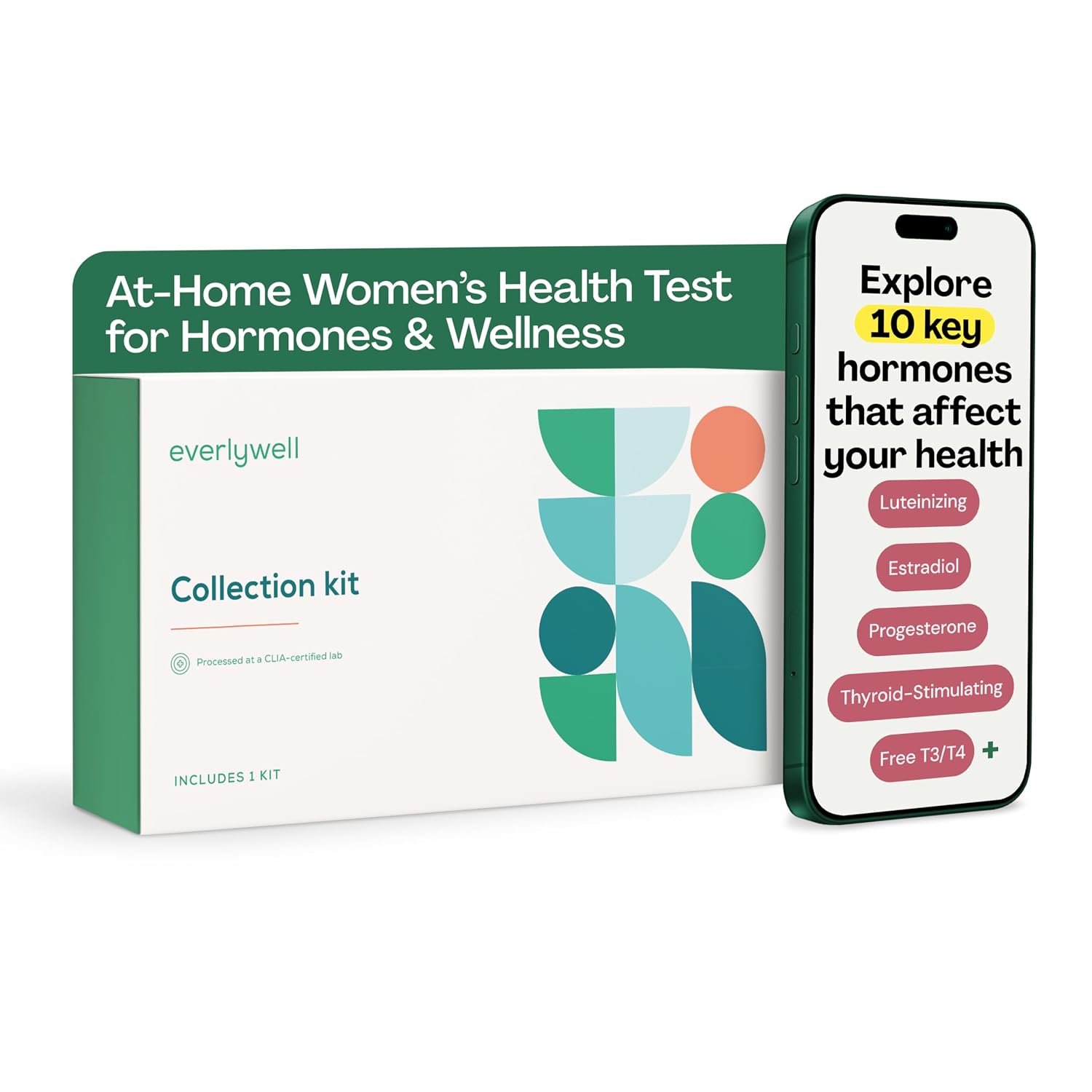
Everlywell Women's Health Test
$249
$747
$249
No membership — single kit
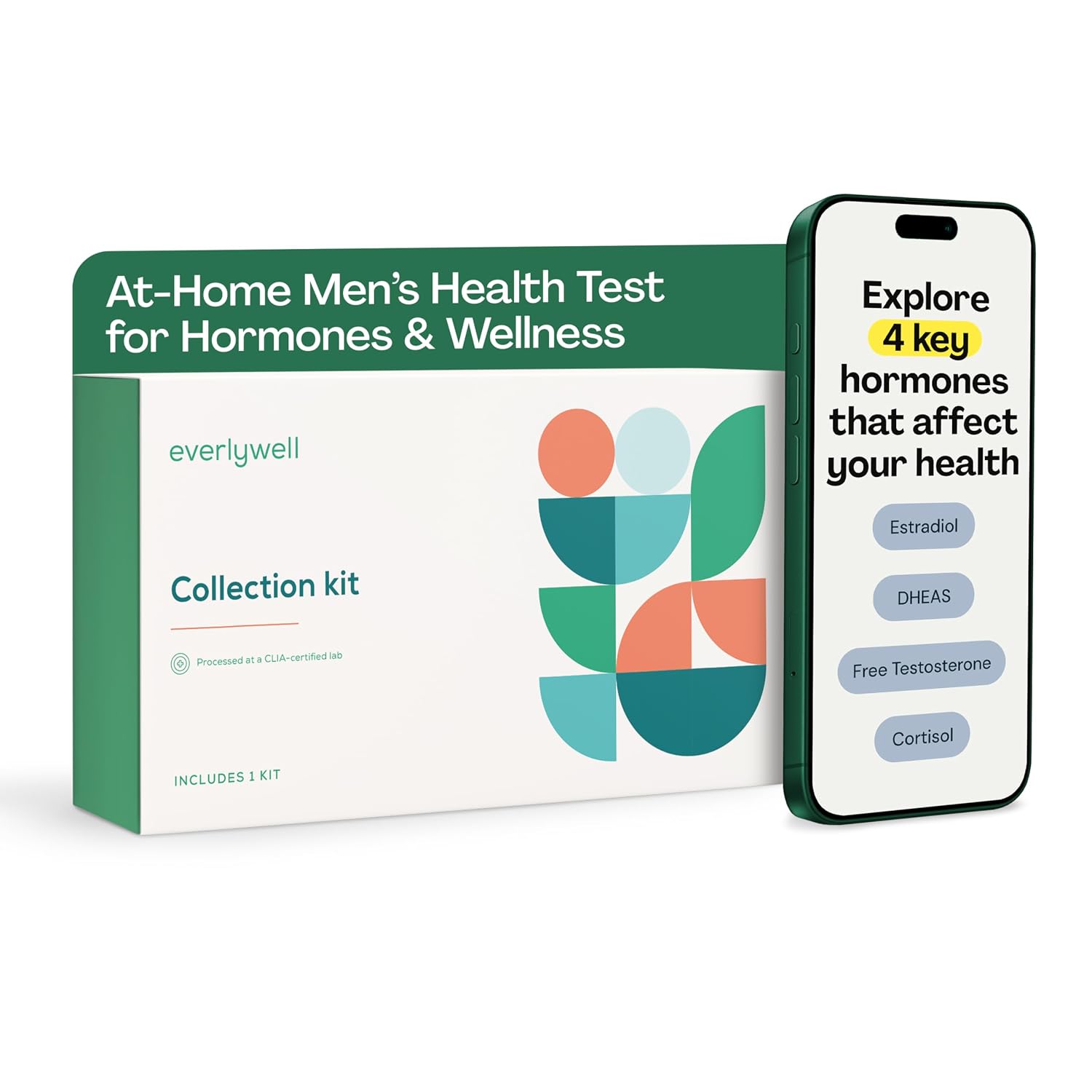
Everlywell Men's Health Test
$249
$747
$249
No membership — single kit
Everlywell Cholesterol and Lipids Test
$49
$147
$49
No membership — single kit
Match the pathway to coverage needs and who will act on abnormal results.Which blood panel path should you use?
Choose clinician-ordered annual labs if...
Choose Function Health or Everlywell 360 if...
Choose InsideTracker Ultimate if...
Choose Quest / Labcorp DIY if...
Choose Everlywell Amazon kits if...
Below are deeper notes on every option in the comparison table, sorted by editorial score. Jump directly from the table pins or the cost section.
Primary care / insurance pathway · Clinic-order
Best for: Highest-trust default for annual metabolic and cardiovascular screening with someone who can act on results
Start here for most adults: a clinician-ordered annual panel still beats shopping a stack of kits if results will be ignored. Ask explicitly for ApoB, HbA1c, and a full lipid panel when risk warrants it. Clinician-ordered venous labs remain the highest-trust annual pathway when results feed decisions, not just PDFs. Annual blood work is most useful as a longitudinal record — same markers, same conditions, interpreted with a clinician when abnormal. Start here for most adults: a clinician-ordered annual panel still beats shopping a stack of kits if results will be ignored. Ask explicitly for ApoB, HbA1c, and a full lipid panel when risk warrants it.
Estimated ownership: about $150 in year 1 and
$450 over 3 years.
Assumes modest annual out-of-pocket for covered preventive labs; cash-pay add-ons change the math.
Function Health · Membership-panel
Best for: Broad twice-yearly biomarker coverage without à-la-carte insurance fights
Function is the membership-style annual blood stack for people who want breadth and trends: metabolic, advanced lipids, hormones, nutrients, and more — twice a year. Membership lab programs package large venous panels on a fixed annual fee — useful when insurance panels feel thin. Annual blood work is most useful as a longitudinal record — same markers, same conditions, interpreted with a clinician when abnormal. Function is the membership-style annual blood stack for people who want breadth and trends: metabolic, advanced lipids, hormones, nutrients, and more — twice a year.
Estimated ownership: about $365 in year 1 and
$1,095 over 3 years.
Assumes current ~$365/year membership with two included panels; renewals and add-ons vary.
Quest / Labcorp cash-pay · Diy-lab-order
Best for: Building a transparent cash-pay panel (ApoB, Lp(a), HbA1c, CMP, TSH) without a wellness membership
DIY Quest/Labcorp ordering is the power-user path: pick the longevity-relevant markers, pay cash, trend the same panel every year — bring the PDF to your clinician. Direct-to-consumer lab storefronts let you order individual venous assays and draw at national patient centers. Annual blood work is most useful as a longitudinal record — same markers, same conditions, interpreted with a clinician when abnormal. DIY Quest/Labcorp ordering is the power-user path: pick the longevity-relevant markers, pay cash, trend the same panel every year — bring the PDF to your clinician.
Estimated ownership: about $250 in year 1 and
$750 over 3 years.
Assumes a thoughtful ~$250 annual custom panel; ApoB/Lp(a)/hormones add cost.
InsideTracker · Membership-panel
Best for: Action-plan UX on ~50+ healthspan biomarkers with clear lifestyle levers
InsideTracker Ultimate is the coaching-forward annual blood option: fewer markers than the widest memberships, stronger “do this next” product design. Healthspan blood platforms combine venous labs with algorithmic lifestyle recommendations and category scores. Annual blood work is most useful as a longitudinal record — same markers, same conditions, interpreted with a clinician when abnormal. InsideTracker Ultimate is the coaching-forward annual blood option: fewer markers than the widest memberships, stronger “do this next” product design.
Estimated ownership: about $489 in year 1 and
$1,169 over 3 years.
Assumes year-1 membership+Ultimate ~$489, then two member Ultimates in years 2–3 (~$340 each) averaged into 3-year total.
Everlywell · Membership-panel
Best for: One annual full-body consumer panel with Quest logistics and a care-plan UX
Everlywell 360 is a practical annual “more than a physical” panel via Quest — strong when you want one scheduled draw and a readable plan, without building your own à-la-carte order. Annual membership panels schedule a large venous lab panel once per year with consumer UX around the results. Annual blood work is most useful as a longitudinal record — same markers, same conditions, interpreted with a clinician when abnormal. Everlywell 360 is a practical annual “more than a physical” panel via Quest — strong when you want one scheduled draw and a readable plan, without building your own à-la-carte order.
Estimated ownership: about $399 in year 1 and
$1,197 over 3 years.
Assumes base $399/year membership; consult add-on tiers cost more.
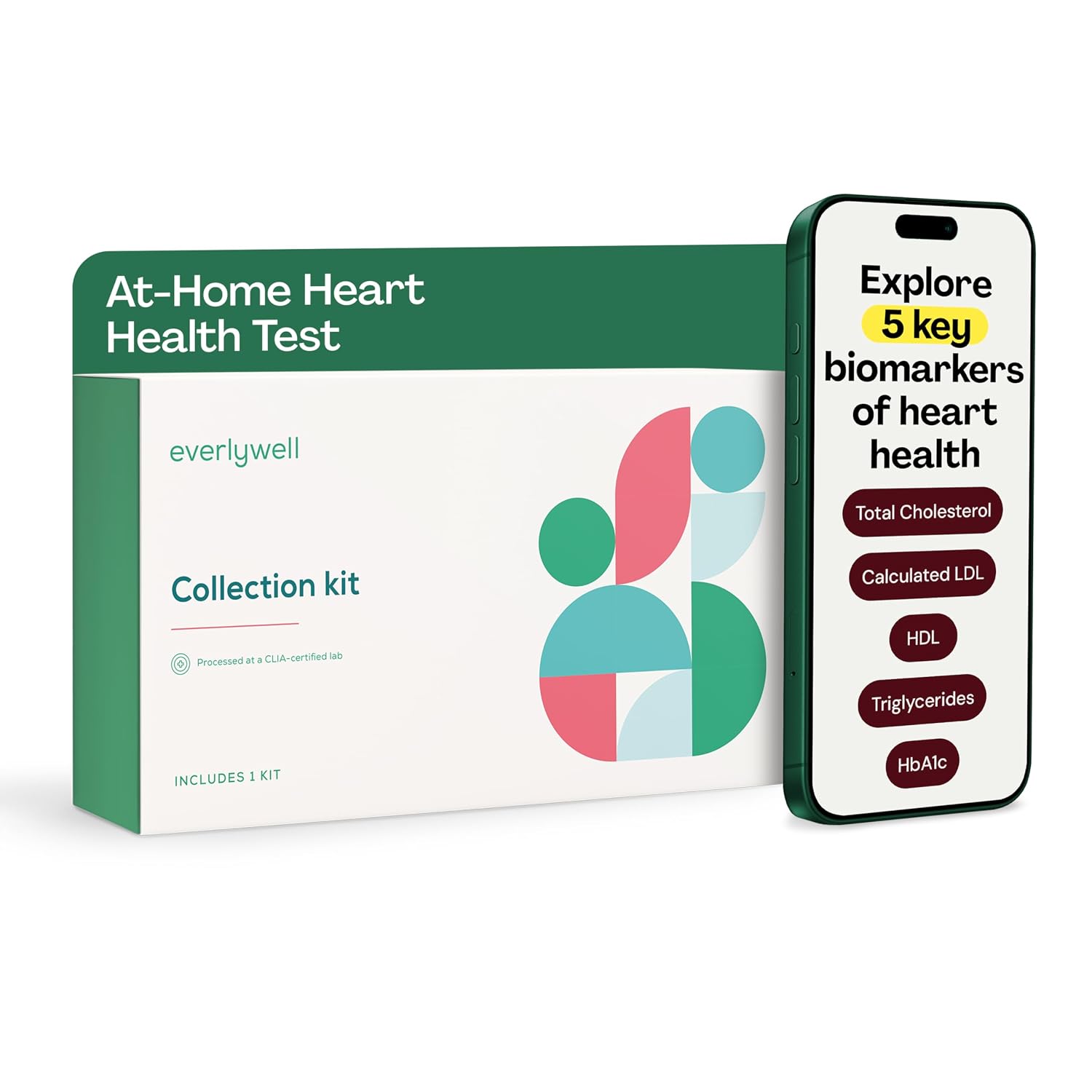
Everlywell · At-home-kit
Best for: Convenient at-home combo of lipids plus HbA1c when a full venous panel is not available yet
Heart Health is the best Amazon starter when you need lipids and A1c without a clinic appointment — useful bridge, not a complete annual longevity panel. At-home cardiometabolic kits combine cholesterol/triglycerides with HbA1c from mailed finger-stick samples. Annual blood work is most useful as a longitudinal record — same markers, same conditions, interpreted with a clinician when abnormal. Heart Health is the best Amazon starter when you need lipids and A1c without a clinic appointment — useful bridge, not a complete annual longevity panel.
Estimated ownership: about $99 in year 1 and
$297 over 3 years.
Assumes one kit per year as a bridge between clinician visits.
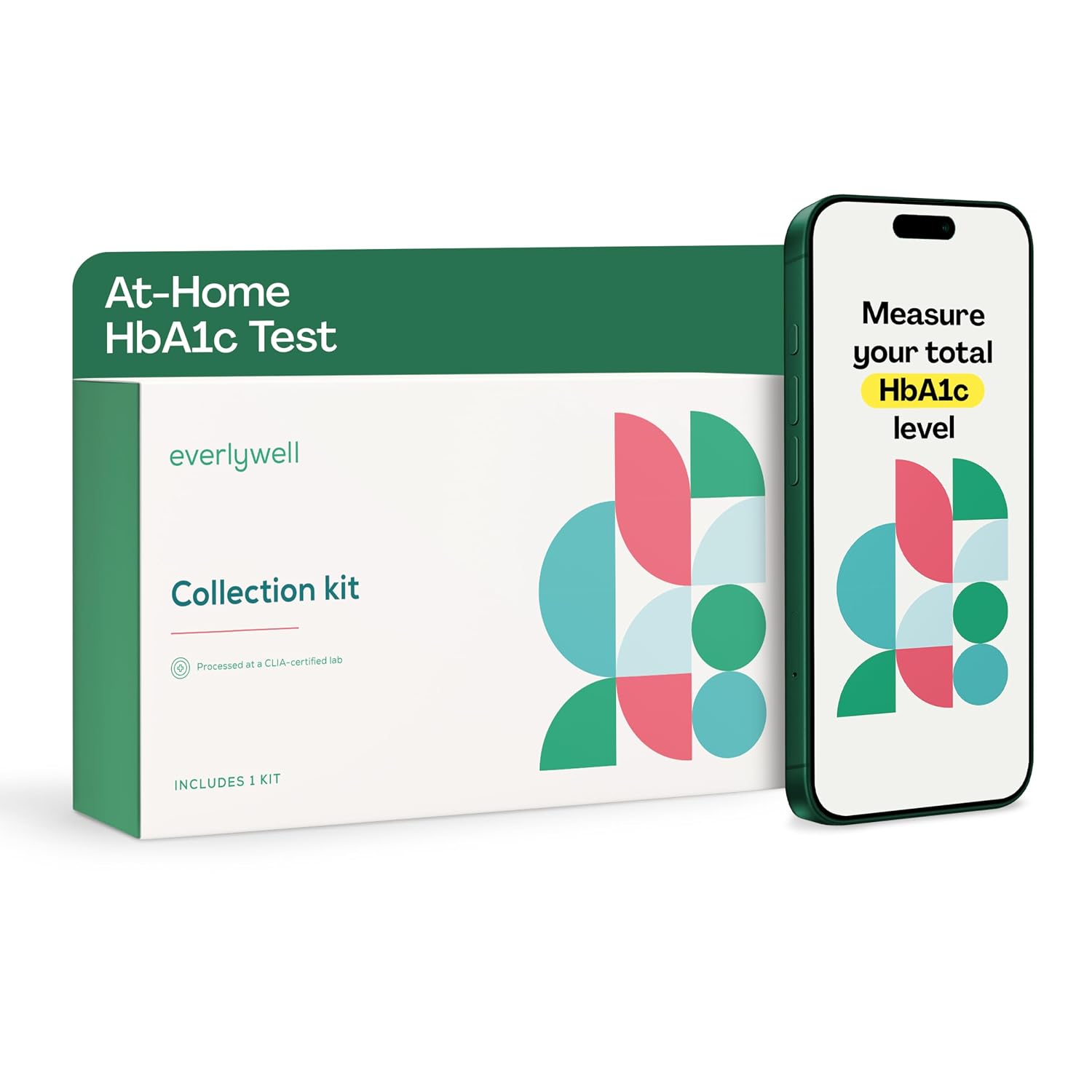
Everlywell · At-home-kit
Best for: Low-cost average glucose monitoring between clinician visits
HbA1c is one of the highest-ROI single markers as we age. An at-home kit is fine for a trend bridge — confirm abnormal values in clinic. HbA1c estimates average blood glucose over roughly 2–3 months and is a core metabolic aging biomarker. Annual blood work is most useful as a longitudinal record — same markers, same conditions, interpreted with a clinician when abnormal. HbA1c is one of the highest-ROI single markers as we age. An at-home kit is fine for a trend bridge — confirm abnormal values in clinic.
Estimated ownership: about $49 in year 1 and
$147 over 3 years.
Assumes one kit per year; higher-risk people may retest more often with clinician guidance.
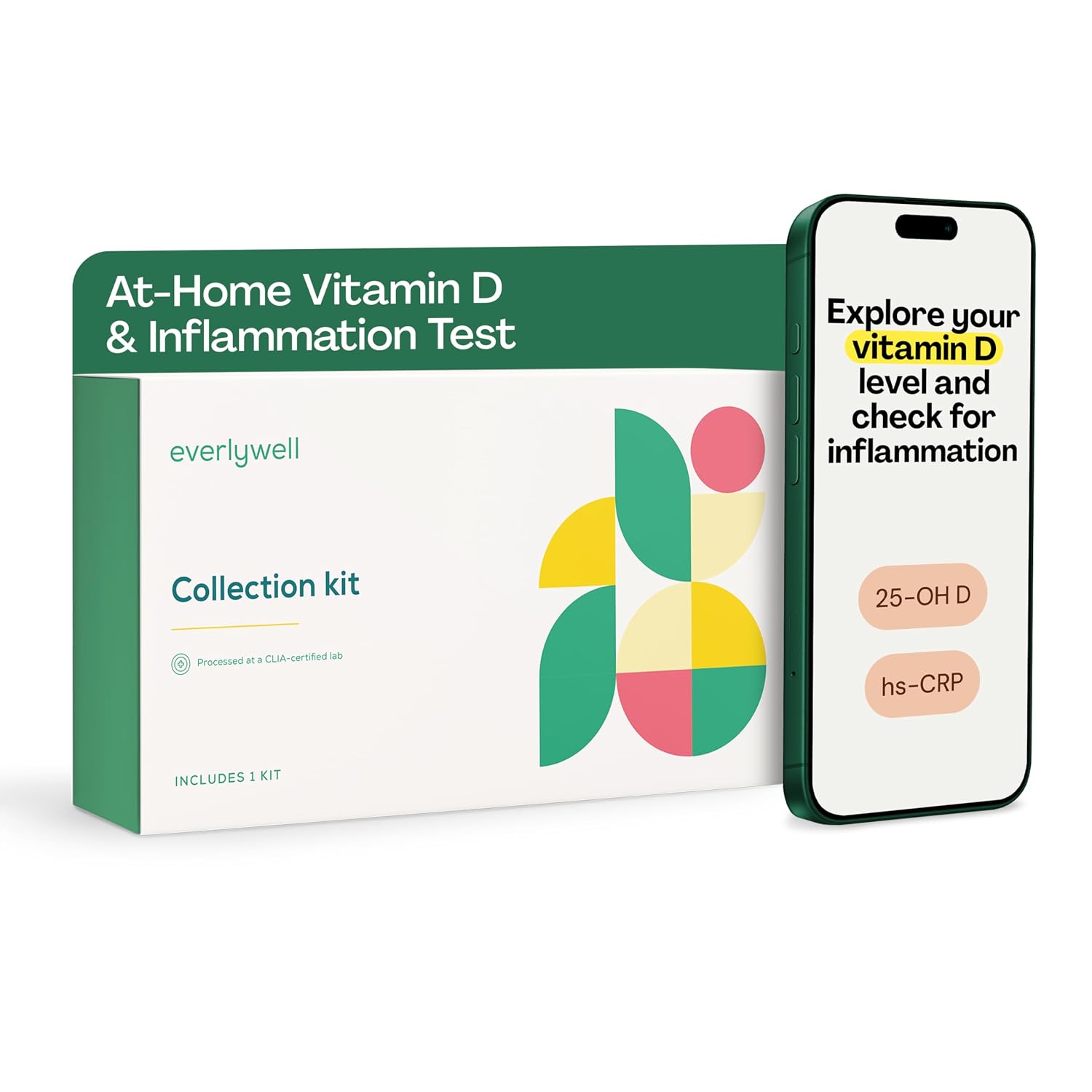
Everlywell · At-home-kit
Best for: At-home 25-OH vitamin D plus hs-CRP when those markers are missing from a thin physical
Vitamin D + hs-CRP is a reasonable Amazon add-on when your annual labs skipped both — useful context, not a license to mega-dose supplements from one PDF. Combined nutrient and inflammation kits measure 25-hydroxy vitamin D and high-sensitivity CRP from mailed samples. Annual blood work is most useful as a longitudinal record — same markers, same conditions, interpreted with a clinician when abnormal. Vitamin D + hs-CRP is a reasonable Amazon add-on when your annual labs skipped both — useful context, not a license to mega-dose supplements from one PDF.
Estimated ownership: about $99 in year 1 and
$297 over 3 years.
Assumes one kit per year as an add-on to a core metabolic panel.
Everlywell · At-home-kit
Best for: At-home female hormone and thyroid-adjacent snapshot when symptoms suggest a hormone deep dive
Women’s Health kits help explore hormonal wellness questions — pair them with (do not replace) annual metabolic and cardiovascular labs. Female hormone at-home kits combine sex hormones, cortisol, and thyroid-related markers from mailed samples. Annual blood work is most useful as a longitudinal record — same markers, same conditions, interpreted with a clinician when abnormal. Women’s Health kits help explore hormonal wellness questions — pair them with (do not replace) annual metabolic and cardiovascular labs.
Estimated ownership: about $249 in year 1 and
$747 over 3 years.
Assumes one kit per year as a hormone add-on alongside core metabolic labs.
Everlywell · At-home-kit
Best for: At-home male hormone snapshot (testosterone, cortisol, DHEA, estradiol) between fuller labs
Men’s Health kits answer a hormone question — they do not replace lipids, A1c, kidney/liver chemistries, or advanced cardiovascular markers. Male hormone at-home kits typically measure free testosterone, cortisol, DHEA-S, and estradiol from mailed samples. Annual blood work is most useful as a longitudinal record — same markers, same conditions, interpreted with a clinician when abnormal. Men’s Health kits answer a hormone question — they do not replace lipids, A1c, kidney/liver chemistries, or advanced cardiovascular markers.
Estimated ownership: about $249 in year 1 and
$747 over 3 years.
Assumes one kit per year as a hormone add-on, not a replacement for lipids/A1c.
Everlywell · At-home-kit
Best for: Cheapest Amazon lipid check between fuller annual panels
A $49 lipid kit is a legitimate between-visit check — not a substitute for ApoB-aware venous risk assessment when cardiovascular risk is the question. Focused at-home lipid kits measure standard cholesterol fractions from mailed blood spots. Annual blood work is most useful as a longitudinal record — same markers, same conditions, interpreted with a clinician when abnormal. A $49 lipid kit is a legitimate between-visit check — not a substitute for ApoB-aware venous risk assessment when cardiovascular risk is the question.
Estimated ownership: about $49 in year 1 and
$147 over 3 years.
Assumes one kit per year as a cheap lipid trend bridge.
Detailed reviews
Clinician-Ordered Annual Labs
Pros
Cons
Choose this if
Skip this if
Function Health Membership
Pros
Cons
Choose this if
Skip this if
Quest Health / Labcorp OnDemand DIY Panel
Pros
Cons
Choose this if
Skip this if
InsideTracker Ultimate
Pros
Cons
Choose this if
Skip this if
Everlywell 360 Annual Panel
Pros
Cons
Choose this if
Skip this if
Everlywell Heart Health Test
Pros
Cons
Choose this if
Skip this if
Everlywell HbA1c Test
Pros
Cons
Choose this if
Skip this if
Everlywell Vitamin D and Inflammation Test
Pros
Cons
Choose this if
Skip this if
Everlywell Women's Health Test
Pros
Cons
Choose this if
Skip this if
Everlywell Men's Health Test
Pros
Cons
Choose this if
Skip this if
Everlywell Cholesterol and Lipids Test
Pros
Cons
Choose this if
Skip this if
How to run an annual lab protocol
- Pick a primary pathway (clinician, membership, or DIY venous) for the broad panel.
- Standardize conditions — similar fasting window, morning draw when possible, note medications and illness.
- Save prior PDFs side-by-side; trends beat single “optimal” badges.
- Use Amazon kits as bridges, not as the whole strategy.
- Escalate abnormal values to a clinician who can prescribe, image, or refer.
- Pair with non-blood signals — fitness (VO2 max), composition (DEXA), and optional aging scores (biological age tests).
Feeling fine is not a metabolic dashboard. As we age, silent shifts in glucose, lipids, kidney/liver function, and thyroid status are common. Annual (or risk-based) labs catch trends while behavior and treatment still have leverage. A practical core: fasting lipids (ideally with ApoB when cardiovascular risk matters), HbA1c or fasting glucose, CMP (kidney/liver/electrolytes), CBC, and TSH. Add hs-CRP, vitamin D, hormones, and Lp(a) based on risk and prior results — not because a kit marketed them. ApoB counts atherogenic particles and often clarifies risk when triglycerides are high or LDL looks “okay” but particle burden is not. Many longevity-minded clinicians want ApoB on the annual list; standard physicals still omit it unless you ask. They are convenient bridges for lipids, A1c, vitamin D, and some hormones. Venous draws at a lab remain the default for comprehensive annual panels, advanced lipids, and anything you will treat on. Confirm surprising home-kit results in clinic. Follow clinician guidance. Lifestyle interventions often recheck in 3–6 months; medication titration can be faster. Do not wait a full year to recheck a clearly abnormal A1c or lipid pattern you are actively treating. Blood-chemistry “inner age” scores can motivate, but the actionable work is still the underlying markers. See Biological Age Tests Explained — and keep a real clinical panel in the loop.Annual blood panels FAQ
Do I need annual blood work if I feel fine?
+
What is the minimum annual panel?
+
Is ApoB better than LDL cholesterol?
+
Are at-home finger-stick kits as good as venous labs?
+
How often should I retest if something is abnormal?
+
Should I buy a biological age blood test instead?
+
This comparison is designed for practical decision-making. Product capabilities, pricing, and memberships change quickly, so treat battery claims, plan costs, and feature availability as moving targets.
USPSTF, “Screening for Prediabetes and Type 2 Diabetes” (JAMA, 2021)
B recommendation to screen adults aged 35–70 with overweight or obesity — core rationale for keeping glucose/A1c on the annual list as we age.
USPSTF, “Risk Assessment for Cardiovascular Disease With Nontraditional Risk Factors” (JAMA, 2018)
I statement on adding hs-CRP (with ABI and CAC) to traditional CVD risk models — useful brake on treating every inflammation kit as mandatory screening.
Related Keersa guide: DEXA, Visceral Fat, and Body Composition
Imaging companion to blood work — VAT and lean mass trends the labs cannot show.
Related Keersa guide: VO2 Max as a Longevity Biomarker
Cardiorespiratory fitness as a trainable vital sign that pairs with metabolic blood markers.
Related Keersa guide: Biological Age Tests Explained
Where blood-chemistry “inner age” products sit versus epigenetic clocks — related but not interchangeable.
Related Keersa guide: Zone 2 Training Technology
Aerobic-base training tools that often improve the metabolic markers annual panels track.
Affiliate disclosure: some product links on Keersa Health may earn a commission at no extra cost to you.
Editorial recommendations are independent of commercial relationships.
Read our full disclosure.
Sources and editorial notes
Bottom line
As we age, annual blood work earns its keep by catching silent metabolic and cardiovascular drift early enough to matter. Build a core panel you will repeat, add ApoB and other longevity markers when risk warrants them, and choose clinician labs, a membership stack, or DIY venous ordering as your spine — with Amazon kits as convenient bridges. Related: DEXA, Visceral Fat, and Body Composition and Biological Age Tests Explained.
Next in Longevity: Zone 2 Training Technology — heart rate, lactate proxies, and wearable guidance for aerobic base that supports healthspan.