Longevity guide · Updated 2026
DEXA, Visceral Fat, and Body Composition: What the Scan Actually Tells You
A deep dive into DEXA body composition for longevity — what the scan measures, why visceral fat matters more than the bathroom scale, how to read a report, and how often retesting is worth the radiation and cost.
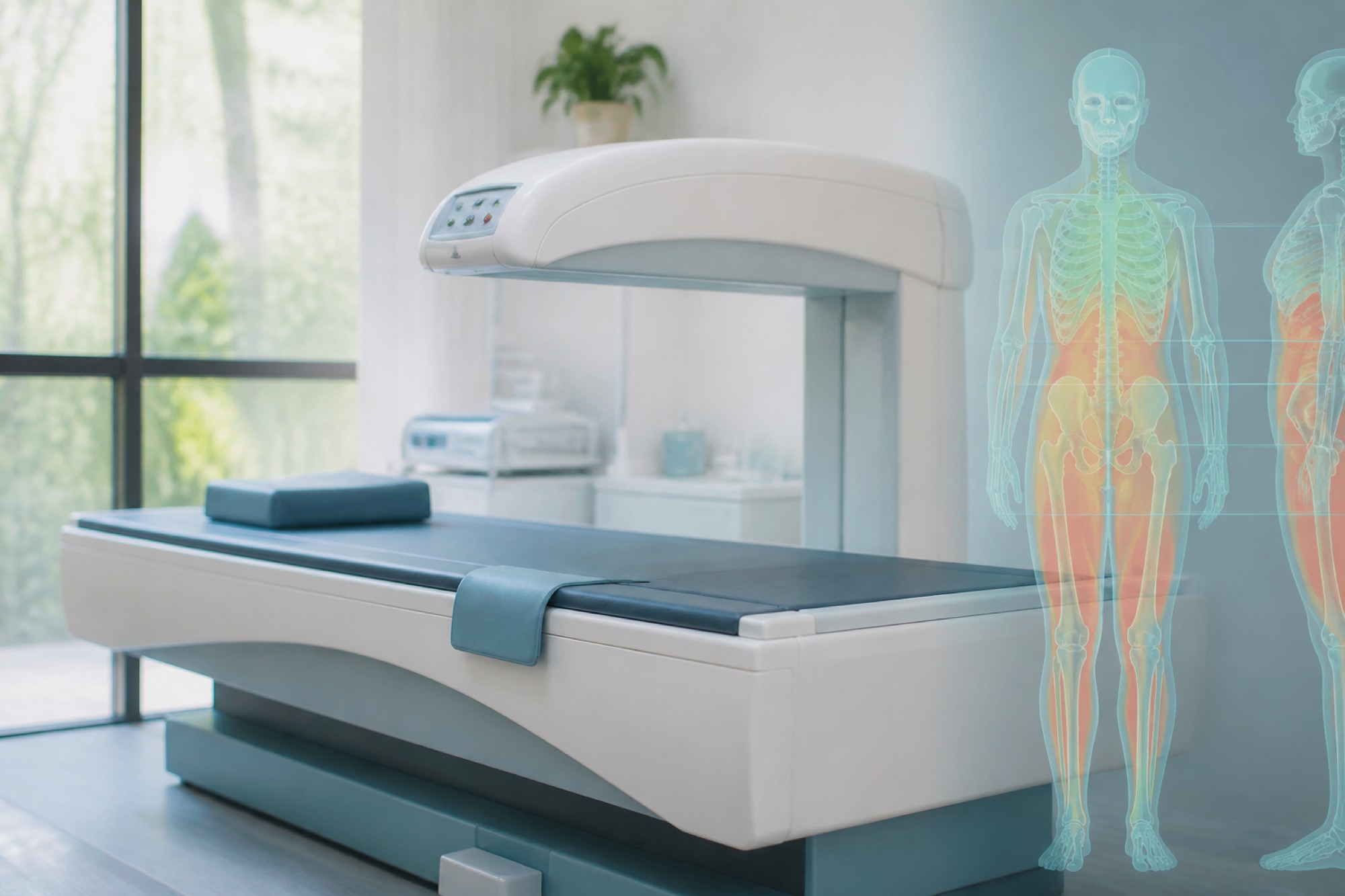
The bathroom scale collapses a complicated organism into one number. Longevity care needs compartments: how much fat you carry, where it sits, how much lean tissue supports metabolism and resilience, and whether bone is keeping up as you age. DEXA (dual-energy X-ray absorptiometry, also written DXA) is the most practical clinical-grade tool most people can access for that picture — including an estimate of visceral adipose tissue (VAT), the deep abdominal fat linked to metabolic risk.
This guide is a deep dive, not a product roundup. Start with the overview below, then open each section as you need it: what DEXA measures, why visceral fat matters, how to read a report, scan cadence, targets without dogma, and what actually moves the numbers. Related longevity measurement context: VO2 Max as a Longevity Biomarker and Biological Age Tests Explained.
Overview: what this scan is for
Use DEXA body composition when you want answers the scale cannot give:
- Is weight change fat, muscle, or water?
- Is abdominal risk rising even if BMI looks “normal”?
- Is lean mass holding during a fat-loss phase?
- Are regional patterns (android vs gynoid, limbs vs trunk) shifting in the direction you intend?
DEXA will not tell you your biological age, your VO2 max, or whether your training program is fun. It will tell you, with useful precision, how your soft tissue and bone compartments are distributed — and whether visceral fat is the quiet problem behind a flattering scale weight.
Key takeaways
- Body composition > scale weight for longevity decisions — same BMI can hide very different metabolic risk.
- VAT is the composition metric most worth obsessing about for cardiometabolic risk; subcutaneous fat is not equally dangerous.
- DEXA is the practical imaging sweet spot: strong VAT correlation with CT in validation work, low radiation, whole-body lean/fat/bone in one session.
- CT/MRI remain anatomic gold standards for visceral fat; DEXA is the serial-tracking workhorse.
- No universal VAT cutoff fits every age, sex, and ancestry group — trend + labs beat one magic threshold.
- Retest on a decision cadence (often 3–12 months), not weekly curiosity.
- Training, sleep, and energy balance move composition; another scan does not.
Why body composition beats the scale
BMI and scale weight remain useful population screens. They fail individuals in predictable ways:
- High muscle, “overweight” BMI — common in trained adults; the scale overstates risk.
- Normal-weight central obesity — BMI looks fine while VAT and metabolic markers worsen.
- Weight-stable recomposition — fat down and lean up can cancel on the scale while healthspan markers improve.
- Aggressive dieting — scale wins that include lean-mass loss are pyrrhic for aging.
Composition imaging separates those stories. Pair it with fitness markers (VO2 max, grip strength) so you do not optimize a DEXA PDF while fitness collapses.
What DEXA actually measures
DEXA sends two low-dose X-ray energies through the body and estimates how much of each pixel behaves like bone mineral, lean soft tissue, or fat. A whole-body composition scan typically reports:
Total and regional fat
Whole-body fat mass and fat percentage, plus regional breakdowns (arms, legs, trunk). Many reports highlight android (abdominal) and gynoid (hip/thigh) regions. Android fat is not identical to visceral fat, but it is the neighborhood where VAT lives.
Lean soft tissue
Lean mass includes muscle, organs, and connective tissue water — it is not a pure “muscle mass” meter. Still, appendicular lean mass (arms + legs) is widely used as a sarcopenia-related indicator when interpreted with strength and function, not in isolation.
Bone mineral
Whole-body bone mineral content and density context. This is valuable longitudinal signal for aging athletes, but a composition scan is not automatically a diagnostic osteoporosis workup of the hip and spine. Ask the facility what protocol you are buying.
Visceral fat estimate
Software (for example GE CoreScan-class approaches) estimates VAT within the android region by modeling subcutaneous abdominal fat and subtracting it from android fat — validated against CT with strong correlation in published work. Output units vary by vendor: mass (g), volume (cm3), or area-like metrics. Always compare like-to-like on the same machine and software when possible.
Visceral fat deep dive
What VAT is (and is not)
Visceral adipose tissue sits inside the abdominal cavity around organs. Subcutaneous adipose tissue (SAT) sits under the skin. Both are fat. They are not equal risk partners. VAT is more strongly tied to insulin resistance, atherogenic lipids, inflammation signaling, and cardiometabolic disease patterns than an equivalent amount of peripheral subcutaneous fat.
Why VAT shows up in longevity conversations
Imaging cohorts and systematic reviews link higher abdominal VAT to adverse outcomes, including all-cause mortality signals in midlife groups — with important caveats: associations can attenuate after adjusting for glycemic markers, BMI, or other fat measures, and findings are less consistent in older cohorts. Translation: VAT is a serious risk marker, not a magical singular cause of death, and context (age, metabolic health, other fat depots) matters.
Thresholds without dogma
Clinics love cutoffs. Evidence is messier. Reviews of VAT thresholds for metabolic syndrome risk find wide ranges across sex, age, BMI, and ancestry — including systematically lower thresholds reported in some Asian cohorts versus some Caucasian cohorts. Practical rule:
- Treat vendor “elevated” flags as a conversation starter.
- Prefer multi-year trend + waist + labs (glucose, lipids, blood pressure) over arguing about 50 grams.
- If VAT is rising while weight is flat, take it seriously.
What actually lowers VAT
There is no reliable “spot reduce visceral fat with a gadget” pathway. The boring stack wins:
- Sustained energy deficit when fat loss is the goal — aggressive enough to matter, gentle enough to protect lean mass.
- Resistance training to defend muscle during deficit.
- Aerobic work (including Zone 2-style volume) for cardiometabolic support — see the VO2 longevity framing in VO2 Max as a Longevity Biomarker.
- Sleep and stress hygiene — chronic short sleep and high stress make adherence and appetite regulation harder.
- Alcohol moderation — excess intake is a common VAT accomplice.
How to read a DEXA report without getting lost
Open the PDF in this order:
- Same-machine caveat. Note scanner model, software, and technician notes. Switching brands mid-journey creates fake “changes.”
- Total fat mass and %. Useful, but not the whole story.
- VAT / visceral metric. Your primary metabolic composition signal when available.
- Lean mass (total and appendicular). Did a diet cost you tissue you wanted to keep?
- Android / gynoid and trunk vs limbs. Distribution shifts can matter before total fat % looks dramatic.
- Bone. Watch long-term trajectory; escalate to clinical densitometry if risk factors or low values appear.
- Compare deltas, not vibes. Write the previous numbers next to the new ones. Percentiles without a prior scan are weaker than a six-month delta you earned.
Common report traps
- Hydration and glycogen shift lean soft-tissue estimates — scan under similar conditions (time of day, recent training, sodium, menstrual phase awareness).
- Creatine loading or big training weeks can nudge lean readings without true hypertrophy.
- Comparing your fat % to an influencer’s screenshot ignores age, sex, machine, and protocol.
- Treating one high VAT reading as destiny instead of a baseline for a 12-week intervention.
How often to scan
Radiation from whole-body composition DEXA is low relative to CT, but it is not zero — and cost/time are real. Choose cadence by decision density:
- Maintenance / curiosity-light: every 12 months.
- Active recomposition or clinical weight management: every 3–6 months.
- After a major training or nutrition block: one post-block scan beats mid-block noise.
- Avoid: monthly scans that only feed anxiety. If nothing in behavior changed, the number usually will not either.
Between scans, waist circumference, progress photos, strength logs, and a consistent smart scale can bridge the gap — with humility about BIA error bars.
DEXA vs alternatives
- CT / MRI: best anatomic VAT detail; higher cost, less convenient, CT adds meaningful radiation — research and specialty clinical use more than yearly lifestyle tracking.
- Bod Pod / underwater weighing: whole-body density methods for fat/lean; no visceral compartment the way modern DEXA offers.
- BIA / smart scales: cheap longitudinal proxies; sensitive to hydration; weak VAT specificity.
- Skinfolds / waist: still useful field tools; waist is an underrated free VAT-risk proxy when measured consistently.
- Consumer “body fat cameras” and apps: entertainment-grade until proven otherwise against imaging.
For most longevity-minded adults who want one paid imaging habit, whole-body DEXA with VAT is the default. Escalate to CT/MRI when a clinician needs anatomic precision you cannot get from DEXA.
A practical longevity protocol around DEXA
- Baseline DEXA on a known machine; save the raw report.
- Pick one primary composition goal for the next 3–6 months (e.g., reduce VAT while holding appendicular lean mass).
- Install the boring behaviors — protein-aware eating, progressive strength work, aerobic base, sleep.
- Track cheap proxies weekly (waist, training performance).
- Retest DEXA when you have a decision to make, not when you want a dopamine hit.
- Keep parallel biomarkers honest — fitness (VO2), optional aging scores (biological age tests), and upcoming blood-panel discipline.
Who should be cautious or ask a clinician first
- Pregnancy or possible pregnancy
- Recent contrast studies or conflicting imaging plans your clinician wants sequenced
- Very high fracture risk or known osteoporosis needing dedicated densitometry protocols
- Implants, severe inability to lie flat, or weight/height limits for a given scanner
DEXA facilities vary in quality. Prefer operators who do composition scans routinely, can explain VAT units, and will rescan on the same device.
Same technology family, different protocols and reports. A clinical hip/spine DXA for osteoporosis focuses on bone mineral density at specific sites. A whole-body composition DEXA reports fat, lean soft tissue, regional distribution, and often an estimated visceral fat metric — plus a bone overview that is not always a diagnostic osteoporosis workup. CT and MRI remain the anatomic gold standards for isolating visceral adipose tissue. Modern DXA VAT estimates correlate strongly with CT in validation studies and use far less radiation, which makes serial tracking practical. Treat DXA VAT as a high-quality estimate and trend tool, not a CT substitute for research-grade absolute area. For most longevity-minded adults with stable habits: roughly every 6–12 months. During an intentional fat-loss or hypertrophy block: every 3–6 months can be useful if you will actually change behavior from the result. More frequent scanning rarely beats better training, sleep, and protein consistency. There is no single universal VAT cutoff that fits every sex, age, BMI, and ancestry group. Clinics often flag elevated ranges, but systematic reviews show thresholds vary widely. Prioritize direction of change, metabolic labs, waist trends, and fitness — not one magic gram count. Home BIA and smart scales are fine for rough trend arrows if hydration and timing are consistent. They are weaker for absolute fat percentage and usually cannot isolate visceral fat the way imaging can. Use them between DEXA visits, not as a replacement when VAT or lean-mass decisions matter. Whole-body composition DEXA is low dose compared with CT. For healthy adults at sensible retest intervals, radiation is usually a minor concern relative to the information gained — still worth avoiding unnecessary weekly “curiosity scans,” especially in pregnancy or when a clinician advises otherwise.DEXA and body composition FAQ
Is DEXA the same as a bone-density scan?
+
How accurate is DEXA visceral fat vs CT or MRI?
+
How often should I get a DEXA for body composition?
+
What visceral fat number is “too high”?
+
Can I just use a smart scale or BIA instead?
+
Does DEXA radiation matter?
+
This comparison is designed for practical decision-making. Product capabilities, pricing, and memberships change quickly, so treat battery claims, plan costs, and feature availability as moving targets.
Kaul et al., “Dual-Energy X-Ray Absorptiometry for Quantification of Visceral Fat” (Obesity, 2012)
Validation of DXA-derived visceral fat against CT — foundational evidence that modern whole-body DXA can estimate VAT with high correlation and far lower radiation than CT. Systematic review of VAT imaging and mortality: higher VAT often associates with higher all-cause mortality in midlife cohorts, with nuance by age and after metabolic adjustment. No single universal VAT threshold fits every sex, age, BMI, and ancestry group — useful brake on one-number dogma when reading DEXA VAT reports.
Related Keersa guide: VO2 Max as a Longevity Biomarker
Cardiorespiratory fitness as a complementary trainable longevity vital sign alongside body-composition imaging.
Related Keersa guide: Biological Age Tests Explained
Molecular and blood-chemistry aging scores — another measurement lane that pairs with composition trends, not a substitute for them.
Related Keersa guide: Grip Strength as a Health Biomarker
Low-tech functional biomarker that often moves with muscle quality and healthspan risk.
Related Keersa guide: Blood Panels Worth Tracking Annually
Lab companion to composition imaging — metabolic and cardiovascular markers to trend yearly.
Affiliate disclosure: some product links on Keersa Health may earn a commission at no extra cost to you.
Editorial recommendations are independent of commercial relationships.
Read our full disclosure.
Sources and editorial notes
Bottom line
DEXA earns its place in a longevity toolkit because it separates fat, lean tissue, and bone — and can estimate the visceral fat the scale ignores. Use it as a periodic truth serum for composition goals, not as a personality score. Related: VO2 Max as a Longevity Biomarker, Biological Age Tests Explained, and Grip Strength as a Health Biomarker.
Next in Longevity: Blood Panels Worth Tracking Annually — a practical biomarker set for metabolic, inflammatory, and hormonal trends without test overload.