Heat & Cold guide · Updated 2026
Contrast Therapy Protocols: Heat–Cold Sequencing That Makes Sense at Home
A detailed 2026 guide to contrast therapy protocols — heat-to-cold sequencing, classic contrast water ratios, sauna-and-plunge rounds, when to finish cold, and how to avoid stacking recovery theater on top of bad timing.
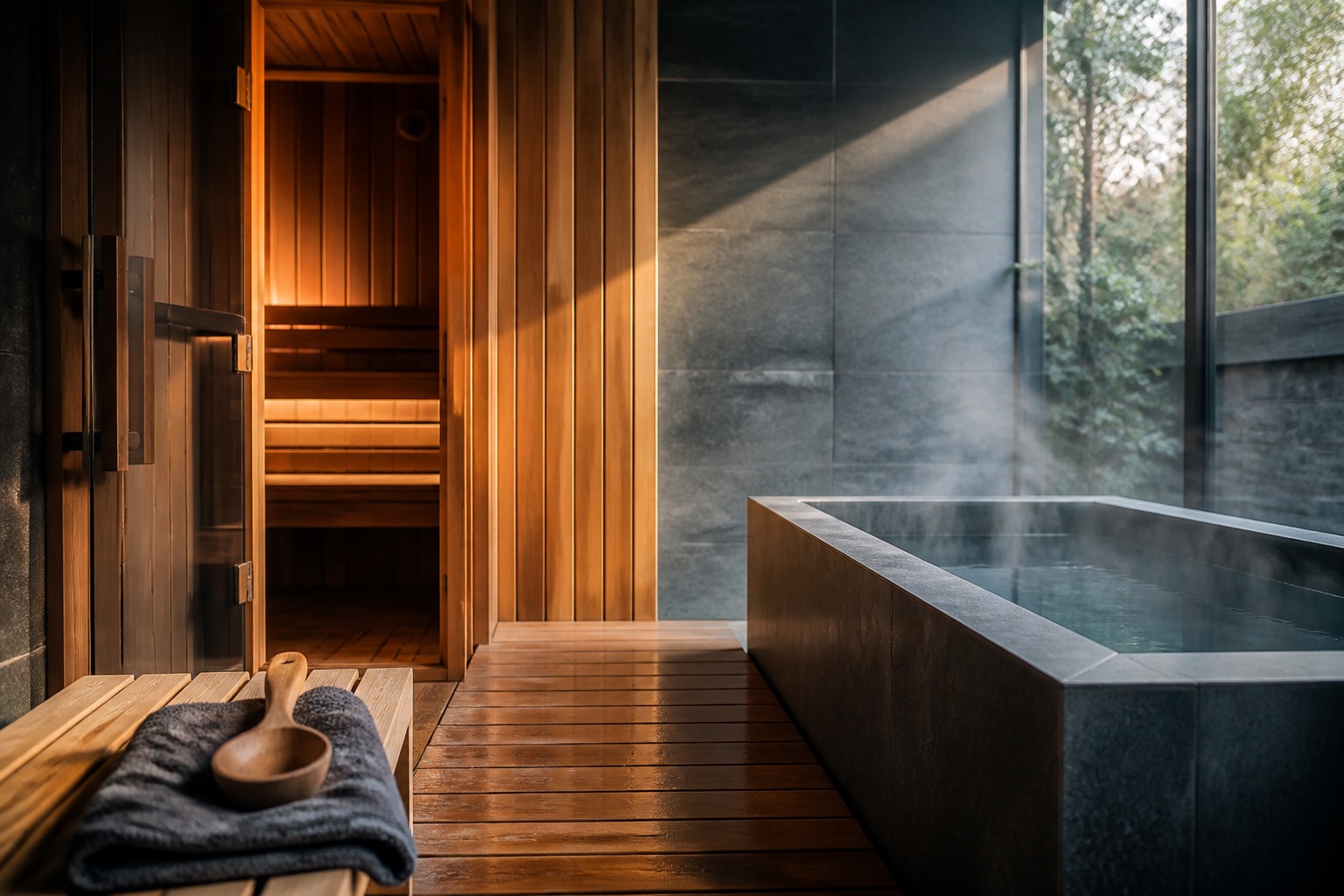
Contrast therapy means deliberate heat–cold sequencing — not randomly bouncing between a hot room and an ice bath until you feel dramatic. In 2026 home setups make contrast easy; good practice still means choosing a modality (limb contrast water vs sauna + plunge), writing round lengths, picking a finish rule, and respecting training-day timing.
This guide is protocol-first. For hardware, use Home Sauna Types Compared and Cold Plunge Setup Guide. For whether cold belongs near lifting at all, use Cold Exposure Timing Around Training.
Key takeaways
- Start heat, finish cold is the default sports/wellness script unless a clinician tells you otherwise.
- Write the rounds. Temperatures and minutes beat “until it feels intense.”
- Two modalities, two playbooks: classic contrast water baths ≠ Finnish sauna + plunge, even though both alternate hot and cold.
- Evidence is modest and mixed for beating cold-only recovery on hard performance outcomes — use contrast for a clear job (feel, routine, congestion weeks), not as magic.
- Ending on cold still counts as cold timing after hypertrophy work.
- One quality round beats three sloppy ones for beginners.
What contrast is trying to do
Alternating heat and cold drives repeated vasodilation and vasoconstriction. Therapy and sports traditions claim this “vascular pumping” helps comfort, perceived recovery, and readiness. Near-infrared and clinical contrast-bath work shows local hemodynamic changes are real enough to study — that does not automatically mean faster muscle repair or better next-day power for every athlete.
Systematic reviews of contrast water therapy after muscle-damaging exercise and team-sport hydrotherapy reviews generally find small or inconsistent advantages versus passive recovery or cold water immersion alone. Treat contrast as a structured recovery option with honest effect sizes, not as a required pillar of training.
Two home playbooks
Playbook A — Contrast water (baths / tubs)
This is the physical-therapy lineage: immersing a limb (or more of the body) in warm/hot water, then cold water, repeating.
- Hot water: often ~38–40°C (not sauna air heat)
- Cold water: often ~10–15°C (sometimes colder in clinic scripts)
- Common ratio: roughly 3:1 or 4:1 hot:cold minutes (e.g., 3–4 minutes hot, 1 minute cold), repeated for several cycles
- Total time: often ~15–30 minutes depending on whether an opening long hot bout is used
- Finish: typically cold
Higgins et al.’s team-sport hydrotherapy synthesis discusses CWT with hot water around 38–40°C and cold around 10°C, with total immersion time not trivially short. Exact recipes vary — consistency inside a session matters more than copying one paper’s stopwatch.
Playbook B — Sauna + cold plunge
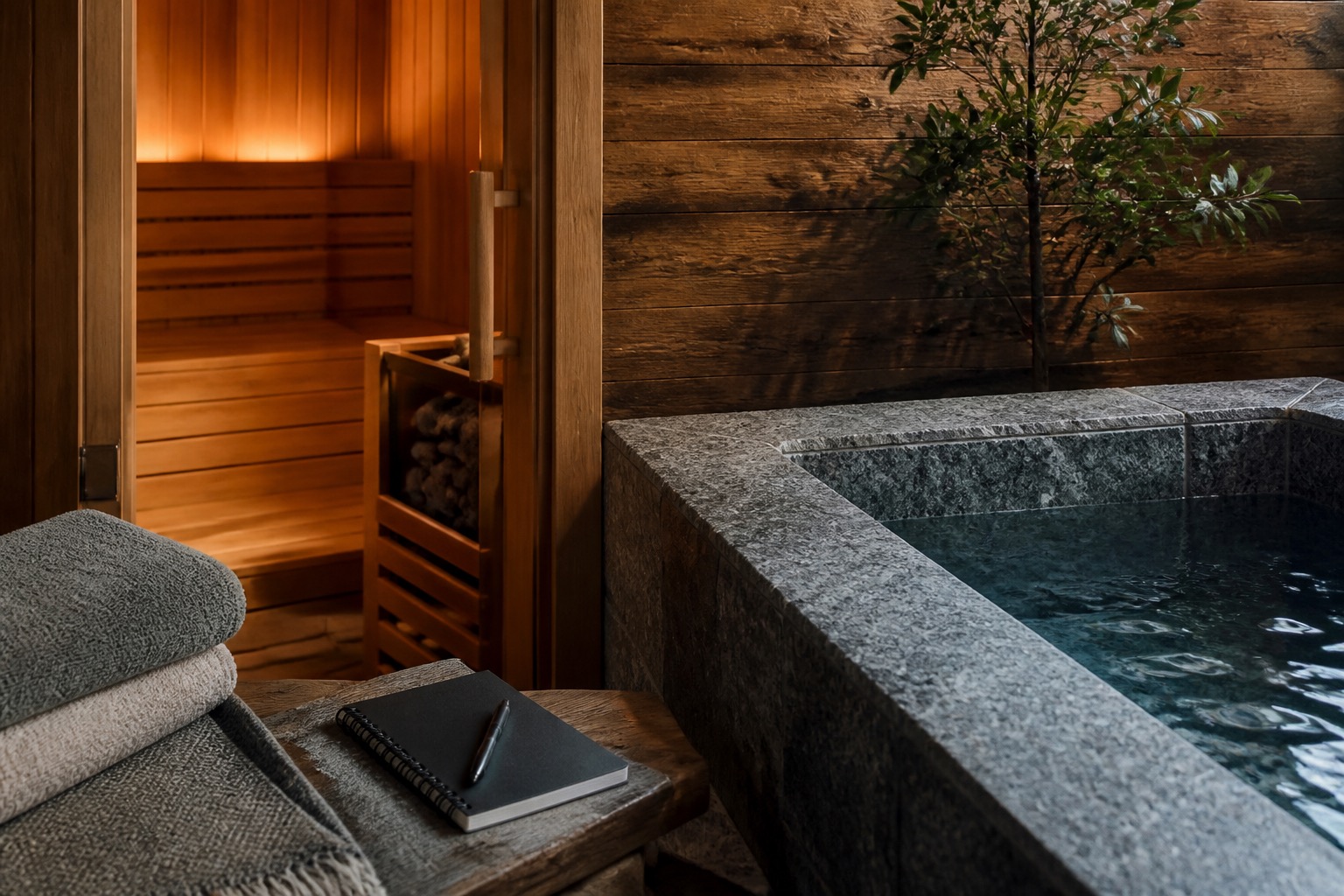
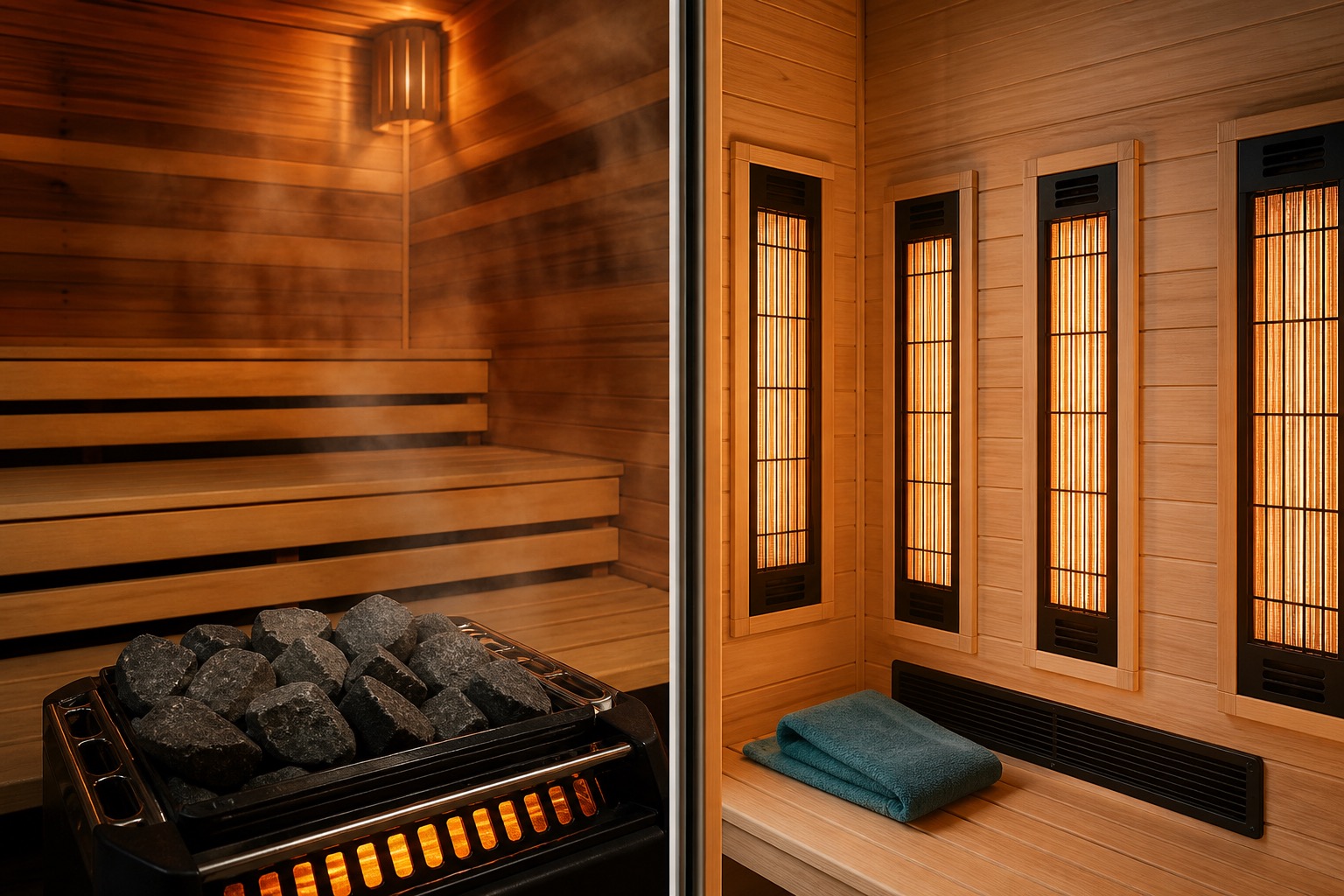
This is the home wellness lineage: hot air (traditional or IR cabin) alternated with whole-body cold immersion.
- Heat: traditional sauna is a different stress than 40°C water — start shorter if you are heat-naive
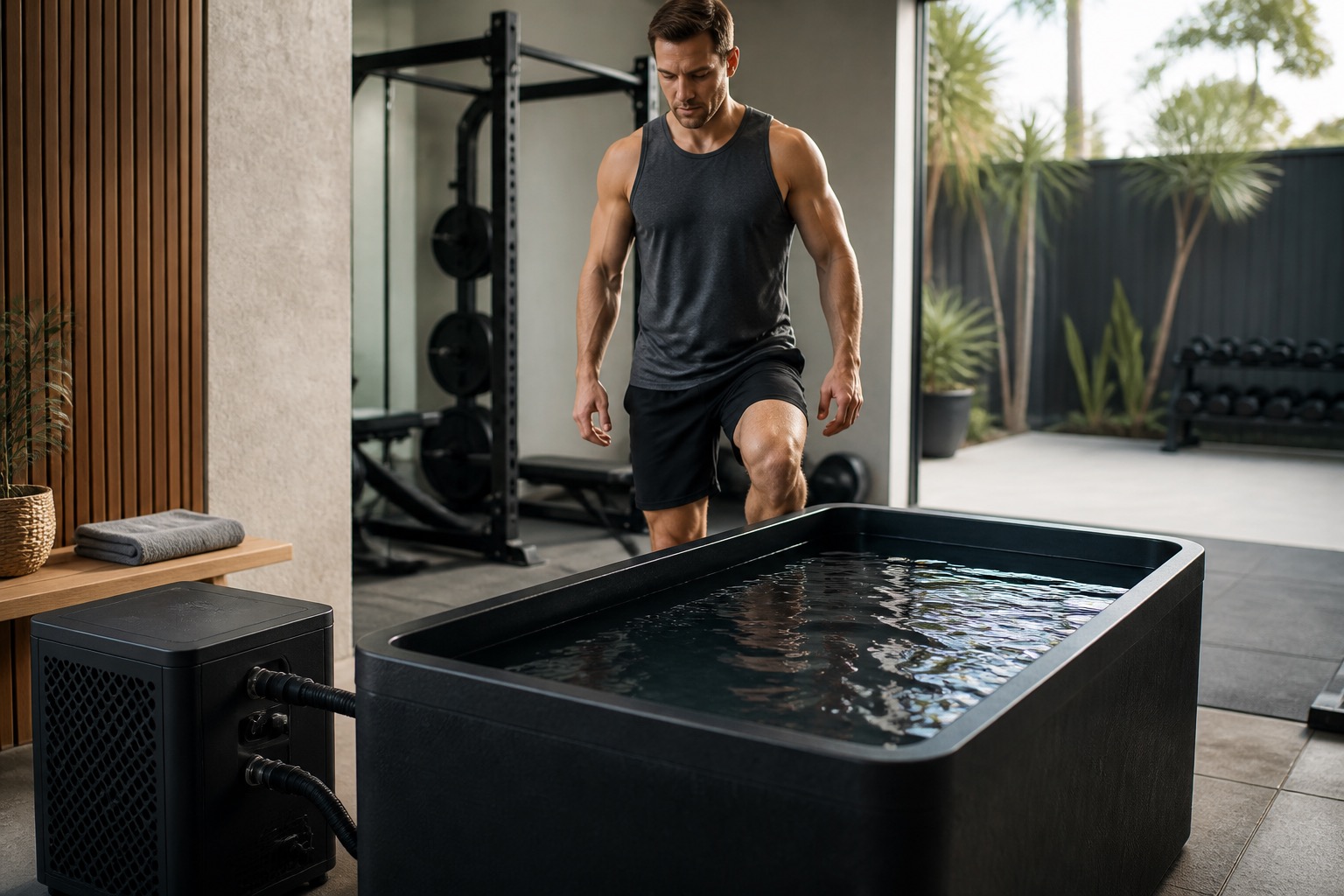
- Cold: aim for a measured recovery band (~10–15°C / 50–59°F) rather than punishment extremes
- Rounds: 1 for beginners; 2–3 once tolerant
- Transitions: walk carefully; no racing; breathe before you enter cold
- Finish: cold, then rewarm with clothes, fluids, and quiet sitting
Do not paste a 4:1 limb-bath ratio onto 90°C air. Sauna rounds are limited by heat tolerance and blood pressure responses, not by hand-therapy stopwatches.
Default home sequences
Beginner — one round (sauna + plunge)
- Hydrate; no alcohol.
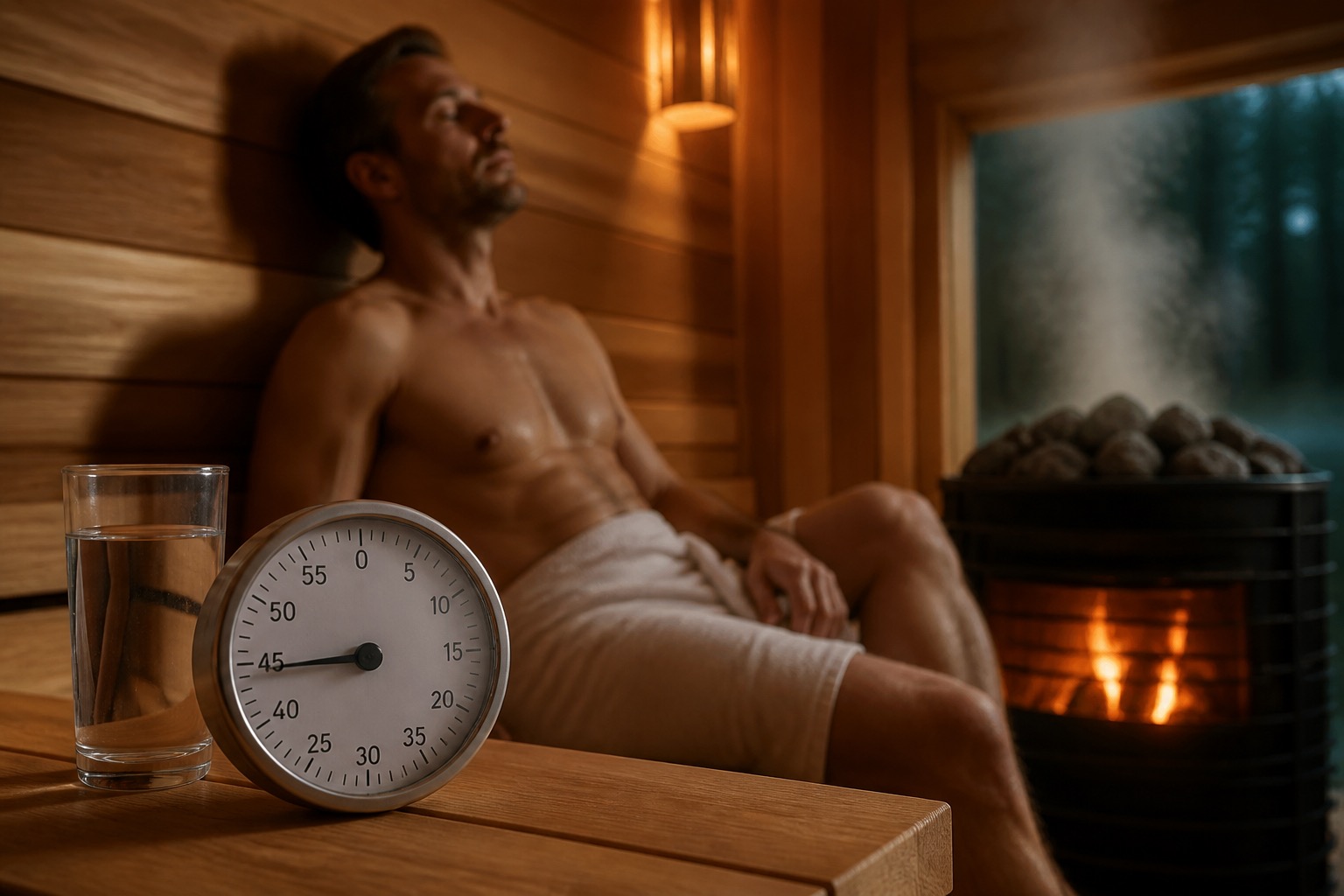
- Heat 8–12 minutes at a tolerable sauna setting (exit early if dizzy).
- Transition 30–60 seconds; steady breathing.
- Cold 60–120 seconds in a measured ~10–15°C plunge (or end sooner).
- Dry off, dress, sip fluids, sit 5–10 minutes.
Run this 1–2× weekly for a couple of weeks before adding rounds.
Standard — two to three rounds (sauna + plunge)
- Heat 10–15 minutes
- Cold 1–3 minutes
- Optional brief ambient rest (1–3 minutes) if you need it to stay safe — not a phone doomscroll
- Repeat for a second (and optionally third) round
- Finish on cold
- Rewarm passively; avoid jumping into hard training immediately after
Total session time often lands around 30–60+ minutes including transitions. If you rush, you are collecting risk, not protocol points.
Contrast water limb script (clinic-inspired)
- Confirm skin integrity and sensation are normal.
- Hot immersion ~3–4 minutes (~38–40°C)
- Cold immersion ~1 minute (~10–15°C)
- Repeat 3–4 cycles; finish cold
- Keep the rest of the body warm and supervised if only a limb is immersed
This is closer to athletic-training contrast baths than to Finnish sauna culture. Use it when the target is a limb/region and you can control water temperatures precisely.
Ordering rules that matter
- Start with heat unless a clinician specifies otherwise — cold-first contrast is a different stress profile.
- Finish with cold for the common recovery script.
- Keep the gradient real. Lukewarm “hot” and barely cool “cold” is just bathing.
- Equal drama is not the goal. Longer heat with shorter cold is common; matching misery minutes is not required.
- One variable per week. Change round count or cold duration — not both — when progressing.
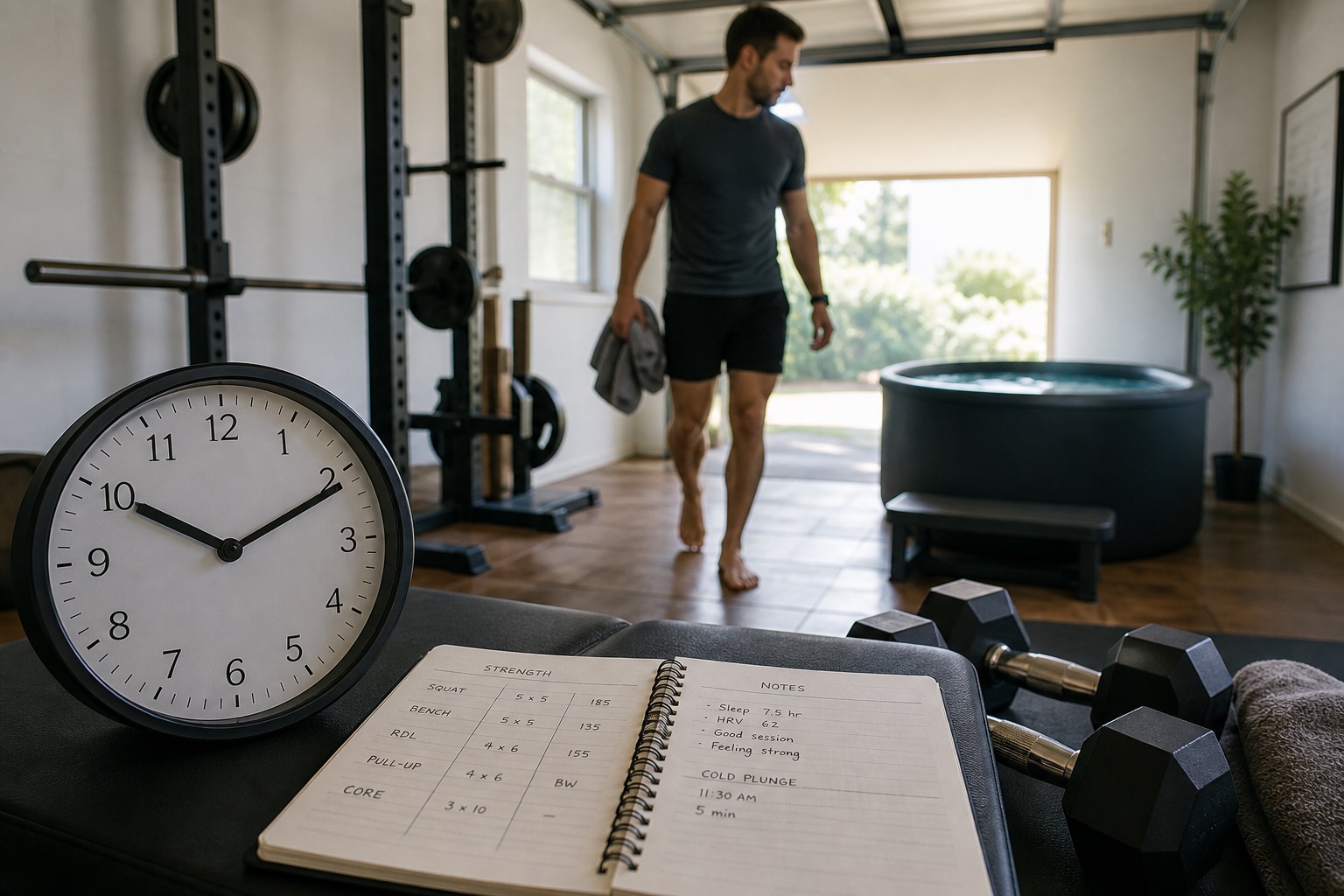
- Log how you sleep and train next day. If contrast trashes sleep, you overdid the final cold or the hour was too late.
Training-day caveats
Contrast does not erase cold-timing physiology. If the last step is a cold plunge after hypertrophy lifting, you are still in the post-resistance cold pattern associated with blunted hypertrophy signaling in training studies. Options:
- Save contrast for endurance days, rest days, or competition-congestion weeks
- Do heat-only after hypertrophy sessions
- Delay the whole contrast block several hours (still not a guarantee of zero interference)
Details: Cold Exposure Timing Around Training. Heat-only cardiovascular practice: Sauna Protocols for Cardiovascular Health.
Safety and stop rules
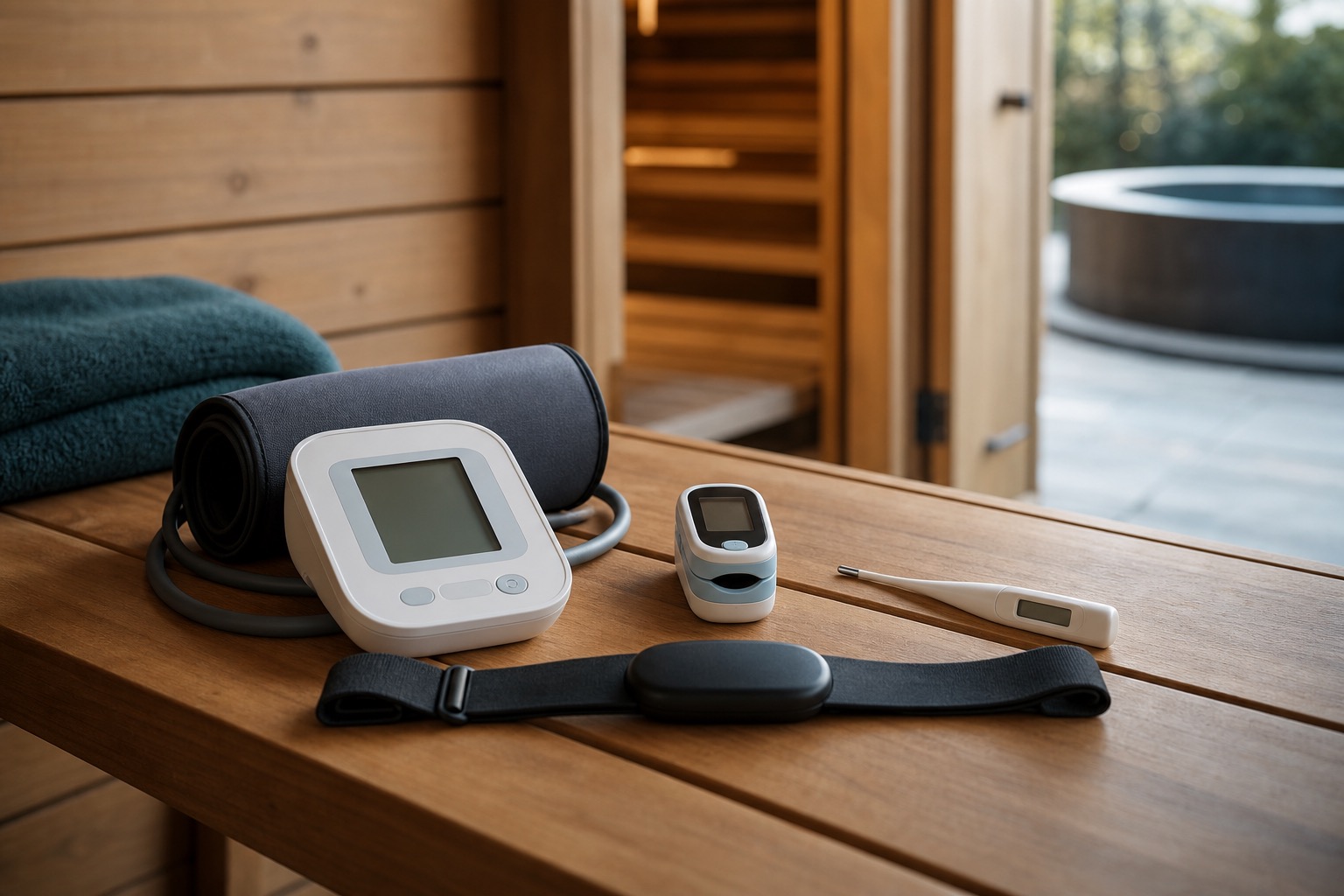
- Cardiovascular risk, pregnancy, Raynaud’s, neuropathy, open wounds, illness: get guidance first
- No alcohol with heat–cold stress
- Hydrate before and after; sauna sweat is not optional trivia
- Supervise transitions — wet floors and blood-pressure swings cause falls
- Exit immediately for chest pain, severe dizziness, confusion, or feeling faint
- Rewarm on purpose after the final cold — do not drive home still shivering hard
A simple weekly framework
- Most weeks: 1–2 contrast sessions max unless you are heat/cold adapted and sleeping well
- Growth blocks: prefer contrast away from hypertrophy sessions
- Endurance or congestion weeks: contrast can sit nearer hard efforts if it helps readiness
- Deload weeks: keep one gentle round or drop contrast entirely
- Always: measured temperatures, written rounds, finish rule, stop rules
Most sports and wellness contrast scripts finish on cold (vasoconstriction “close”). Clinical contrast-bath literature also commonly ends cold. If you feel wiped or sleep suffers, shorten the final cold rather than inventing endless heat finishes. Not reliably. Reviews comparing CWT and CWI for team-sport recovery find mixed, often modest effects. Contrast can feel better subjectively for some people — that is not the same as proven superiority on every performance marker. One round: 8–12 minutes comfortable sauna heat, 1–2 minutes cold plunge in a measured ~10–15°C band, then rest and rewarm with clothes/fluids. Add a second round only after several uneventful sessions. They are related ideas, not identical prescriptions. Limb contrast baths often use ~38–40°C water and ~1-minute cold bouts in repeating ratios. Sauna air is much hotter; keep sauna rounds shorter on heat tolerance, not copied minute-for-minute from hand therapy protocols. Be careful. Ending on cold still counts as post-lift cold exposure. If muscle growth is the priority, delay or skip the cold half on hard hypertrophy days — see our cold-timing guide. Stop for chest pain, severe dizziness, confusion, nausea, fainting feeling, or loss of dexterity in the cold. No alcohol. Hydrate. Get medical clearance if you have cardiovascular risk, pregnancy concerns, or heat/cold intolerance.Contrast therapy protocols FAQ
Should contrast therapy end on cold or heat in 2026?
+
Is contrast better than cold water immersion alone?
+
What is a good beginner home sequence?
+
Do classic 4:1 hot:cold limb baths apply to sauna + plunge?
+
Can I use contrast after hypertrophy lifting?
+
What are hard stop rules?
+
This comparison is designed for practical decision-making. Product capabilities, pricing, and memberships change quickly, so treat battery claims, plan costs, and feature availability as moving targets.
Pooled look at contrast water therapy after damaging exercise — useful for expectations on soreness vs objective recovery markers. Team-sport focused review/meta-analysis comparing CWI and CWT, with practical immersion protocol suggestions. Classic therapy-facing review of contrast methods, protocol variability, and evidence limits. Documents common clinical contrast-bath ratios (often ~4:1 hot:cold) and physiologic monitoring context. Reminder that finishing contrast with immediate hard cold after hypertrophy lifting is still cold timing — not a free pass.
Laukkanen et al., Finnish sauna bathing and cardiovascular outcomes (JAMA Internal Medicine, 2015)
Context for the heat half of home sauna + plunge contrast — traditional heat practice is a different literature than limb contrast baths.
Keersa Health Heat & Cold guides
Hardware and timing deep dives linked from this protocol overview.
Affiliate disclosure: some product links on Keersa Health may earn a commission at no extra cost to you.
Editorial recommendations are independent of commercial relationships.
Read our full disclosure.
Sources and editorial notes
Bottom line
Good contrast therapy is boring on purpose: start heat, time the rounds, finish cold, rewarm, and do not pretend the sequence overrides training biology. Use limb contrast water when you need precise local temperatures; use sauna + plunge when you want whole-body sequencing — and keep hypertrophy-day cold caution in force. Related: Cold Plunge Setup Guide, Home Sauna Types Compared, Cold Exposure Timing Around Training, and Sauna Protocols for Cardiovascular Health.
Next: Cryotherapy Chambers vs Cold Water, Infrared vs Traditional Heat Physiology, and Designing a Heat and Cold Routine.