Heat & Cold guide · Updated 2026
Cryotherapy Chambers vs Cold Water: Skin Temperature, Tissue Cooling & Cost-Benefit
A detailed 2026 comparison of whole-body cryotherapy chambers versus cold-water immersion — air vs water conductivity, Amazon-buyable options, studio membership math, and what the evidence actually supports.
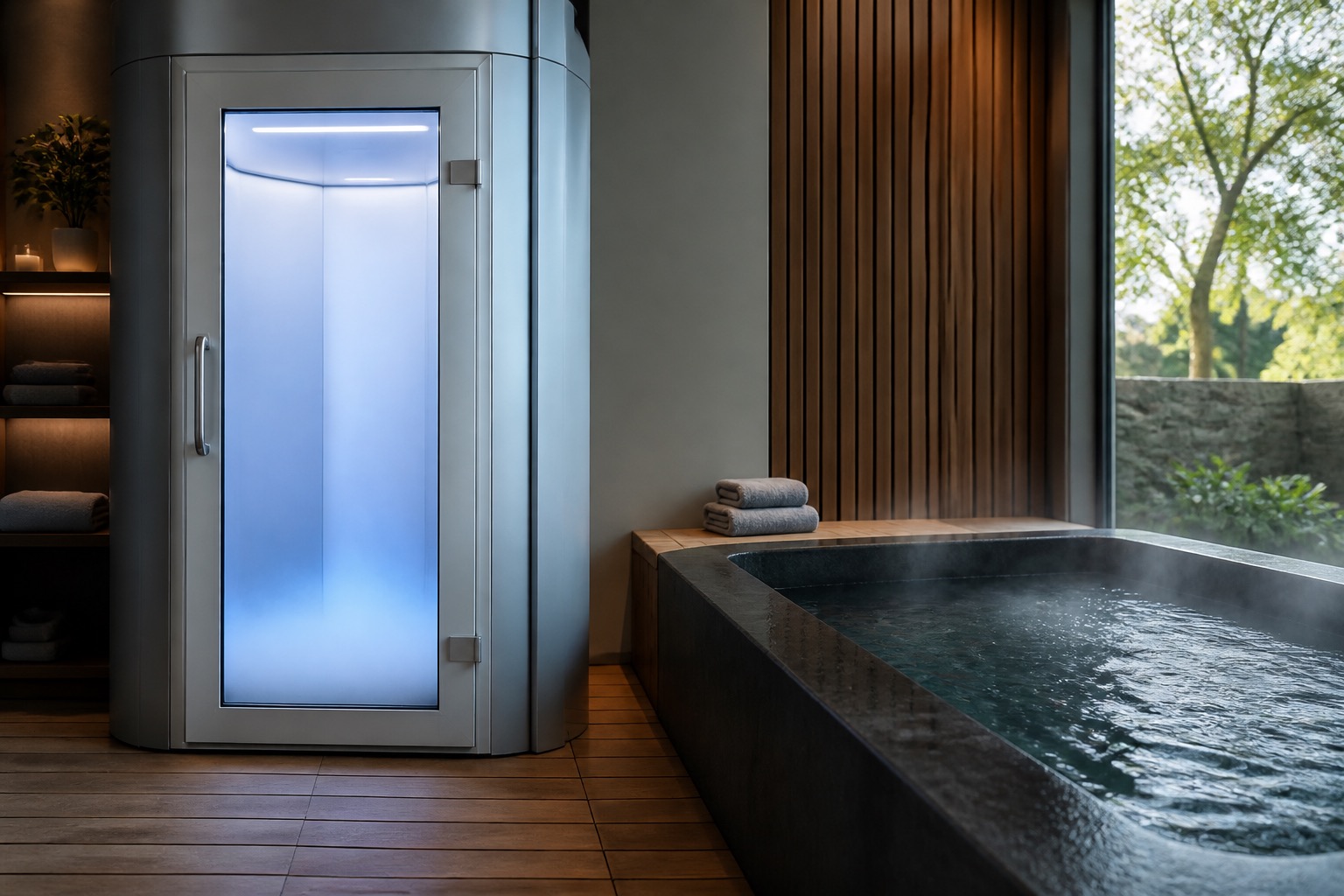
Cryotherapy chambers sell a story: step into air colder than Antarctica for two minutes and recover like a pro. Cold water sells less theater and more physics. In 2026, if your goal is tissue cooling and cost-effective recovery stress, immersion usually wins — not because plunges are trendy, but because water moves heat better than air.
This guide compares studio nitrogen WBC, Amazon-reachable local circulating “cryotherapy” machines, and home cold-water setups from ice tubs to chillers. Related hardware detail lives in the Cold Plunge Setup Guide; schedule caveats live in Cold Exposure Timing Around Training.
Key takeaways
- Best frequent-user value: DIY Stock Tank + Active Aqua Chiller (cold water).
- Best compact insulated immersion: Ice Barrel 300.
- Best one-cart Amazon immersion: Plunge + Chiller kit class.
- Best cheap immersion test: Wilder XL Ice Bath (or similar insulated pod).
- Best local (not whole-body) Amazon cryo: Polar Active Ice 3.0.
- Best occasional supervised extreme air: Studio Nitrogen WBC — not a default weekly plan.
- Biggest buying mistake: equating chamber display temperature with superior recovery, then financing memberships that a thermometered plunge would beat on both physics and cost.
How we evaluate chambers vs water
Editorial scores favor modalities that deliver repeatable cooling you can afford and adhere to — not the lowest air temperature on a wall display. We score across five pillars:
- Cooling physics (25%) — conductivity, session design, and evidence for sustained tissue effects.
- Whole-body vs local fit (15%) — does the product match the job people think they bought?
- Home buyability (20%) — Amazon/direct ownership vs studio-only access.
- Ownership cost (25%) — per-session and 1–3 year reality for frequent users.
- Adherence friction (15%) — setup, sanitation, travel, and showing up.
Important limitation: Keersa Health scores are editorial synthesis. Extreme cold has medical contraindications. Studio screening does not transfer to unsupervised home plunges.
Air vs water: the temperature trap
WBC rooms often run below −100°C for 2–4 minutes. That gradient looks decisive. Air, however, is a poor conductor relative to water. Reviews of WBC physiology emphasize this gap; head-to-head work (for example Mawhinney et al. in MSSE) has shown greater reductions in limb blood flow and muscle temperature after ecologically valid CWI than after short WBC. Costello et al. also found skin-temperature patterns where WBC can look colder immediately, while CWI keeps skin colder longer across the following hour.
Translation for buyers: do not shop recovery by chamber thermostat. Shop by modality (air vs immersion vs local pad), protocol minutes, and whether you will repeat it weekly without resentment.
Features that matter most
- Immersion vs air — conductivity and tissue cooling realism.
- Whole-body vs pad — Amazon “cryotherapy machines” are often local only.
- Session economics — studio fees vs electricity/ice vs one-time hardware.
- Temperature measurement — thermometer for water; do not trust vibes.
- Timing around lifting — cold after hypertrophy still needs a schedule (see the timing guide).
Interactive comparison
Filter by form factor, sort by score or price, and pin up to three options for a focused side-by-side view.
Tradeoff:
Sticker price still matters here — most options are one-time hardware buys, so the three-year estimate mainly reflects purchase price plus expected upkeep.
Estimates are directional and based on common public pricing patterns. Promotions, refurbished units, family plans, and tier changes can move these numbers materially.
3-year cost of ownership
Device
Year 1
3-year estimate
Amazon Price
DIY Stock Tank + Active Aqua Chiller
$1,650
$2,100
$859.89
Ice Barrel 300
$1,400
$1,900
$1,149.99
Amazon Plunge + Chiller Kit
$780
$1,050
$649
Wilder XL Ice Bath
$450
$1,100
$61.98
Polar Active Ice 3.0
$420
$520
$359.99
Studio Nitrogen WBC Chamber
$2,800
$8,400
—
Form factor decides the job. Studio WBC is extreme air. Circulating machines are local pads. Plunges are immersion. Mixing those labels is how people overpay.Chamber vs local cryo vs water
Choose studio nitrogen WBC if...
Choose a Polar-class circulating machine if...
Choose cold-water immersion if...
Choose DIY Active Aqua or an Amazon chiller kit if...
Wait on the category if...
Below are deeper notes on every option in the comparison table, sorted by editorial score. Jump directly from the table pins or the cost section.
DIY / Active Aqua · Kit
Best for: Best value consistent cold: hold recovery temps without daily ice runs
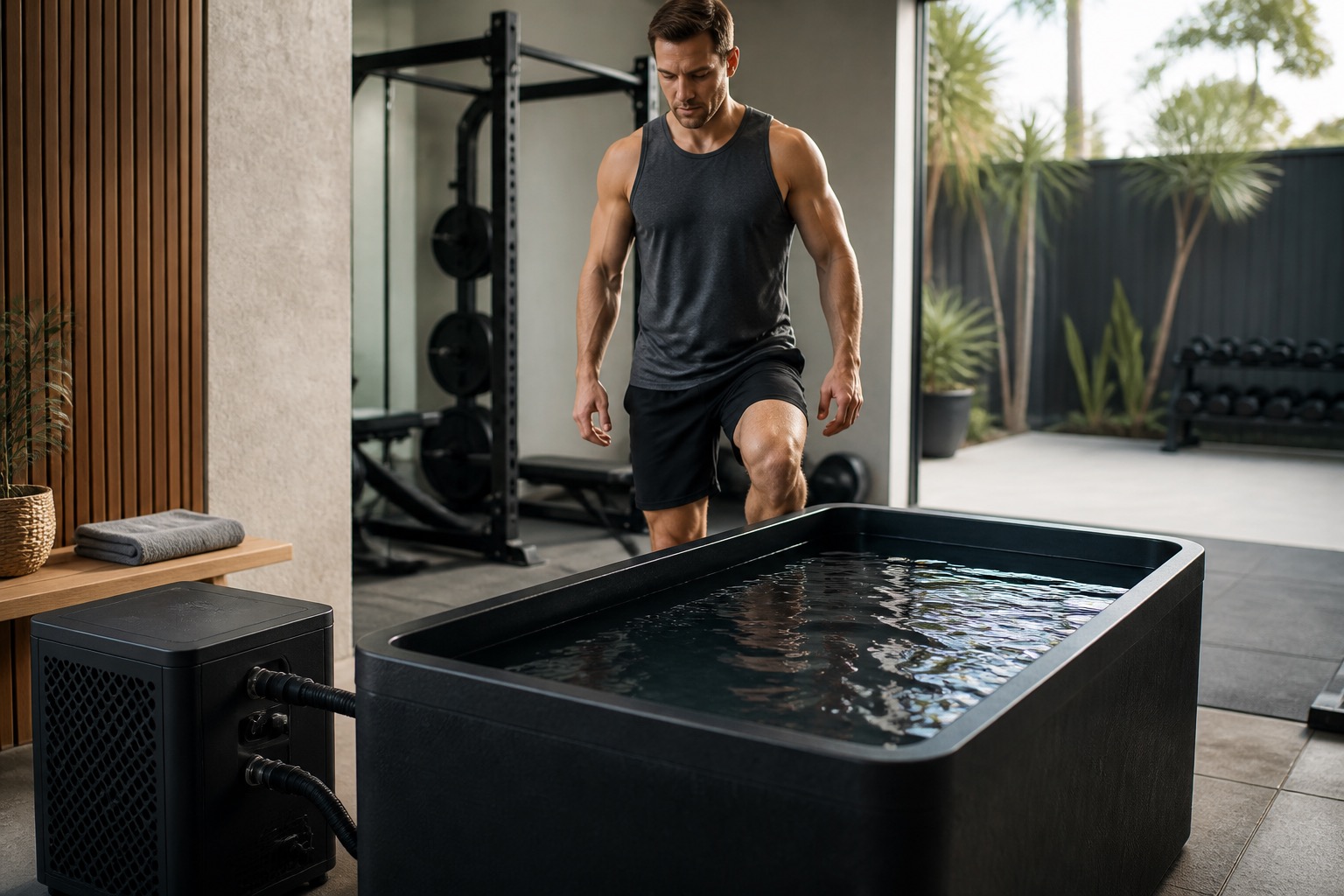
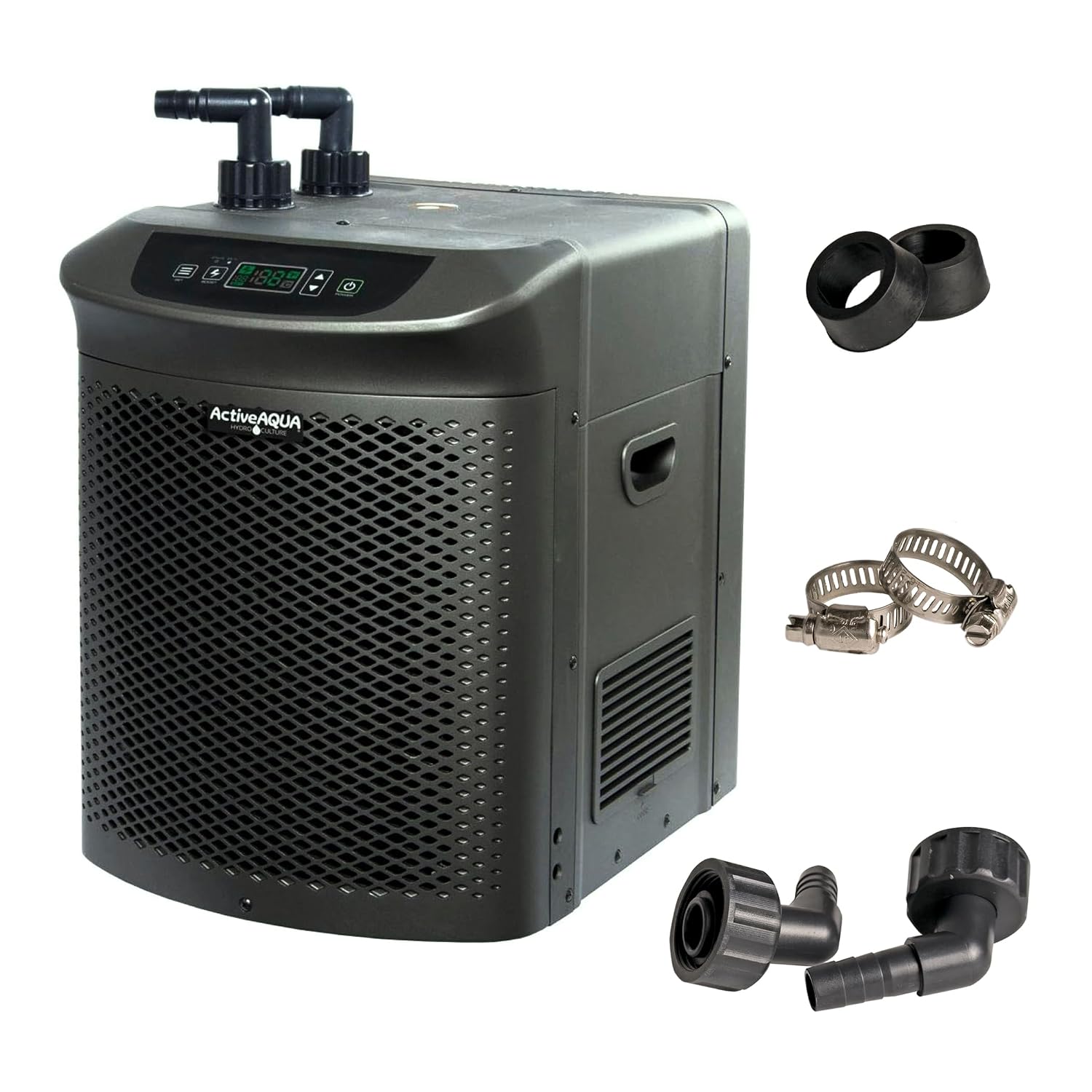
DIY Stock Tank + Active Aqua is the workhorse home plunge: a 100–150 gallon tank, 1/4–1/2 HP chiller, pump, and filter holding roughly the 50–59°F recovery band. Buy it when ice-only becomes a chore. Size chiller HP to volume, ambient heat, and insulation. Uninsulated metal tanks need more cooling power. Use GFCI protection. Keep electrical gear dry and elevated. Choose DIY chiller for value consistency. Skip it if you want zero plumbing and will pay for turnkey.
Estimated ownership: about $1,650 in year 1 and
$2,100 over 3 years.
Assumes tank + ~1/2 HP Active Aqua-class chiller + pump/filter/hose + insulation. Electricity and filter changes ongoing.
Ice Barrel · Barrel
Best for: Compact insulated upright plunge with a cleaner look than a stock tank
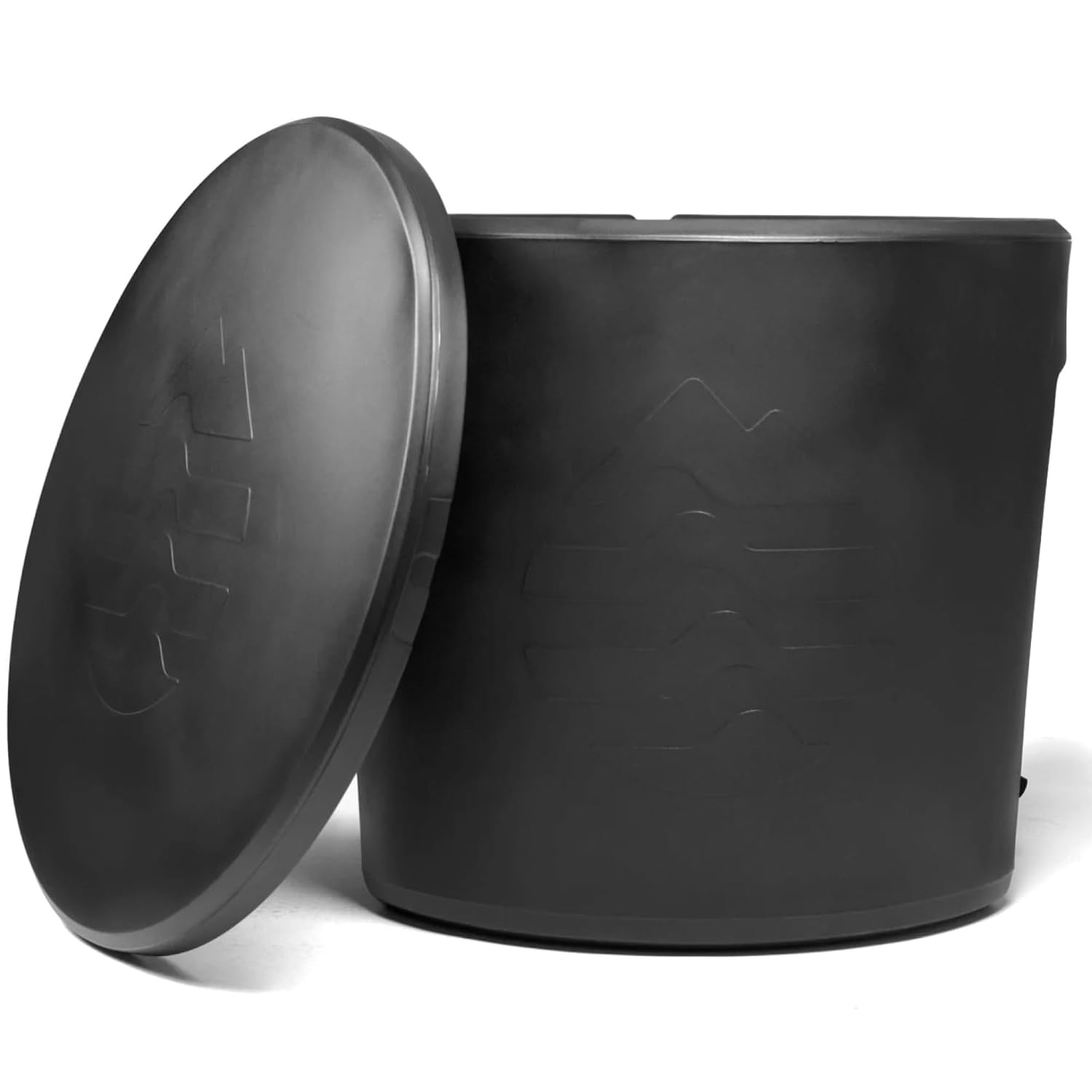
Ice Barrel 300 is the insulated middle path: better than a naked stock tank, cheaper than a premium all-in-one, and ready for a chiller when ice fatigue hits. Insulation is the product. It cuts ice melt and chiller duty cycle versus thin tanks. Confirm person height fit before buying upright designs. Choose Ice Barrel for compact insulated form. Pair Penguin-class chillers when you want set-and-forget cold.
Estimated ownership: about $1,400 in year 1 and
$1,900 over 3 years.
Barrel-only year costs assume ice use. Add $1,500–$4,000 if pairing a dedicated chiller.
Generic / Amazon · Kit
Best for: Fastest Amazon cart path to chilled immersion when you want one-box cold water instead of studio air
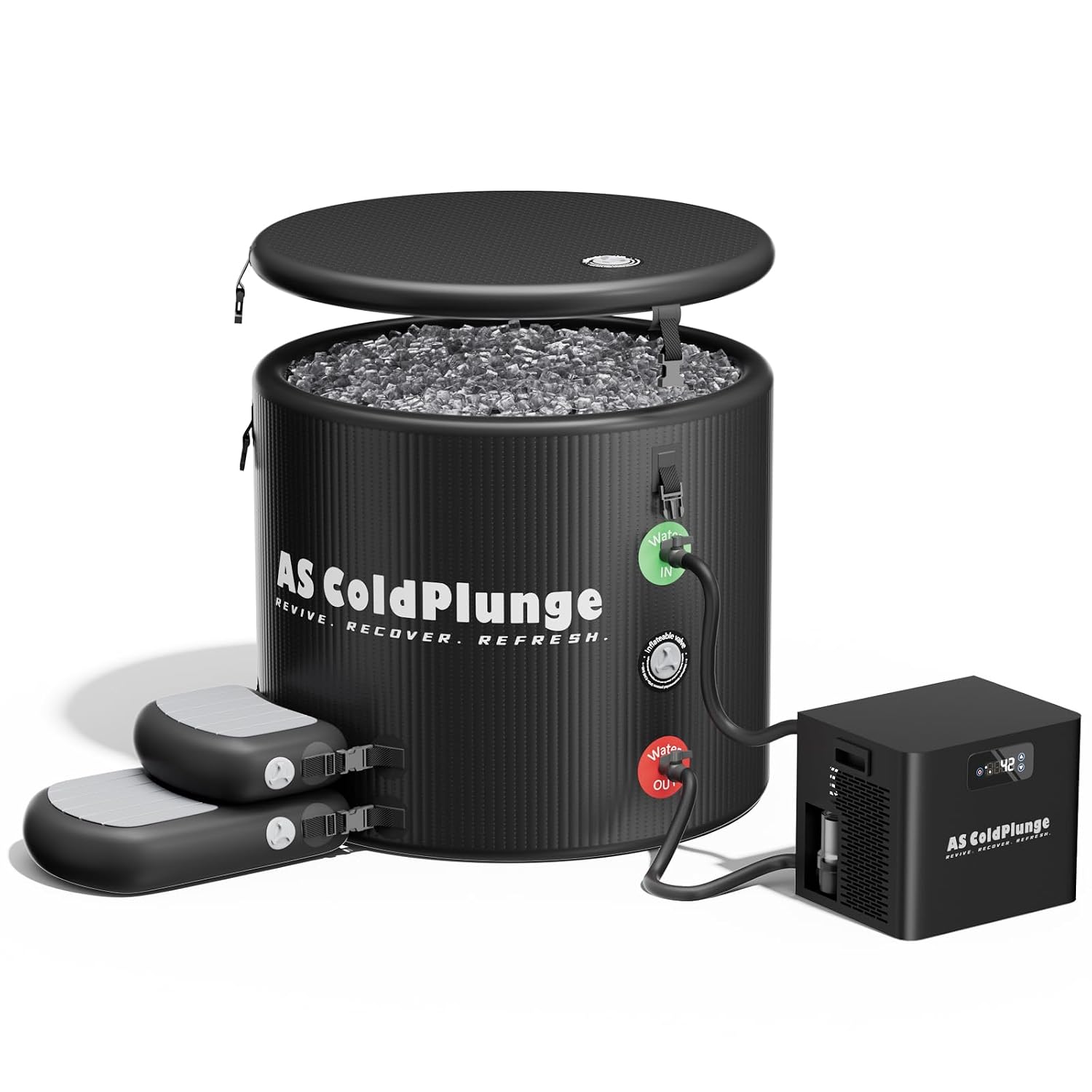
Amazon Plunge + Chiller kits are the practical anti-chamber purchase: chilled water immersion shipped to your door. Expect product variance — measure temps and treat sanitation seriously. Verify chiller HP vs tub volume and climate before trusting summer holds. Read return windows; no-name compressors fail more than branded cold-therapy chillers. Choose kit for speed-to-immersion. Choose DIY Active Aqua if you want known chiller lineage.
Estimated ownership: about $780 in year 1 and
$1,050 over 3 years.
Assumes kit purchase + electricity/filters. Confirm current ASIN generation — Amazon kit SKUs churn.
Wilder · Inflatable
Best for: Cheapest honest test of cold-water immersion before financing chillers or cryo memberships
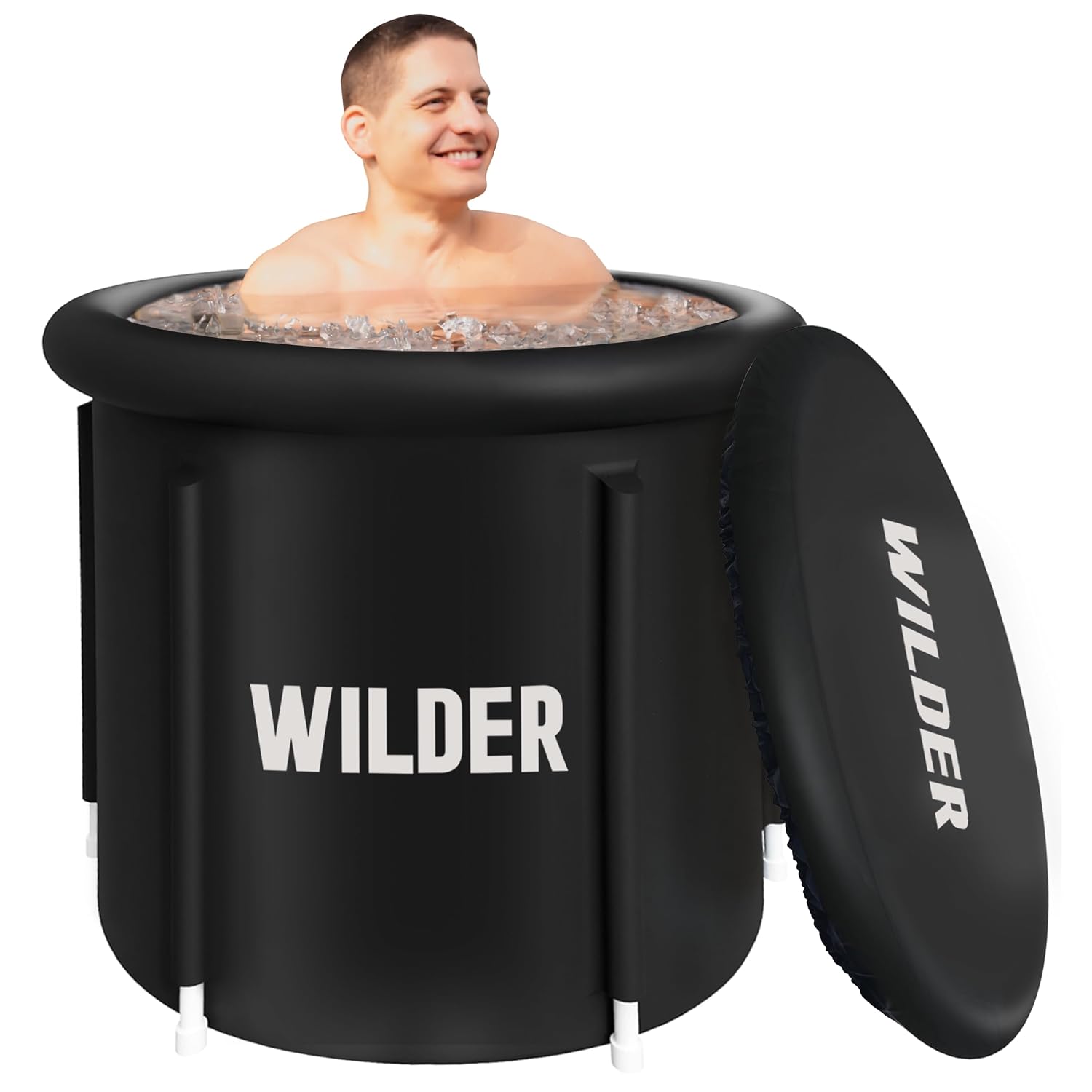
Wilder XL Ice Bath is Stage 0 water: prove you will immerse before buying cryo packages or five-figure tubs. One month of honest plunging beats twelve unpaid chamber trials. Use a thermometer. Aim for a recovery band, not pain contests. Dump/treat water; portable tubs are not set-and-forget aquariums. Choose Wilder-class pods to test CWI. Graduate when ice becomes the reason you skip.
Estimated ownership: about $450 in year 1 and
$1,100 over 3 years.
Tub is cheap; ice dominates if you plunge often. A chiller or quitting ice-only usually wins by year two for frequent users.
Polar Products · Machine
Best for: Localized continuous cold for joints or a body region — Amazon-reachable “cryotherapy machine” reality
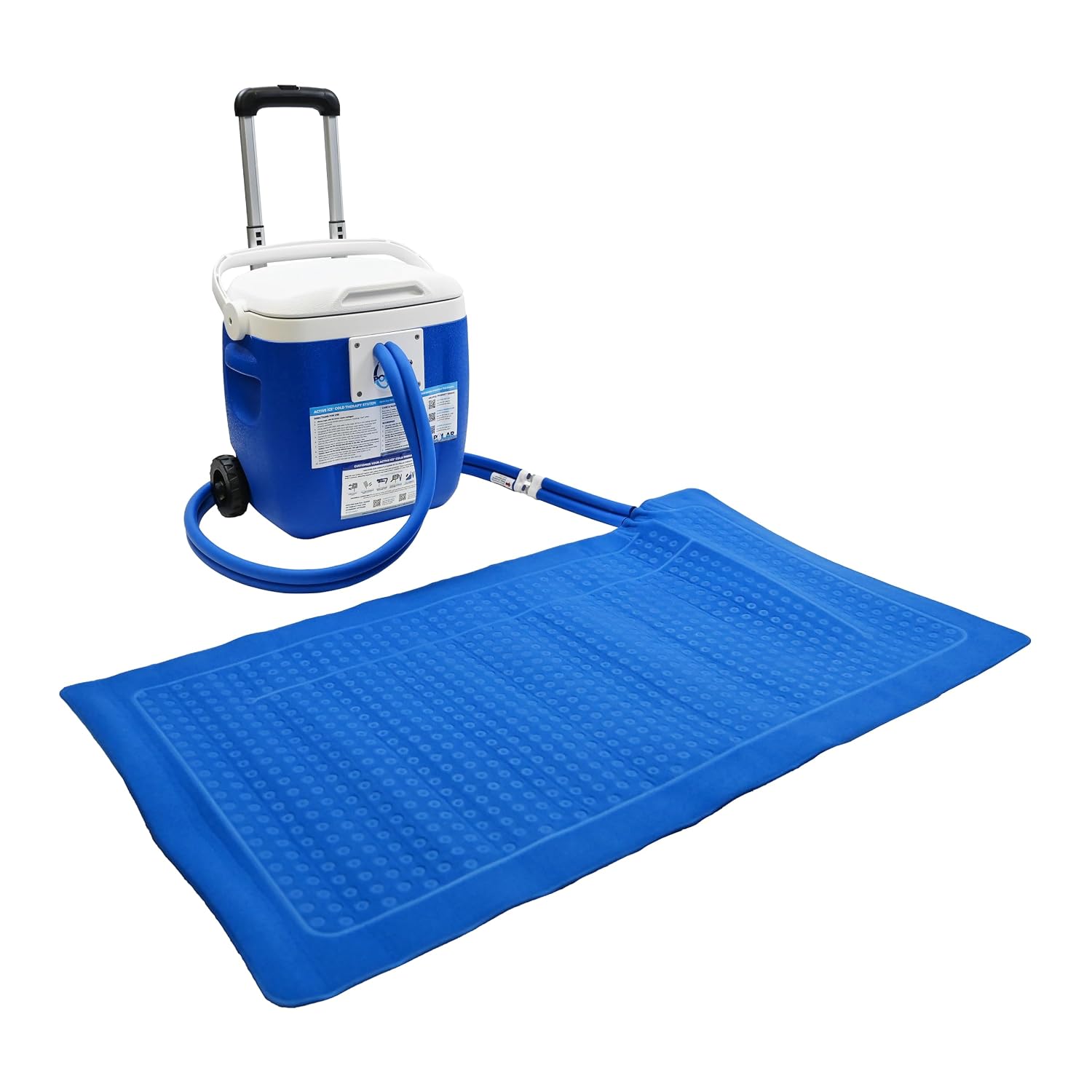
Polar Active Ice 3.0 is what Amazon usually means by “cryotherapy machine”: a circulating cold pad system, not a −110°C cabin. Buy it for knees, shoulders, and targeted recovery — not as a chamber substitute. Uses ice + water circulation through a pad. Temperature control is pad contact and flow, not nitrogen gas. Useful after surgery or for focal soreness when whole-body immersion is unnecessary or contraindicated. Choose Polar-class machines for local jobs. Choose CWI when you want whole-body immersion cooling.
Estimated ownership: about $420 in year 1 and
$520 over 3 years.
Hardware + occasional ice and pad replacement. Much cheaper than weekly WBC if your goal is local analgesia.
Commercial / Studio · Chamber
Best for: Trying extreme cold-air exposure without buying hardware — novelty, travel, or supervised first exposures
Studio Nitrogen WBC is the marketing apex of cryotherapy: −100°C-class air for 2–4 minutes. Buy sessions to sample the modality — not because the chamber temperature alone proves deeper recovery than cold water. WBC protocols in research are typically 2–4 minutes in extreme dry cold air with protective extremities covered. Immediate post-session skin readings can look dramatic; sustained tissue cooling and limb blood-flow reductions often favor cold water in head-to-head work. Choose studio WBC for convenience/novelty. Choose water when cost-per-cooling-session and tissue cooling matter.
Estimated ownership: about $2,800 in year 1 and
$8,400 over 3 years.
Assumes ~1 session/week at ~$55 average. Packages lower per-visit cost; daily athletes pay much more. Hardware purchase for true LN2 chambers is commercial five-to-six figures — not modeled here.
Detailed reviews
DIY Stock Tank + Active Aqua Chiller
Pros
Cons
Choose this if
Skip this if
Ice Barrel 300
Pros
Cons
Choose this if
Skip this if
Amazon Plunge + Chiller Kit
Pros
Cons
Choose this if
Skip this if
Wilder XL Ice Bath
Pros
Cons
Choose this if
Skip this if
Polar Active Ice 3.0
Pros
Cons
Choose this if
Skip this if
Studio Nitrogen WBC Chamber
Pros
Cons
Choose this if
Skip this if
Cost reality vs the cryo membership
A year of weekly studio WBC often lands in the mid-to-high thousands. A Wilder-class ice tub is under $100 to start. A DIY Active Aqua-class plunge is usually still cheaper over three years than treating the chamber as your primary recovery appliance. Local Polar-class machines sit in the middle for people who only needed a knee or shoulder pad all along.
If you already love occasional WBC as a supervised novelty, keep it — just stop pretending the invoice is required for “pro recovery” when a measured plunge exists.
How to choose without the marketing fog
- Name the job. Local joint cold ≠ whole-body immersion ≠ extreme air novelty.
- Check contraindications with a clinician when relevant.
- Run a 3–4 week immersion test with an inexpensive tub before signing cryo packages.
- Measure water temperature in a researched recovery band (often ~10–15°C / 50–59°F to start).
- Add a chiller when ice logistics — not boredom — are the bottleneck.
- Keep WBC optional for travel or rare supervised sessions once home water works.
Quick recommendations by persona
- Leaving a cryo studio: DIY Active Aqua or Amazon Plunge + Chiller kit
- Small space immersion: Ice Barrel 300
- Just testing water: Wilder XL Ice Bath
- Knee/shoulder focus only: Polar Active Ice 3.0
- Occasional supervised air: Studio Nitrogen WBC
The air temperature is colder — often below −100°C for a few minutes. That does not automatically mean deeper or longer tissue cooling. Water conducts heat far better than air, so a 10–15°C plunge can outperform extreme air on muscle temperature and limb blood flow in head-to-head studies. Generally no. True liquid-nitrogen whole-body chambers are commercial systems. Amazon “cryotherapy” listings are usually circulating ice-pad machines, ice baths, or chillers — useful products, but not −110°C walk-in cabins. Not clearly. Cochrane review quality for WBC soreness outcomes is limited, and narrative reviews note cheaper modalities can offer comparable effects. Do not pay chamber premiums for a certainty the literature does not provide. For local cold: circulating systems like Polar Active Ice. For whole-body cold stress: an ice bath or chilled plunge. Those are different jobs — pick the modality that matches the body area and budget. Yes — travel, supervised first exposures, or occasional novelty when you will not maintain a plunge. It makes less sense as a multi-times-weekly recovery plan versus owning immersion hardware. Both extreme air and immersion have contraindications (cardiovascular disease, uncontrolled hypertension, Raynaud’s, pregnancy concerns, cold urticaria, etc.). WBC studios usually require screening; home plunges put the screening burden on you. Get clearance when needed.Cryotherapy chambers vs cold water FAQ
Is a cryotherapy chamber colder than a cold plunge in 2026?
+
Can I buy a real nitrogen WBC chamber on Amazon?
+
Is whole-body cryotherapy proven better for soreness than cold water?
+
What Amazon product is closest to “cryotherapy” at home?
+
Does studio WBC still make sense sometimes?
+
Any safety notes?
+
This comparison is designed for practical decision-making. Product capabilities, pricing, and memberships change quickly, so treat battery claims, plan costs, and feature availability as moving targets.
Cochrane review of WBC for post-exercise soreness: evidence quality is limited; WBC is not clearly superior to cheaper cold options on the outcomes that matter most to everyday athletes. Key framing paper: extreme air temperatures create a steep gradient, but air’s poor thermal conductivity limits deep tissue cooling — and cheaper modalities can offer comparable effects. Skin-temperature kinetics: WBC can look colder immediately post-exposure, while CWI often keeps skin colder longer across the following hour. After matched exercise, CWI produced greater reductions in limb blood flow and muscle temperature than a short WBC exposure — a core reason water often beats chamber marketing. Foundational CWI recovery review: many protocols cluster around roughly 10–15°C water for several minutes — the band home plunges should hold. Physiology overview placing WBC and CWI on the same cryotherapy spectrum while emphasizing conductivity and protocol heterogeneity.
Related Keersa guides: Cold Plunge Setup Guide and Cold Exposure Timing Around Training
Hardware and schedule companions once you choose water over chamber memberships.
Affiliate disclosure: some product links on Keersa Health may earn a commission at no extra cost to you.
Editorial recommendations are independent of commercial relationships.
Read our full disclosure.
Sources and editorial notes
Bottom line
Cryotherapy chambers win on spectacle. Cold water usually wins on conductivity, sustained cooling, and ownership math. Use Amazon local cryo machines for focal jobs, use immersion for whole-body cold stress, and treat studio WBC as an optional supervised experience — not the evidence-backed default. Related: Cold Plunge Setup Guide, Cold Exposure Timing Around Training, Contrast Therapy Protocols, and Home Sauna Types Compared.
Next: Infrared vs Traditional Heat Physiology, Safety/Contraindications, and Designing a Heat and Cold Routine.