Heat & Cold guide · Updated 2026
Infrared vs Traditional Heat Physiology: Wavelengths, Core Temperature & What Actually Differs
A clear, practical look at infrared versus traditional sauna heat — air temperature, core-temperature response, sweat, cardiovascular strain, and four Amazon-reachable products that map each heat class.
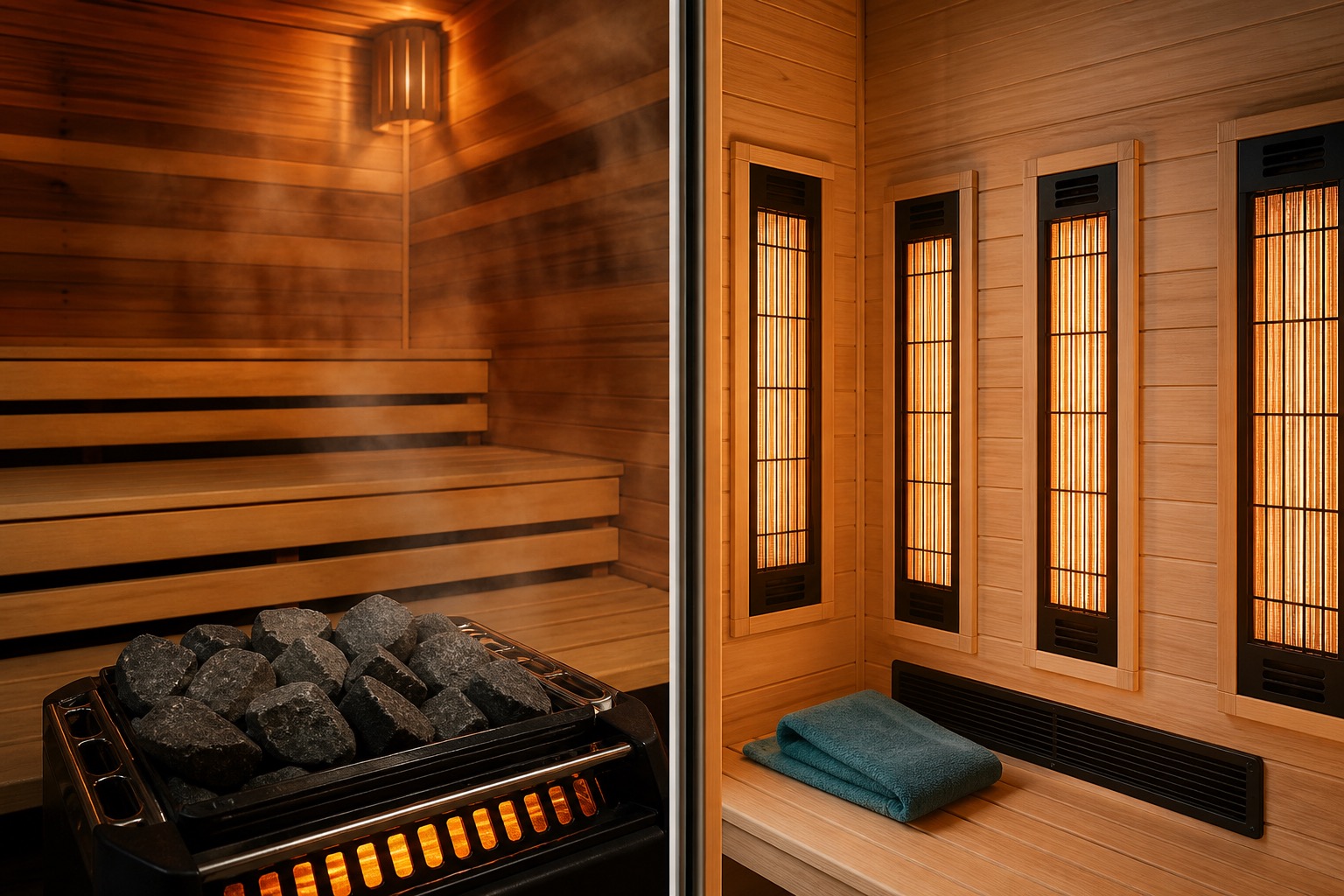
Both infrared and traditional saunas can feel fantastic — the trick is knowing why they feel different. Rock heat and far-infrared emitters are both honest tools for passive heat practice; they just ask different things of your body. Once you understand air temperature, core temperature, cardiovascular strain, and session design, picking a cabin (or a blanket) gets a lot more fun — and a lot less hype-driven.
We kept this guide tight: four Amazon-listed products that map each heat class, plus the physiology that helps you match the right heater to your goals. For broader buying form factors, see Home Sauna Types Compared. For session recipes, see Sauna Protocols for Cardiovascular Health.
Key takeaways
- Best Amazon traditional cabin match: Backyard Discovery Henley Traditional Cabin.
- Best traditional heat engine (room required): Harvia KIP Electric Sauna Heater.
- Best Amazon far-IR cabin exemplar: Dynamic Barcelona Infrared Cabin.
- Best soft-IR experiment: HigherDOSE Infrared Sauna Blanket.
- Physiology rule: high-air rock heat ≠ far-IR panels ≠ wrap blankets — even when all three make you sweat.
- Biggest buying mistake: buying infrared for “Finnish sauna benefits” without matching heat class, temperature, or duration.
How we evaluate heat physiology options
Editorial scores favor products that honestly represent a heat class and are buyable now — not the loudest detox claim. We score across five pillars:
- Heat-class fidelity (30%) — traditional rock heat vs far-IR vs soft wrap.
- Core-stimulus realism (20%) — likelihood of meaningful thermal strain in common protocols.
- Amazon practicality (20%) — complete cabin vs heater-only vs portable.
- Adherence friction (15%) — warm-up, comfort, install, shared use.
- Ownership cost (15%) — hardware plus electrical/install reality.
Important limitation: Keersa Health scores are editorial synthesis. Heat is hormetic stress with medical contraindications.
What actually differs
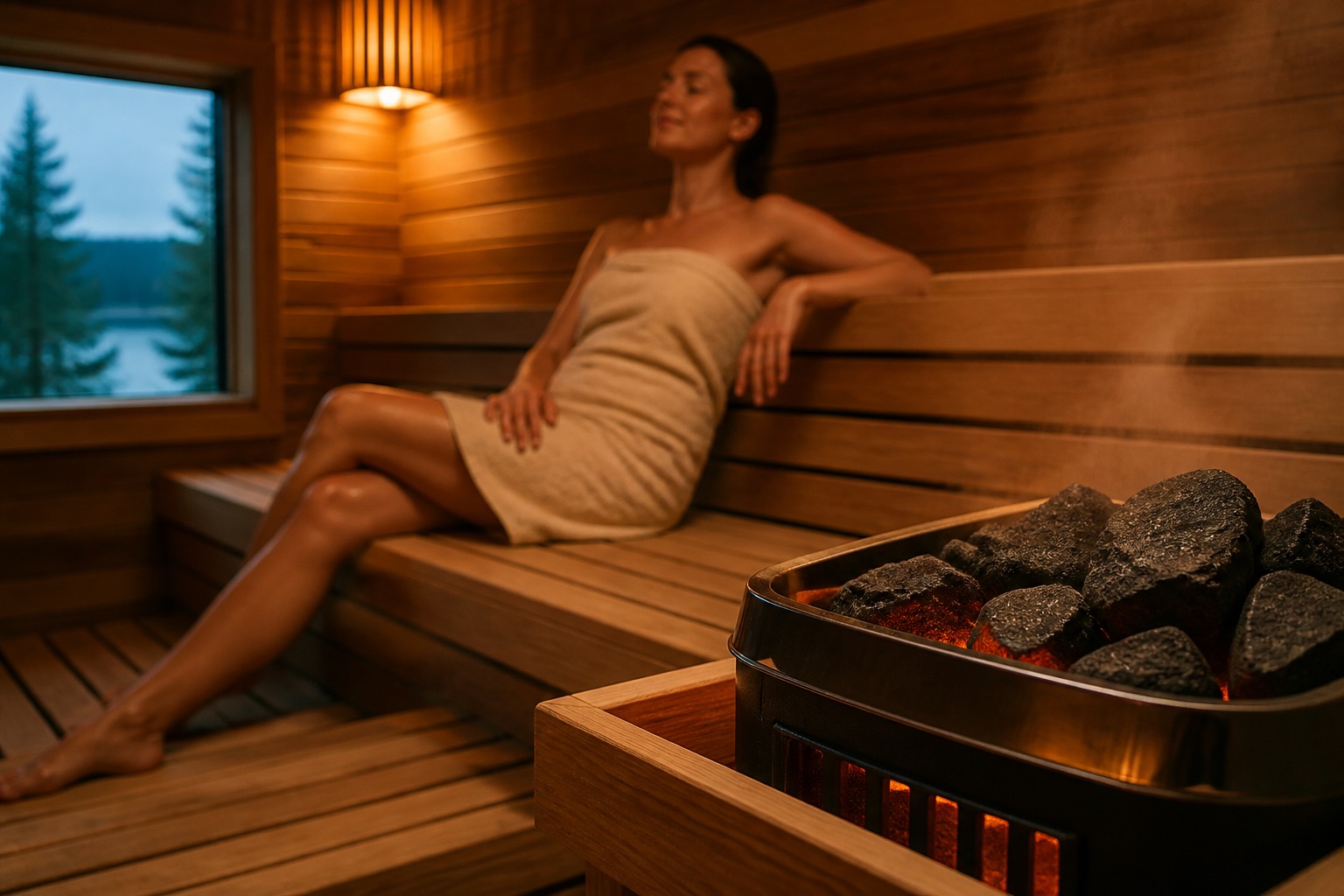
Traditional Finnish-class heat uses high environmental air temperature (often ~70–100°C) and a rock heater that can add humidity bursts (löyly). Landmark Finnish cardiovascular associations describe that practice class — not a 45–60°C IR cabin.
Far-infrared cabins use radiant emitters at lower air temperatures. Skin can feel warm quickly while core temperature rises more slowly or less, depending on protocol. Clinical IR/Waon literature exists, but it is not a drop-in replacement for Finnish cohort conditions.
Head-to-head reality check: Atencio et al. (2025) compared common-use hot water immersion, traditional sauna, and far-infrared sessions. Hot water immersion produced the largest core-temperature and immune responses; traditional sauna raised core more than far-infrared in that design; FIR was the least impactful on core and several downstream markers. That does not make IR “useless” — it means you should stop claiming identical physiology from mismatched heaters.
Features that matter most
- Air temperature class — 80°C rock room vs ~50–65°C IR cabin vs wrap contact heat.
- Heater type — stones + convection/radiation vs far-IR panels.
- Session length — short hot rounds vs longer milder IR sits.
- Install reality — outdoor cabin vs 240V heater vs plug-in IR vs blanket.
- Evidence match — buy the modality that matches the literature you care about.
Interactive comparison
Filter by form factor, sort by score or price, and pin up to three options for a focused side-by-side view.
Tradeoff:
Sticker price still matters here — most options are one-time hardware buys, so the three-year estimate mainly reflects purchase price plus expected upkeep.
Estimates are directional and based on common public pricing patterns. Promotions, refurbished units, family plans, and tier changes can move these numbers materially.
3-year cost of ownership
Device
Year 1
3-year estimate
Amazon Price
Backyard Discovery Henley Traditional Cabin
$3,900
$4,300
$3,498.99
Harvia KIP Electric Sauna Heater
$4,500
$4,800
$1,275
Dynamic Barcelona Infrared Cabin
$2,050
$2,200
$1,599.99
HigherDOSE Infrared Sauna Blanket
$750
$850
$699
Heat class decides the stimulus. Traditional rock heat is high-air Finnish-class practice. Far-IR cabins are milder-air radiant heat. Blankets are portable soft IR â useful tests, weak traditional matches.Traditional vs infrared vs blanket
Choose traditional cabin or Harvia rock heat if...
Choose a Dynamic-class IR cabin if...
Choose an IR blanket if...
Wait on the category if...
Below are deeper notes on every option in the comparison table, sorted by editorial score. Jump directly from the table pins or the cost section.
Backyard Discovery · Cabin
Best for: Amazon-complete traditional heat: high air temperature class with rocks for Finnish-style practice
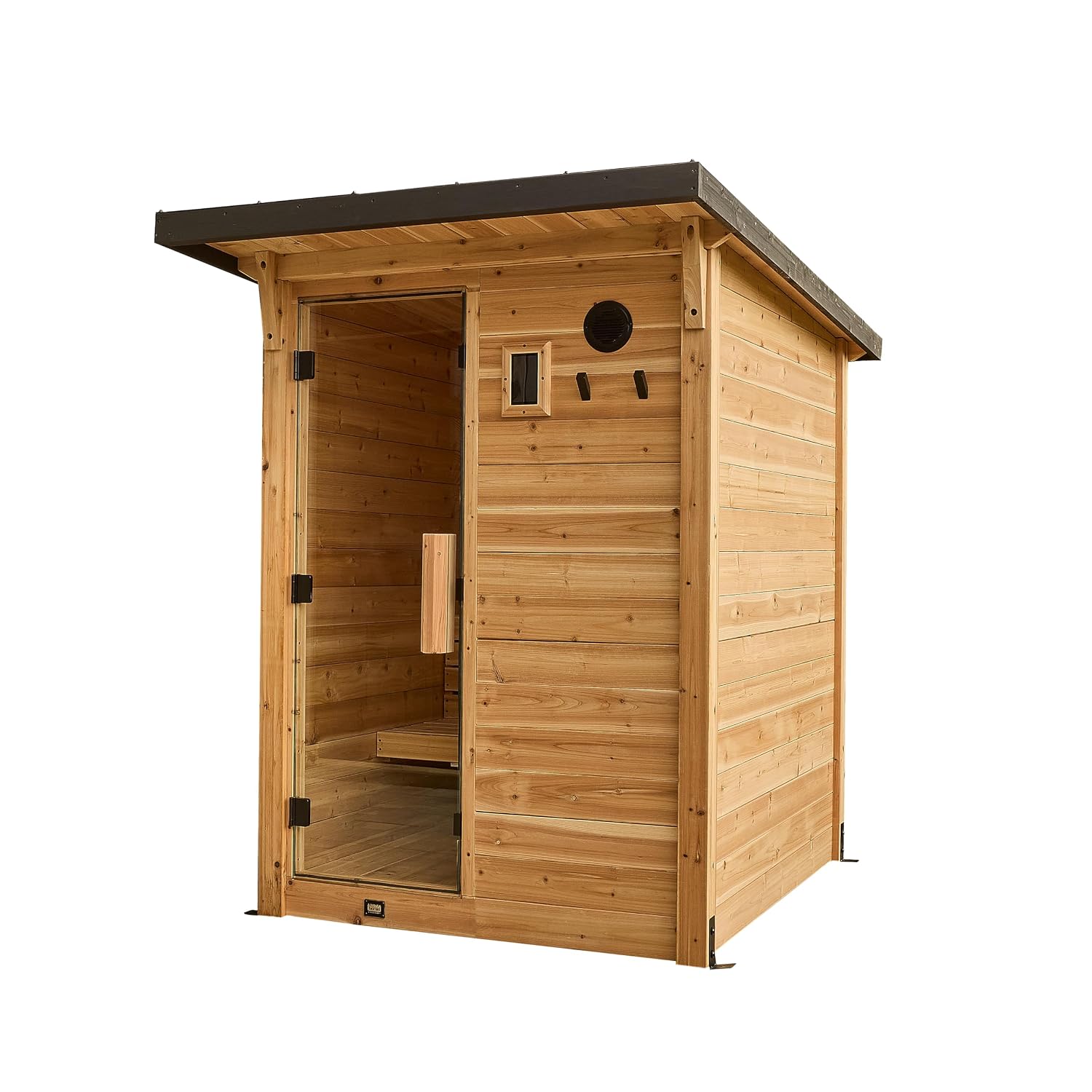
Henley is the clearest Amazon path to traditional sauna physiology: hot air, rock heater, outdoor cabin. Buy it when Finnish-class heat — not gentler IR comfort — is the job. Traditional protocols in physiology comparisons often use ~80°C air with short rounds — closer to this product class than a 50°C IR cabin. Plan a level pad, clearances, and a circuit that matches the heater rating before delivery day. Choose Henley for traditional outdoor practice. Skip it if you need indoor soft IR or zero yard work.
Estimated ownership: about $3,900 in year 1 and
$4,300 over 3 years.
Kit plus freight, pad/foundation, and electrician if needed. Outdoor upkeep adds modest annual cost.
Harvia · Heater
Best for: The traditional heat engine: rock mass and high air temperature when you already have (or will build) a room
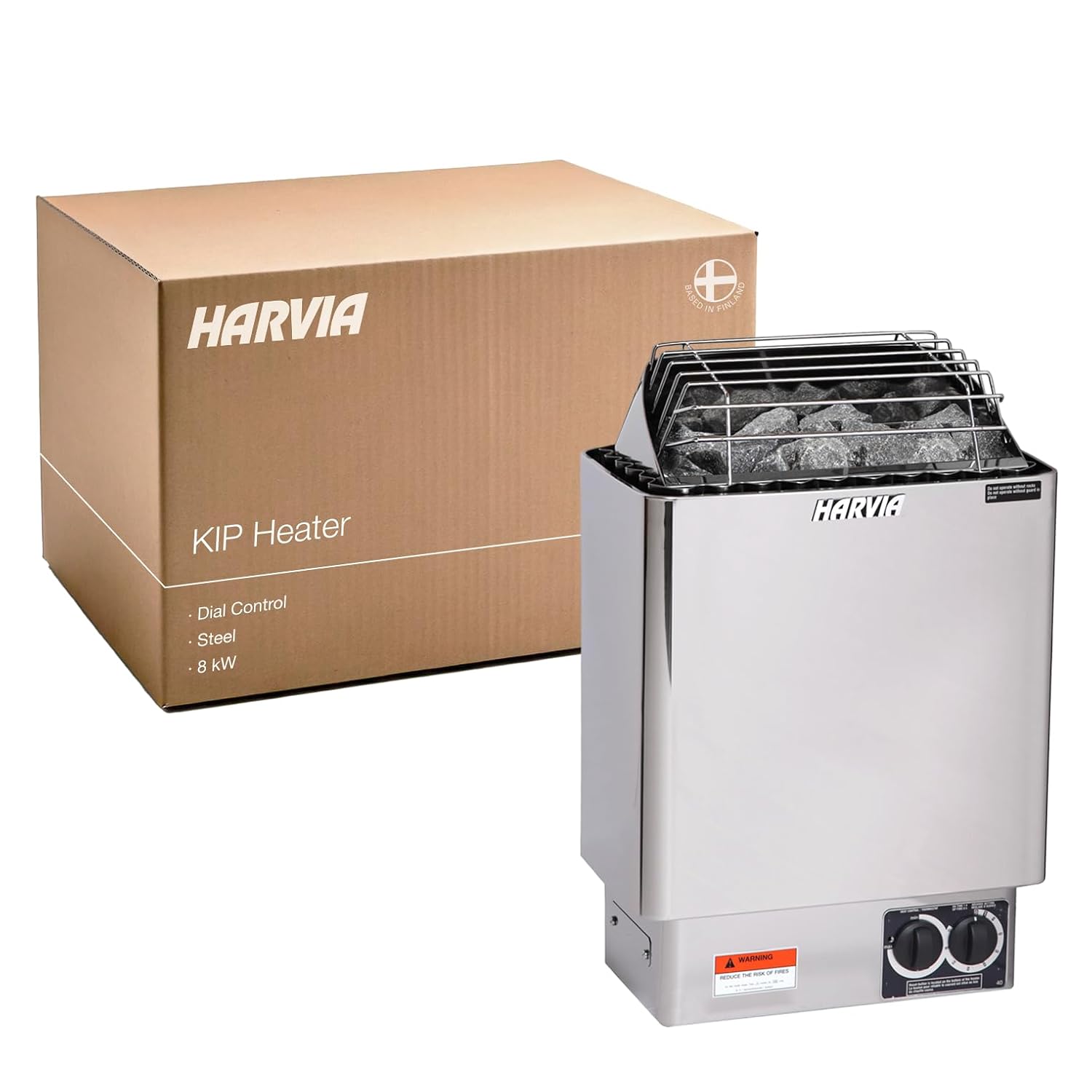
Harvia KIP-class heaters are what traditional heat physiology runs on: dense stones, high air temp, water-on-rocks steam. Buy the heater when the room is real — not as a magic box that replaces cabin construction. Match kW to cubic feet. A weak heater never recreates the traditional thermal stimulus. This is hardware for Finnish-style practice — not far-infrared panels. Choose Harvia when building traditional. Choose a complete cabin kit if you want one Amazon box.
Estimated ownership: about $4,500 in year 1 and
$4,800 over 3 years.
Heater price alone understates total: add cabin/room build, wiring, stones (included on many kits), and ventilation. Year costs assume a completed room.
Dynamic Saunas · Cabin
Best for: Far-infrared cabin heat at lower air temperatures with easier daily adherence for many households
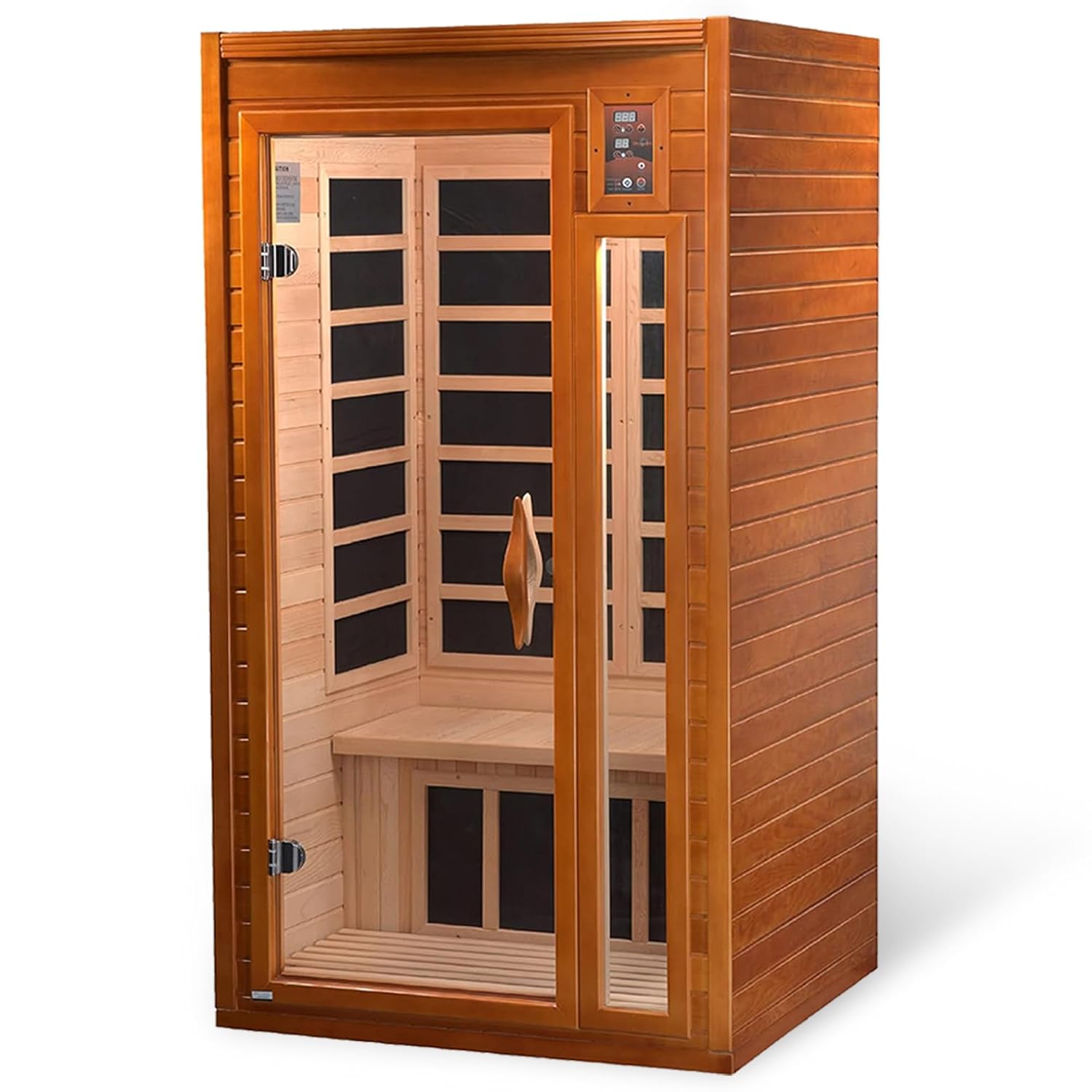
Dynamic Barcelona is the physiology article’s IR cabin exemplar: real far-IR emitters, lower air temps, Amazon buyable. Buy for IR comfort and frequency — not as a literal clone of Finnish 80°C cohort conditions. Far-IR literature (including Waon-style protocols) is a different evidence stack than Finnish traditional cohorts. If maximum core-temperature stimulus is the goal, traditional high-air protocols or hot water immersion usually win in head-to-heads. Choose Barcelona for indoor IR practice. Choose Henley/Harvia when traditional heat class is the point.
Estimated ownership: about $2,050 in year 1 and
$2,200 over 3 years.
Cabin + freight/delivery. Electricity is modest versus heating a traditional room to 80°C+.
HigherDOSE · Blanket
Best for: Portable far-infrared heat when a cabin is impossible — apartments, travel, budget Stage 1 heat
HigherDOSE-class IR blankets are the apartment and budget on-ramp: portable infrared sweat sessions without a wooden cabin. Buy to test heat habit consistency — upgrade to a cabin if you outgrow the zipper. Do not confuse blanket IR with Finnish 80°C rock sauna evidence. Hydrate, start shorter, and respect heat intolerance — portable does not mean risk-free. Choose a blanket to start. Move to a cabin when weekly use and space justify it.
Estimated ownership: about $750 in year 1 and
$850 over 3 years.
Blanket plus optional insert/liner. Best cheap experiment before cabin money.
Detailed reviews
Backyard Discovery Henley Traditional Cabin
Pros
Cons
Choose this if
Skip this if
Harvia KIP Electric Sauna Heater
Pros
Cons
Choose this if
Skip this if
Dynamic Barcelona Infrared Cabin
Pros
Cons
Choose this if
Skip this if

HigherDOSE Infrared Sauna Blanket
Pros
Cons
Choose this if
Skip this if
Wavelength without the mystique
Far-infrared is radiant energy in a band that heats surfaces efficiently. That is engineering, not magic detox physics. Traditional rooms also heat you — largely via hot air and radiation from stones/walls — at much higher air temperatures. Wavelength marketing that skips temperature, duration, and humidity is incomplete physiology.
How to choose a heat class
- Name the evidence you care about. Finnish traditional cohorts → rock heat. IR/Waon-style comfort protocols → far-IR cabin. Habit test → blanket.
- Decide install tolerance. Outdoor cabin, indoor 240V room, plug-in IR, or portable wrap.
- Match session design. Short hot traditional rounds are not the same dose as a long mild IR sit.
- Progress heat load. Beginners often start cooler/shorter regardless of modality.
- Re-check contraindications before chasing max core temperature.
Quick recommendations by persona
- Want Finnish-class stimulus: Backyard Discovery Henley (or Harvia heater + proper room)
- Want indoor IR adherence: Dynamic Barcelona
- Want cheapest heat test: HigherDOSE blanket
- Building a custom traditional room: Harvia KIP-class heater
Often less, when each modality is used the way people actually use it. A recent head-to-head comparing common-use protocols found traditional sauna raised core temperature more than far-infrared, while hot water immersion raised it most of all. Exact numbers depend on air temp, duration, clothing, and individual heat tolerance. No. Landmark Finnish cohort work describes traditional high-temperature sauna bathing (often around ~80°C air with rocks). Infrared cabins and blankets are a different heat class with a different evidence stack. Far-infrared emitters preferentially warm skin and superficial tissues via radiant heating, so air temperature can stay milder while you still feel warm. That comfort is real — it is not proof of identical core-cardiovascular strain to an 80°C rock room. Sweat is a cooling response, not a scoreboard for detox or cardiovascular adaptation. Track how you feel, heart rate, and session consistency — not towel weight. A traditional cabin with a rock heater (such as the Backyard Discovery Henley) or a Harvia-class heater in a proper room. Dynamic Barcelona and HigherDOSE are infrared tools. People with unstable cardiovascular disease, pregnancy concerns, recent illness, heat intolerance, or medications affecting heat response should get clinician guidance before aggressive heat protocols.Infrared vs traditional heat physiology FAQ
Does infrared raise core temperature as much as traditional sauna?
+
Are Finnish longevity findings about infrared saunas?
+
Why do infrared cabins feel “hotter on the skin” at lower air temperatures?
+
Is more sweat always better?
+
Which Amazon option matches traditional physiology best?
+
Who should be careful?
+
This comparison is designed for practical decision-making. Product capabilities, pricing, and memberships change quickly, so treat battery claims, plan costs, and feature availability as moving targets.
Direct modality comparison in common-use protocols: hot water immersion raised core temperature most; traditional sauna raised core more than far-infrared in this design; FIR was the least impactful on core and immune markers. Landmark Finnish cohort (~79°C mean traditional sauna) — the longevity associations people often paste onto infrared cabins without matching the heat class. Reviews passive heat modalities and why Finnish-style practice still carries the strongest outcome clustering. Early clinical summary of far-infrared / Waon-style work — useful, thinner, and not interchangeable with Finnish cohort conditions. Systematic review of dry sauna bathing outcomes and study-quality limits across heat practices.
Related Keersa guides: Home Sauna Types Compared and Sauna Protocols for Cardiovascular Health
Buying-form and protocol companions once you pick a heat class.
Affiliate disclosure: some product links on Keersa Health may earn a commission at no extra cost to you.
Editorial recommendations are independent of commercial relationships.
Read our full disclosure.
Sources and editorial notes
Bottom line
Infrared and traditional saunas both make you hot; they do not make the same physiology by default. Buy rock heat when you want Finnish-class air temperatures and cohort-matching practice. Buy far-IR when you want gentler air and frequent indoor sessions. Buy a blanket to test the habit — then stop arguing wavelengths as if they erase temperature and duration. Related: Home Sauna Types Compared, Sauna Protocols for Cardiovascular Health, Contrast Therapy Protocols, and Cryotherapy Chambers vs Cold Water.
Next: Safety, Contraindications, and Monitoring; Wearables During Thermal Stress; and Designing a Heat and Cold Routine.