Recovery guide · Updated 2026
Normatec and Medical Compression Compared: Same Family, Different Jobs
Athletic Normatec-class boots versus clinical SPCDs, APCDs, and hospital SCDs — indication, session design, and twelve systems across both worlds.
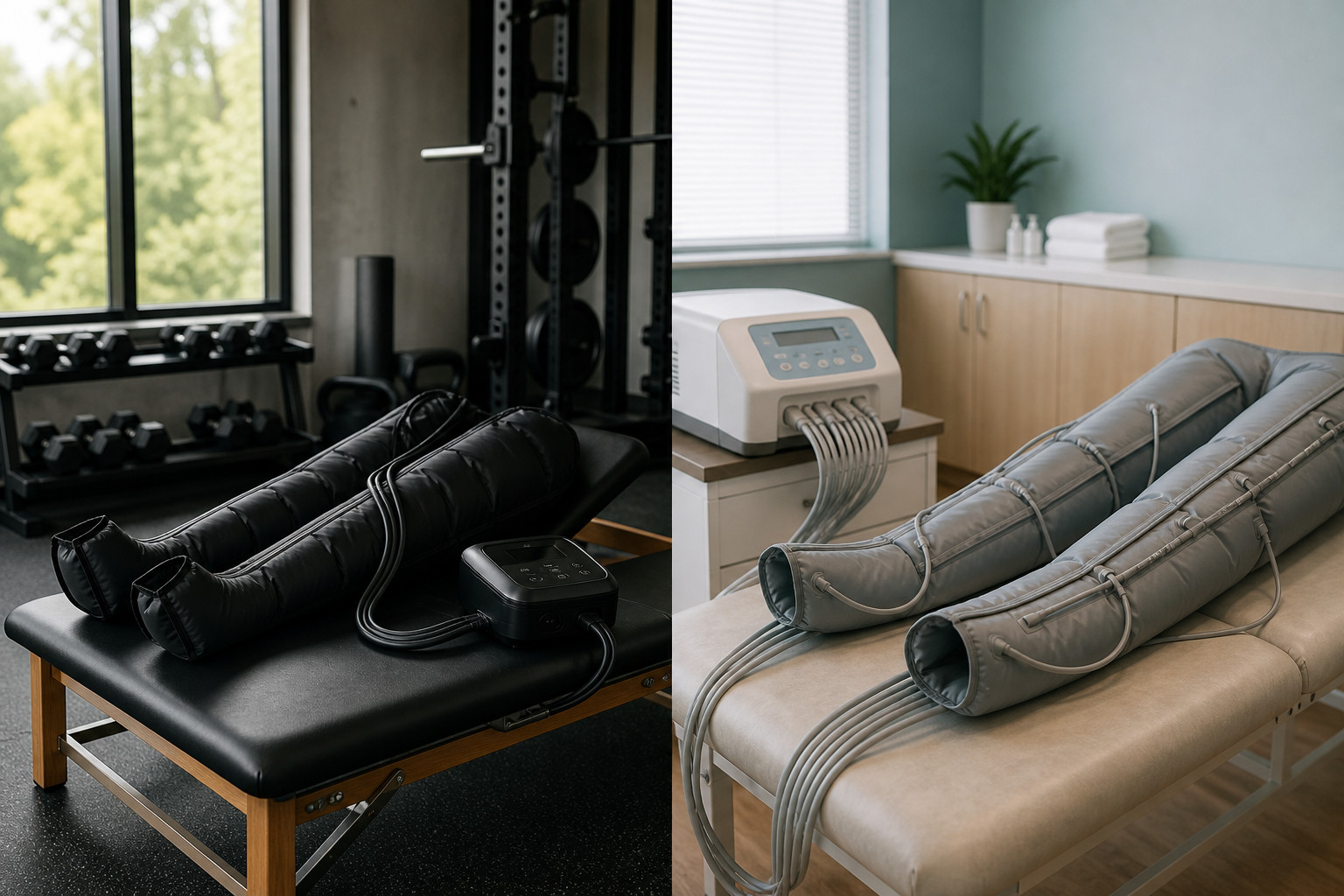
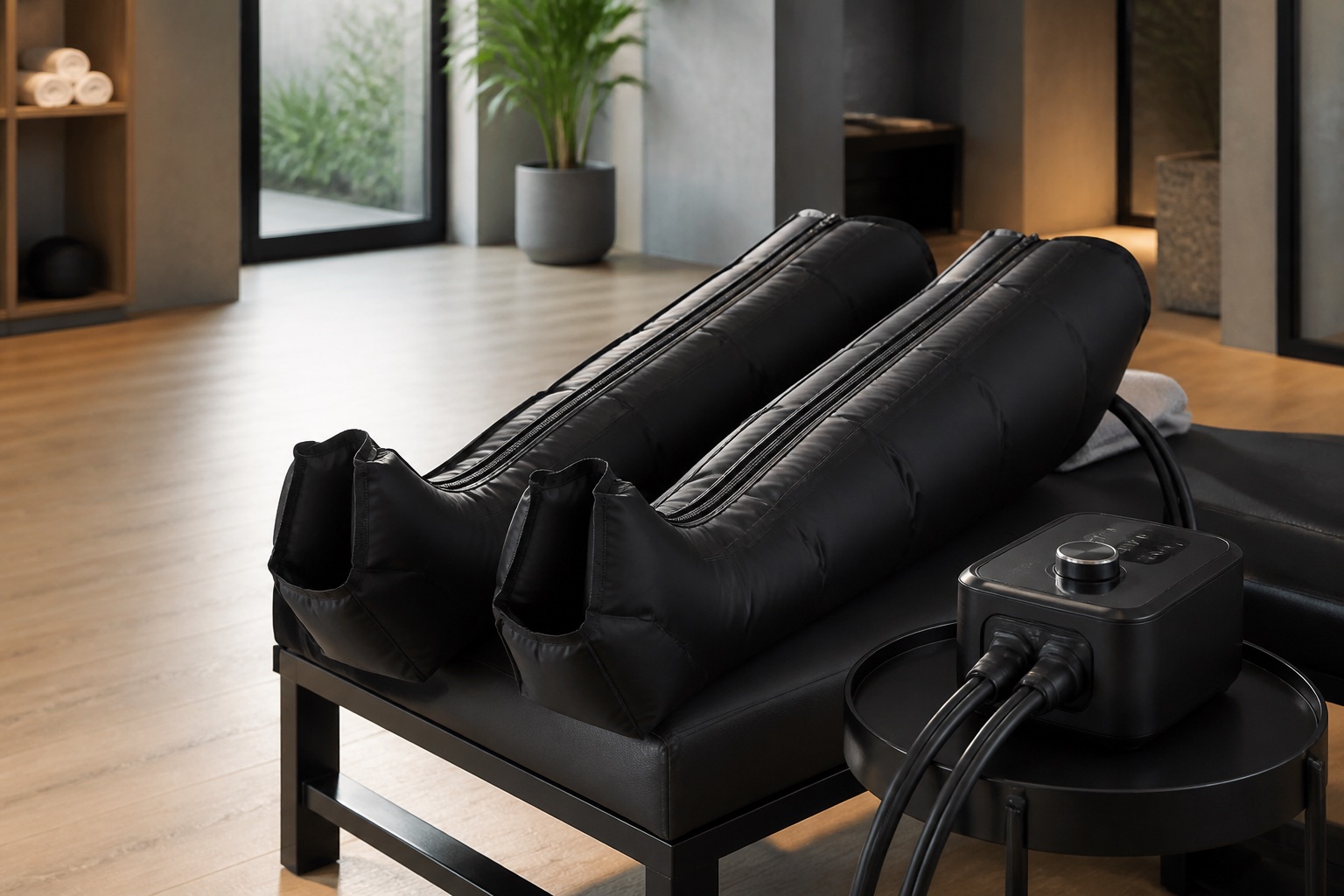
Normatec and “medical compression” get mashed together because both use intermittent pneumatic compression (IPC) — air chambers that inflate and deflate to move fluid and blood along a limb. That shared mechanism is real. The shopping mistake is treating mechanism as indication.
This comparison puts twelve systems on one table across four jobs: athletic recovery boots, home medical sequential pumps, advanced lymphedema APCDs, and hospital SCD platforms (plus one wearable medical contrast). For athletic buying details alone, see Pneumatic Compression Boots.
Key takeaways
- Same family, different jobs: athletic IPC ≠ hospital SCD ≠ lymphedema APCD.
- Best athletic reference: Hyperice Normatec 3 Legs.
- Best wireless athletic Normatec-class: Normatec Elite.
- Best direct athletic alternative package: Rapid Reboot REGEN Complete.
- Clearest medical home SPCD cousin: Bio Compression SC-2008-DL.
- Advanced lymphedema APCD lane: Tactile Flexitouch Plus or Lympha Press Optimal-class systems.
- Hospital DVT-prophylaxis lane: Kendall SCD 700 / Arjo Flowtron ACS900 class devices.
- Biggest category error: citing inpatient VTE literature to justify a 25-minute post-workout boot — or buying Normatec to replace a prescribed APCD.
Four jobs people confuse
- Athletic recovery IPC — short sessions (often ~15–30 minutes), soreness and perceived recovery, athlete ergonomics and apps.
- Home medical SPCD — clinician-directed sequential gradient therapy for edema/venous-lymphatic care, longer holds, DME documentation pathways.
- Advanced APCD — multi-garment, multi-mode systems for more complex lymphedema, often with proximal/trunk strategy.
- Hospital SCD / IPC — thromboprophylaxis workflows for immobilized or peri-operative patients under facility protocols.
Koya Dayspring sits nearby as a wearable medical contrast: compression for eligible patients who need mobility — still not a Normatec clone.
How we evaluate the comparison
Editorial scores here reward job clarity more than absolute “best boot.” A hospital SCD can score well for VTE pathways and still be a terrible athlete purchase. Pillars:
- Indication fit (30%) — recovery vs SPCD vs APCD vs hospital SCD.
- Protocol design (20%) — session length, gradient control, garment strategy.
- Access model (20%) — retail checkout vs prescription/DME vs facility capital.
- Evidence lane honesty (15%) — athletic soreness literature vs VTE/lymphedema literature.
- Ownership reality (15%) — three-year cost and who actually operates the device.
What the evidence supports — by lane
Athletic lane: lower-limb IPC meta-analysis work finds modest benefits for pain/soreness and smaller, inconsistent effects on muscle function. Critically appraised endurance literature supports short-term DOMS relief more than reliable extended damage cleanup.
Hospital VTE lane: IPC has a long clinical history for thromboprophylaxis. Pooled adjunctive-IPC reviews report lower VTE/DVT risk with low-certainty evidence and funding caveats; the large PREVENT trial in critical care found no significant proximal-DVT reduction when IPC was added to pharmacologic prophylaxis. Translation: medical IPC is serious — and still context-dependent — not a marketing blank check for consumer boots.
Lymphedema lane: pneumatic compression is a recognized modality inside clinician-directed care. Advanced devices exist because limb-only athlete boots are not the same as APCD garment systems. This guide does not replace a lymphedema therapist’s device selection.
Specs that matter for the comparison
- Indication class — recovery appliance vs medical SPCD/APCD vs hospital SCD.
- Chambers and garments — legs-only athletic kits vs multi-chamber medical garments including trunk options.
- Session design — 15–30 minute athletic blocks vs longer clinical holds vs near-continuous hospital prophylaxis.
- Access — Amazon/direct retail vs prescription/DME vs facility supply.
- Evidence borrow risk — never paste DVT RCTs onto DOMS shopping decisions.
Interactive comparison
Filter by form factor, sort by score or price, and pin up to three options for a focused side-by-side view.
Tradeoff:
Sticker price still matters here — most options are one-time hardware buys, so the three-year estimate mainly reflects purchase price plus expected upkeep.
Estimates are directional and based on common public pricing patterns. Promotions, refurbished units, family plans, and tier changes can move these numbers materially.
3-year cost of ownership
Device
Year 1
3-year estimate
Amazon Price
Hyperice Normatec 3 Legs
$950
$1,000
$899
Hyperice Normatec Elite
$1,150
$1,220
$1,099
Tactile Medical Flexitouch Plus
$2,200
$3,800
—
Hyperice Normatec 3 Lower Body
$1,200
$1,260
$1,149
Lympha Press Optimal Plus
$2,000
$3,500
—
Bio Compression SC-2008-DL
$1,000
$1,200
—
Therabody RecoveryAir PRO
$600
$650
$1,149.99
Rapid Reboot REGEN Complete
$1,550
$1,650
—
QUINEAR Professional 4-Chamber System
$390
$430
$299.99
Koya Dayspring
$1,800
$3,200
—
Cardinal Health Kendall SCD 700
$500
$500
—
Arjo Flowtron ACS900
$500
$500
—
If you remember one filter: indication first. Chamber count and brand prestige are secondary.Choose by job, not by logo
Choose Normatec / RecoveryAir / Rapid Reboot / QUINEAR if...
Choose Bio Compressionâclass SPCDs if...
Choose Flexitouch / Lympha Press APCD-class if...
Choose hospital SCD / Flowtron-class if...
Below are deeper notes on every option in the comparison table, sorted by editorial score. Jump directly from the table pins or the cost section.
Hyperice · Boots
Best for: The category standard: 5 overlapping leg zones, 7 levels, ZoneBoost, Pulse technology
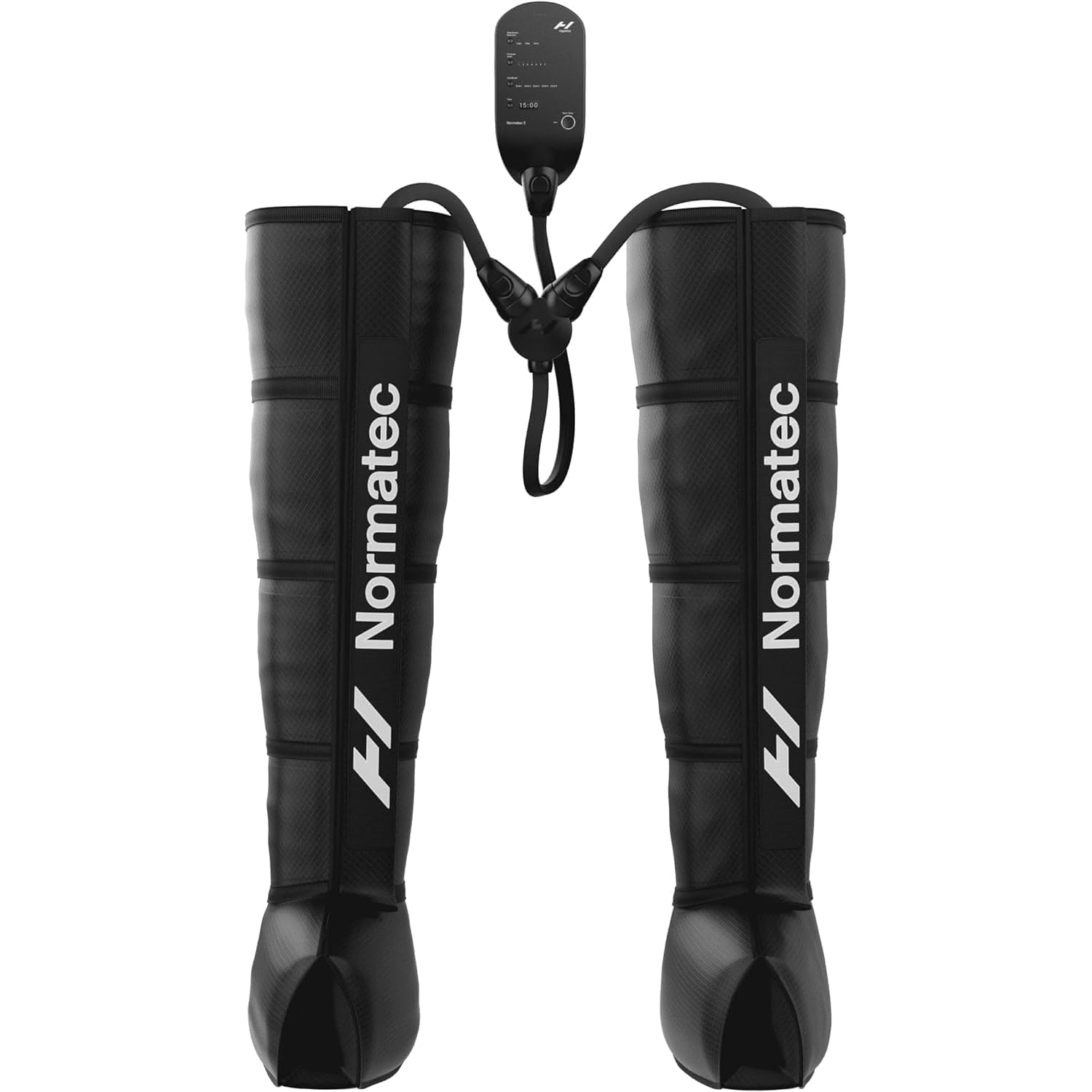
Normatec 3 Legs is still the reference sequential boot: Pulse patterning, ZoneBoost, seven levels. Buy it when you want the standard athletes keep comparing everything else against. Five overlapping leg zones with biomimetic Pulse sequencing are the product’s core, not the logo. Standard size covers a wide height band but check thigh circumference limits. Choose Legs for the classic system. Choose Lower Body if hips are part of every session.
Estimated ownership: about $950 in year 1 and
$1,000 over 3 years.
Legs system. Hip/arm attachments cost extra. Battery ~2–3 hours continuous.
Hyperice · Boots
Best for: Normatec Pulse and ZoneBoost without hoses — wireless full-leg recovery
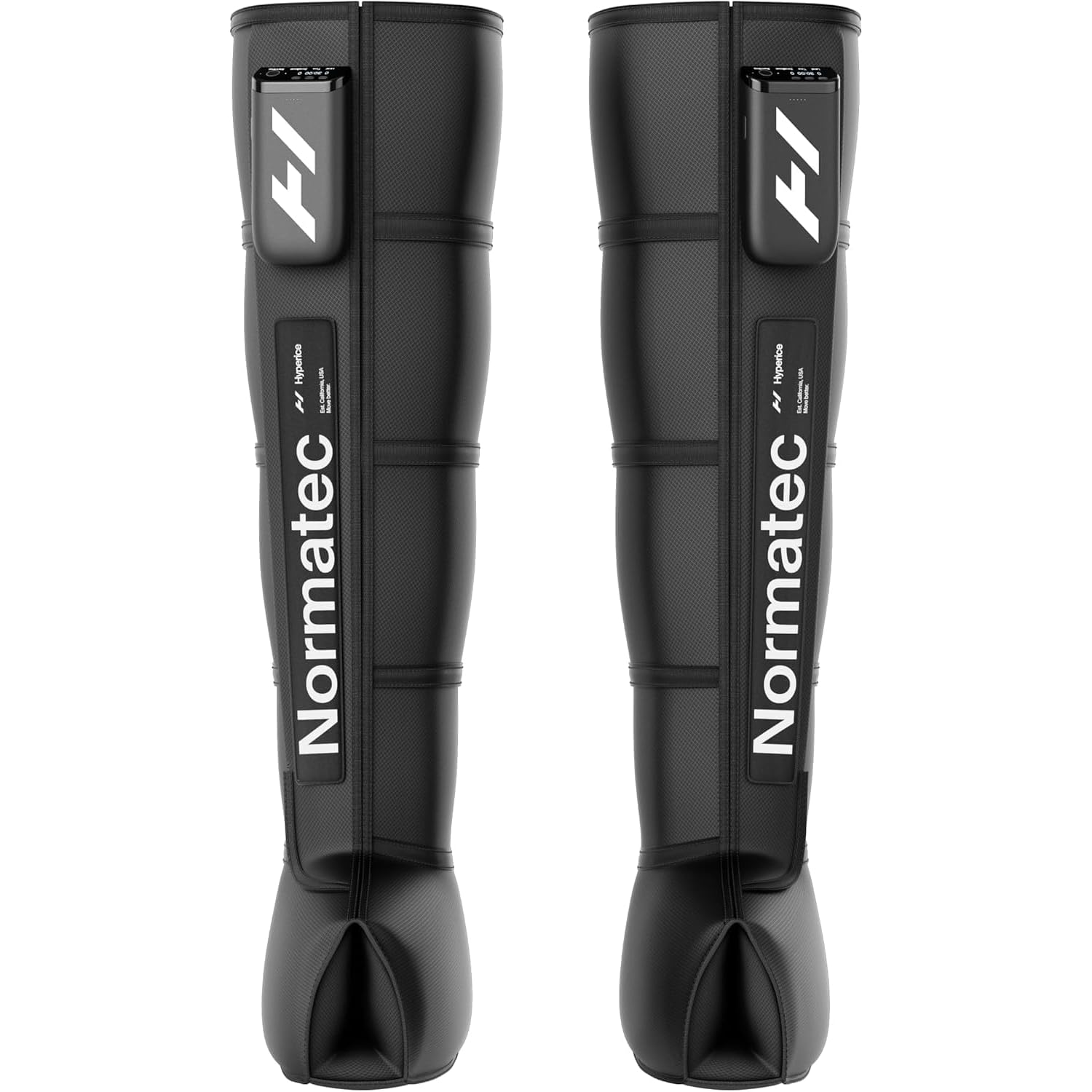
Normatec Elite brings Pulse and ZoneBoost into a hose-free boot. Buy it when you want Normatec sequencing and wireless freedom in one package — and your budget can absorb the upgrade. On-boot control units remove the control-brick dance of Normatec 3. Still a full-leg system — check Short/Standard/Tall sizing carefully. Choose Elite for wireless Normatec. Choose JetBoots Prime to spend less on wireless.
Estimated ownership: about $1,150 in year 1 and
$1,220 over 3 years.
Wireless boots. Battery replacement risk is the long-term ownership wild card.
Tactile Medical · Medical
Best for: Advanced pneumatic compression device (APCD) therapy for clinically indicated lymphedema with trunk preparation logic
Flexitouch Plus is the APCD many lymphedema clinics actually mean. Comparing it to Normatec on chamber marketing alone misses the indication, garment strategy, and payer reality. Class: Advanced medical APCD. Chambers/segments: Many segmented chambers. Pressure framing: Clinician-directed APCD profiles. Athletic recovery devices optimize short sessions and perceived soreness; medical SPCDs/APCDs and hospital SCDs optimize clinician-directed fluid and VTE risk pathways. Flexitouch Plus is the APCD many lymphedema clinics actually mean. Comparing it to Normatec on chamber marketing alone misses the indication, garment strategy, and payer reality.
Estimated ownership: about $2,200 in year 1 and
$3,800 over 3 years.
Directional only — medical and hospital systems are often insurance-, prescription-, or facility-capital priced; patient out-of-pocket varies widely.
Hyperice · System
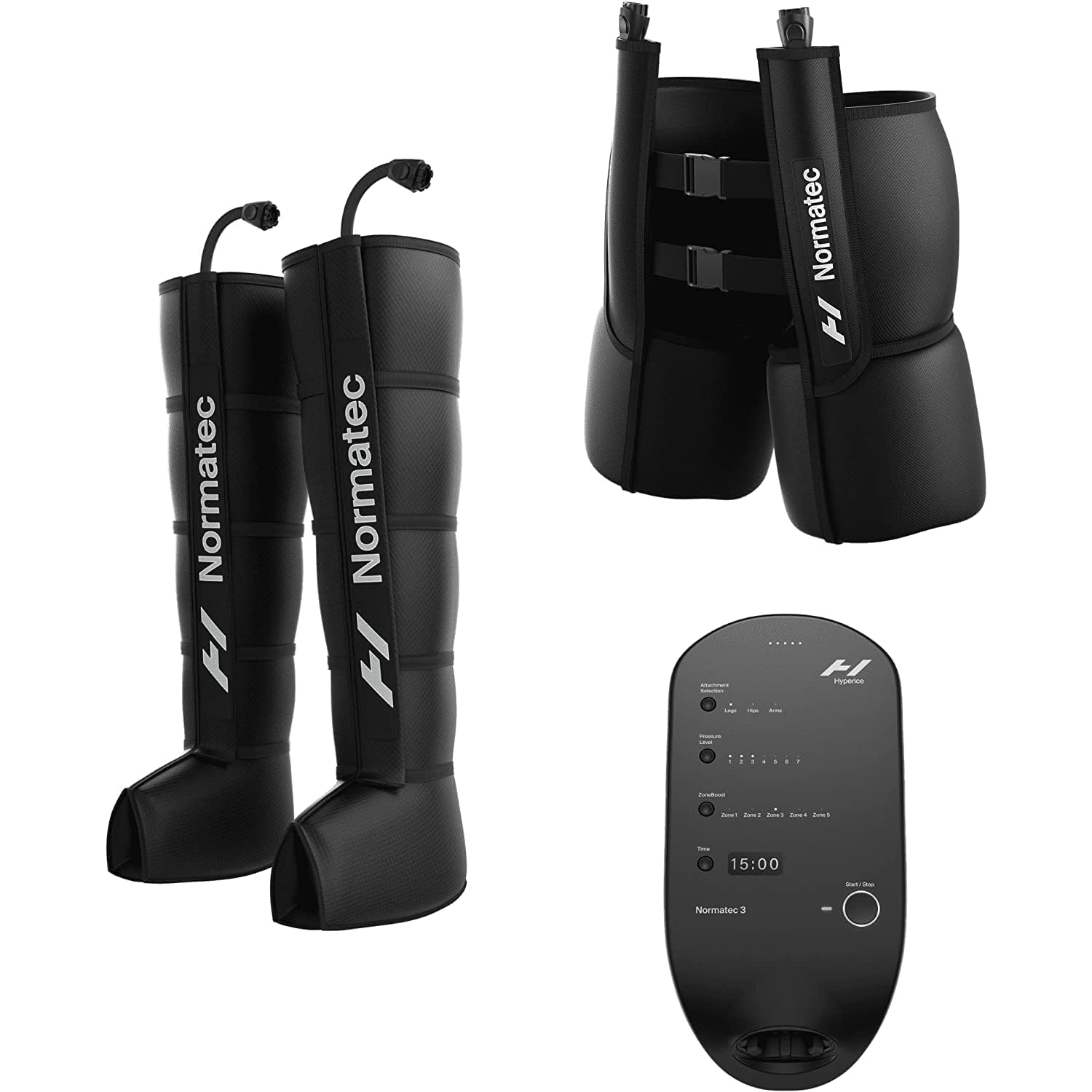
Best for: Legs plus hips in one Normatec 3 system when glutes/IT band/hip recovery is part of the weekly plan
Normatec 3 Lower Body is the legs-and-hips bundle for people who recover the whole kinetic chain. Buy it when hip sleeves will actually get used weekly — otherwise save money on Legs-only. Hip zones add coverage Normatec Legs alone cannot reach — useful for runners and field athletes. Same 7-level Pulse platform as Legs with ZoneBoost. Choose Lower Body for hips included. Choose Legs if hips would collect dust.
Estimated ownership: about $1,200 in year 1 and
$1,260 over 3 years.
Legs + hips bundle. Cheaper long-term than buying hips later à la carte if you know you need them.
Lympha Press · Medical
Best for: Advanced pneumatic compression for moderate–complex lymphedema under clinical protocols
Lympha Press Optimal-class systems are why “just buy Normatec for lymphedema” is bad advice. Advanced modes and proximal garments exist for clinical fluid management, not locker-room vibes. Class: Advanced medical APCD. Chambers/segments: High (APCD-class). Pressure framing: Clinician-programmed gradient protocols. Athletic recovery devices optimize short sessions and perceived soreness; medical SPCDs/APCDs and hospital SCDs optimize clinician-directed fluid and VTE risk pathways. Lympha Press Optimal-class systems are why “just buy Normatec for lymphedema” is bad advice. Advanced modes and proximal garments exist for clinical fluid management, not locker-room vibes.
Estimated ownership: about $2,000 in year 1 and
$3,500 over 3 years.
Directional only — medical and hospital systems are often insurance-, prescription-, or facility-capital priced; patient out-of-pocket varies widely.
Bio Compression Systems · Medical
Best for: Home medical sequential gradient compression for clinician-directed edema and venous/lymphatic care
SC-2008-DL is the clearest “medical cousin” shoppers confuse with Normatec: sequential pneumatic compression with clinical gradient intent. Buy it when a clinician is directing edema care — not because eight chambers look cooler on Instagram. Class: Medical SPCD / home DME. Chambers/segments: 8. Pressure framing: ~10–120 mmHg adjustable clinical window. Athletic recovery devices optimize short sessions and perceived soreness; medical SPCDs/APCDs and hospital SCDs optimize clinician-directed fluid and VTE risk pathways. SC-2008-DL is the clearest “medical cousin” shoppers confuse with Normatec: sequential pneumatic compression with clinical gradient intent. Buy it when a clinician is directing edema care — not because eight chambers look cooler on Instagram.
Estimated ownership: about $1,000 in year 1 and
$1,200 over 3 years.
Directional only — medical and hospital systems are often insurance-, prescription-, or facility-capital priced; patient out-of-pocket varies widely.
Therabody · Boots
Best for: Hose-tethered pro pressure control (to ~100 mmHg) with presets when wireless is optional
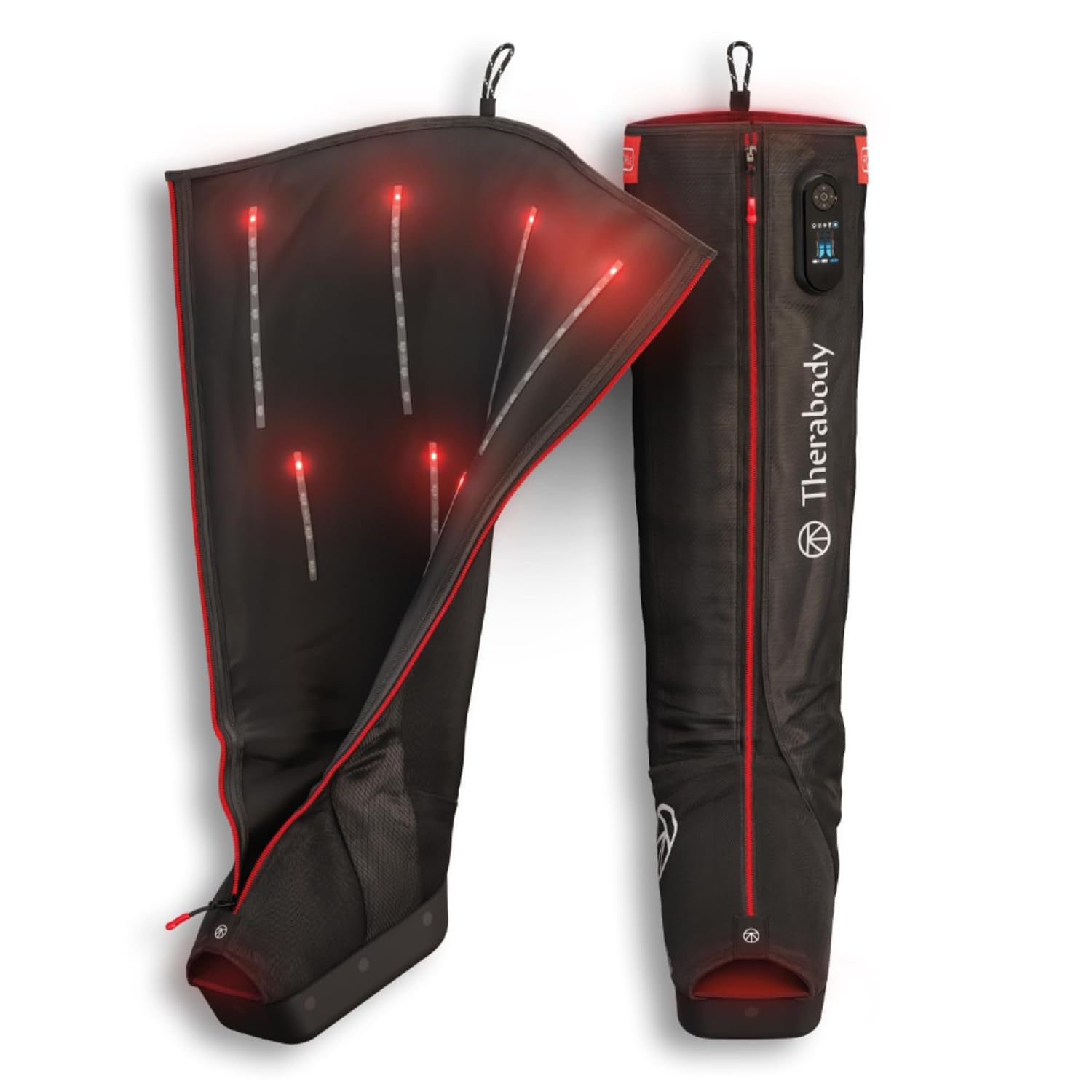
RecoveryAir PRO is Therabody’s hose-tethered precision play: customizable pressure, fast cycles, four chambers. Buy it when you want pro-style control at home and do not mind a hose. Pressure ceilings near 100 mmHg match common athletic IPC windows better than toy massagers. Presets help adherence; freestyle PRO mode helps experimenters. Choose RecoveryAir PRO for home precision. Choose JetBoots when hoses are a dealbreaker.
Estimated ownership: about $600 in year 1 and
$650 over 3 years.
Pump + boots. Often the smart mid-premium when you recover at home and do not need wireless.
Rapid Reboot · Boots
Best for: Athletes who want higher max pressure, per-chamber control, and a full legs-hips-arms kit without Hyperice branding
Rapid Reboot REGEN is the serious athletic alternative to Normatec packages: more pressure headroom and package flexibility, sold direct. Keep it in the athlete column of this comparison. Class: Athletic recovery. Chambers/segments: Multi-chamber full-body kit. Pressure framing: Up to ~200 mmHg claimed (athlete-tunable). Athletic recovery devices optimize short sessions and perceived soreness; medical SPCDs/APCDs and hospital SCDs optimize clinician-directed fluid and VTE risk pathways. Rapid Reboot REGEN is the serious athletic alternative to Normatec packages: more pressure headroom and package flexibility, sold direct. Keep it in the athlete column of this comparison.
Estimated ownership: about $1,550 in year 1 and
$1,650 over 3 years.
Directional only — medical and hospital systems are often insurance-, prescription-, or facility-capital priced; patient out-of-pocket varies widely.
QUINEAR · Boots
Best for: Best budget path to genuine four-chamber sequential full-leg compression
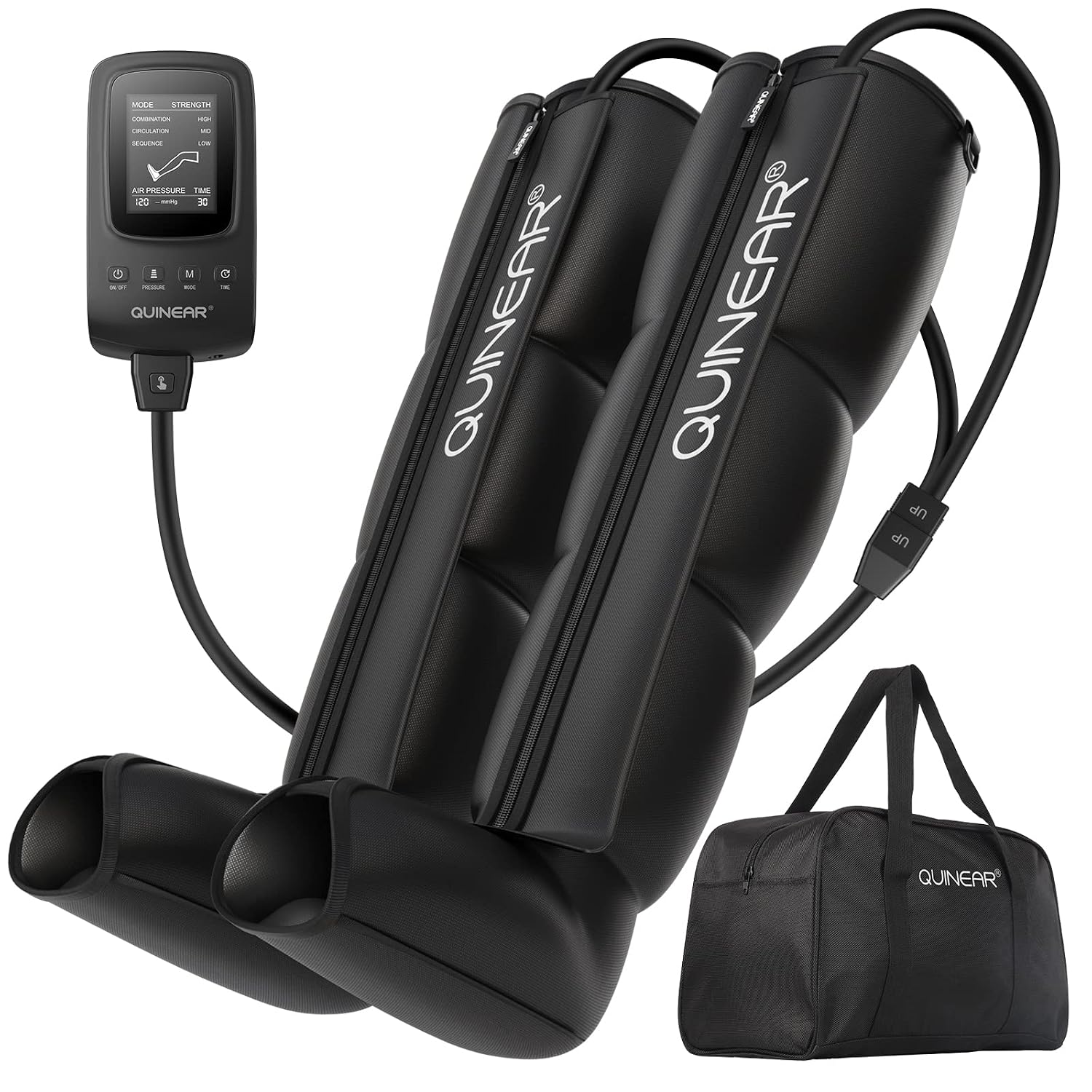
QUINEAR Professional is the value sequential system: four chambers, full-leg boots, sensor-assisted pressure. Buy it when you want real IPC-style sequencing without Normatec pricing. Four chambers is the practical minimum for athletic sequential compression in this category. Protocols in sports IPC reviews often land around 20–30 minutes near ~80 mmHg — match your controller intently. Choose QUINEAR Pro for value. Choose Therabody/Normatec when app polish and pressure precision matter more.
Estimated ownership: about $390 in year 1 and
$430 over 3 years.
Hardware only. The clearest “most of the benefit, fraction of the price” option in this set.
Koya Medical · Wearable
Best for: Mobile non-pneumatic sequential compression for eligible lymphedema patients who need daytime mobility
Dayspring is the useful contrast case: medical compression without looking like Normatec. It exists for mobility during prescribed edema care — proof that “compression” is a family of jobs, not one product. Class: Medical wearable (non-pneumatic). Chambers/segments: Segmented wearable actuators. Pressure framing: Prescription therapy profiles. Athletic recovery devices optimize short sessions and perceived soreness; medical SPCDs/APCDs and hospital SCDs optimize clinician-directed fluid and VTE risk pathways. Dayspring is the useful contrast case: medical compression without looking like Normatec. It exists for mobility during prescribed edema care — proof that “compression” is a family of jobs, not one product.
Estimated ownership: about $1,800 in year 1 and
$3,200 over 3 years.
Directional only — medical and hospital systems are often insurance-, prescription-, or facility-capital priced; patient out-of-pocket varies widely.
Cardinal Health · Hospital
Best for: Inpatient sequential compression for venous thromboembolism risk reduction under hospital protocols
Kendall SCD-class devices are what “medical compression” often means in surgery wards: sequential sleeves for DVT risk management. That job is not the same as post-workout Normatec. Class: Hospital SCD / DVT prophylaxis. Chambers/segments: SCD sleeve chambers. Pressure framing: Protocol-driven prophylaxis profiles. Athletic recovery devices optimize short sessions and perceived soreness; medical SPCDs/APCDs and hospital SCDs optimize clinician-directed fluid and VTE risk pathways. Kendall SCD-class devices are what “medical compression” often means in surgery wards: sequential sleeves for DVT risk management. That job is not the same as post-workout Normatec.
Estimated ownership: about $500 in year 1 and
$500 over 3 years.
Directional only — medical and hospital systems are often insurance-, prescription-, or facility-capital priced; patient out-of-pocket varies widely.
Arjo · Hospital
Best for: Facility intermittent compression for VTE risk pathways and clinical venous return support
Flowtron ACS900 represents hospital IPC hardware: engineered for clinical thromboprophylaxis contexts, not 25-minute couch recovery. Include it so “medical compression” stops meaning “more expensive Normatec.” Class: Hospital SCD / DVT prophylaxis. Chambers/segments: Hospital IPC sleeves. Pressure framing: Clinical prophylaxis profiles. Athletic recovery devices optimize short sessions and perceived soreness; medical SPCDs/APCDs and hospital SCDs optimize clinician-directed fluid and VTE risk pathways. Flowtron ACS900 represents hospital IPC hardware: engineered for clinical thromboprophylaxis contexts, not 25-minute couch recovery. Include it so “medical compression” stops meaning “more expensive Normatec.”
Estimated ownership: about $500 in year 1 and
$500 over 3 years.
Directional only — medical and hospital systems are often insurance-, prescription-, or facility-capital priced; patient out-of-pocket varies widely.
Detailed reviews
Hyperice Normatec 3 Legs
Pros
Cons
Choose this if
Skip this if
Hyperice Normatec Elite
Pros
Cons
Choose this if
Skip this if
Tactile Medical Flexitouch Plus
Pros
Cons
Choose this if
Skip this if
Hyperice Normatec 3 Lower Body
Pros
Cons
Choose this if
Skip this if
Lympha Press Optimal Plus
Pros
Cons
Choose this if
Skip this if
Bio Compression SC-2008-DL
Pros
Cons
Choose this if
Skip this if
Therabody RecoveryAir PRO
Pros
Cons
Choose this if
Skip this if
Rapid Reboot REGEN Complete
Pros
Cons
Choose this if
Skip this if
QUINEAR Professional 4-Chamber System
Pros
Cons
Choose this if
Skip this if
Koya Dayspring
Pros
Cons
Choose this if
Skip this if
Cardinal Health Kendall SCD 700
Pros
Cons
Choose this if
Skip this if
Arjo Flowtron ACS900
Pros
Cons
Choose this if
Skip this if
Decision framework
- Name the job. Soreness after training? Clinician-diagnosed edema? Hospital VTE pathway? These are not synonyms.
- Match the lane. Athletic retail for recovery. SPCD/APCD only with clinical direction. Hospital SCD only inside facility protocols.
- Ignore chamber peacocking. More chambers help sequencing — they do not automatically upgrade indication.
- Price the access model. A $900 Normatec and a $900 Bio Compression pump can share a sticker and still differ in who should own them.
- Stack other tools honestly. Percussion is local soft tissue — see Percussion Massage Devices. Athletic boot shopping details live in Pneumatic Compression Boots.
Quick recommendations by persona
- Athlete, category standard: Normatec 3 Legs
- Athlete, wireless: Normatec Elite
- Athlete, legs + hips kit: Normatec 3 Lower Body
- Athlete, direct alternative package: Rapid Reboot REGEN
- Athlete, mid-premium hose: RecoveryAir PRO
- Athlete, budget sequential: QUINEAR Professional
- Home medical SPCD (clinician-directed): Bio Compression SC-2008-DL
- Complex lymphedema APCD lane: Flexitouch Plus or Lympha Press Optimal-class
- Mobile medical wearable contrast: Koya Dayspring
- Hospital VTE pathway: Kendall SCD / Flowtron class — not a home Normatec decision
They share a family: intermittent pneumatic compression that squeezes limbs with air chambers. They do not share the same primary job. Normatec-class systems are engineered for short athletic recovery sessions and perceived soreness relief. Medical SPCDs, APCDs, and hospital SCDs are engineered around clinician-directed edema care or VTE risk pathways. Not as a casual substitute. Moderate-to-complex lymphedema care often needs advanced pneumatic compression devices with garment strategy, proximal clearance logic, and documentation for DME coverage. An athletic boot may feel similar mechanically and still be the wrong tool for the indication. Ask the clinician directing your care. No. Chamber count matters for how finely a pressure wave can sequence, but indication, protocol length, garment coverage, and clinician oversight matter more. An eight-chamber medical pump and a five-zone athletic boot can look related on a spec sheet while serving different patients. No. Hospital sequential compression devices are studied and used in thromboprophylaxis contexts. Athletic recovery meta-analyses ask different outcomes — soreness, function, damage markers. Borrowing DVT evidence to sell locker-room boots is a category error. Anyone with clot history, active DVT suspicion, severe peripheral artery disease, untreated significant venous disease, acute injury, or unexplained limb swelling. Medical devices in this guide assume clinical pathways — they are not DIY diagnostics. Stay in the athletic column: Normatec 3, Elite, Lower Body, RecoveryAir, Rapid Reboot, or a budget sequential boot. Use our Pneumatic Compression Boots guide for chambers, pressure, and wireless tradeoffs once the job is clearly recovery — not clinical edema care.Normatec vs medical compression FAQ
Are Normatec boots the same as medical IPC?
+
Can I use Normatec instead of a prescribed lymphedema pump?
+
Does more chambers mean more medical?
+
Do hospital SCDs prove Normatec prevents clots for athletes?
+
Who should talk to a clinician before any pneumatic compression?
+
If I only want athletic recovery, what should I buy?
+
This comparison is designed for practical decision-making. Product capabilities, pricing, and memberships change quickly, so treat battery claims, plan costs, and feature availability as moving targets.
Athletic IPC: trivial-to-small muscular-function effects; trivial-to-moderate for pain/soreness — the recovery-boot evidence tier, not DVT prophylaxis. Hospital context: adjunctive IPC associated with lower VTE/DVT risk in pooled RCTs, with low-certainty evidence and funding-related caveats — a different question than athletic soreness. Large critical-care RCT: adding IPC to pharmacologic prophylaxis did not significantly reduce proximal DVT — useful counterweight to “more compression always equals more medical benefit.” Athletic critically appraised topic: short-term DOMS relief possible without reliable extended EIMD cleanup — keeps Normatec-class claims in their lane.
Related Keersa guide: Pneumatic Compression Boots
Buying guide for athletic sequential boots (chambers, pressure, wireless vs hose) once you know you want the recovery job — not the clinical pathway.
Related Keersa guide: Percussion Massage Devices
A different local soft-tissue tool — useful when comparing modality jobs inside a recovery toolkit.
Related Keersa guide: Float Tanks and Sensory Deprivation
Nervous-system REST via flotation — a different recovery job than pneumatic limb compression.
Affiliate disclosure: some product links on Keersa Health may earn a commission at no extra cost to you.
Editorial recommendations are independent of commercial relationships.
Read our full disclosure.
Sources and editorial notes
Bottom line
Normatec-class boots and medical compression devices share pneumatic ancestry and diverge on indication, protocol, access, and evidence lane. Buy athletic systems for short recovery sessions and how hard legs feel. Use medical SPCDs/APCDs and hospital SCDs only inside the clinical jobs they were built for. Related: Pneumatic Compression Boots and Percussion Massage Devices.
Next in Recovery: Float Tanks and Sensory Deprivation — magnesium sulfate REST, stress evidence, and studio vs home economics.