Sleep guide · Updated 2026
Circadian Lighting for the Home: Hue, LIFX, Wake Lights & Therapy Panels
A detailed 2026 guide to circadian-friendly home lighting — Philips Hue, LIFX, Nanoleaf, Govee, wake-up lights, HappyLights, and specialty bulbs — with lux timing, costs, and setup advice.
Circadian lighting for the home is no longer just a smart-home hobby in 2026 — remote workers, early risers, and people fighting dull winter mornings are scheduling brighter days and warmer evenings on purpose. The category now spans tunable white smart bulbs, Matter/Thread ecosystems, bedside wake-up lights, bright morning therapy panels, and spectrum-first specialty fixtures. This guide compares the major options on morning brightness, evening wind-down, automation, cost, and real-world setup friction.
Circadian lighting is about timing light so mornings feel brighter and evenings feel dimmer and warmer — without relying on willpower every night. Smart bulb ecosystems schedule whole rooms. Wake-up lights and bedside ritual devices handle the hour around sleep and rising. Bright therapy-style panels deliver concentrated morning light when outdoor sun is scarce. Specialty warm fixtures target evening wind-down in one zone.
What these devices do for you is make the healthy default automatic: brighter when you want alertness, softer when you want sleep pressure to rise. They do not “hack melatonin” on their own if the house stays blazing cold-white until midnight, and they are usually a complement to outdoor morning light — not a replacement for it.
Key takeaways
- Best whole-home system: Philips Hue White Ambiance — mature automation for bright mornings and warm evenings.
- Best no-bridge bulb start: LIFX Day & Dusk.
- Best Matter/Thread value: Nanoleaf Essentials Matter.
- Best cheap experiment: Govee tunable kits.
- Best morning specialist: Philips SmartSleep Wake-up Light.
- Best wind-down ritual device: Hatch Restore.
- Best bright winter panel value: Verilux HappyLight-class therapy lights.
- Biggest hidden factor: consistency. A mediocre schedule you keep beats a perfect spectral setup you abandon.
How we evaluate circadian lighting
Editorial scores favor systems that change real behavior at home, not just datasheet melanopic metrics. We score each option across five pillars:
- Timing usefulness (25%) — can it support morning alertness and evening wind-down?
- Spectrum and dimming control (20%) — tunable white quality, warm-dim evenings, useful brightness range.
- Automation reliability (20%) — schedules, scenes, and whether the house runs itself.
- Ownership cost (20%) — starter kit reality, expansion cost, membership pressure.
- Setup friction (15%) — hubs, apps, Wi-Fi dependence, and renter-friendliness.
Important limitation: Keersa Health scores are editorial synthesis based on publicly documented product capabilities and established circadian lighting principles. They are not clinical certifications. Firmware, Matter support, and kit pricing change — verify before buying.
How circadian lighting works at home
Your circadian system is especially sensitive to light timing. Morning light helps anchor wakefulness. Evening light that is too bright or too blue-rich can make it harder to wind down for some people. Smart home lighting helps when it makes the healthy default automatic.
Three variables matter more than brand mythology:
- Timing — when light is bright versus dim
- Intensity — how much light reaches your eyes
- Spectrum — cooler vs warmer content, especially in the evening
A simple home protocol
- Morning: get outdoor light if possible; otherwise use a bright panel or well-lit workspace.
- Daytime: keep task areas bright enough to stay alert.
- Evening: dim overheads, shift toward warm ambient layers, reduce screen glare.
- Night: keep pathway lighting low and warm if you need any light at all.
Interactive comparison
Filter by form factor, sort by score or price, and pin up to three options for a focused side-by-side view.
Tradeoff:
Sticker price still matters here — most options are one-time hardware buys, so the three-year estimate mainly reflects purchase price plus expected upkeep.
Estimates are directional and based on common public pricing patterns. Promotions, refurbished units, family plans, and tier changes can move these numbers materially.
3-year cost of ownership
Device
Year 1
3-year estimate
Amazon Price
Philips Hue White Ambiance
$349
$349
$49
Philips SmartSleep Wake-up Light
$170
$170
$99.99
LIFX Day & Dusk
$120
$120
$39.98
Verilux HappyLight
$60
$60
$69.99
Waveform Circadian Bulbs
$180
$180
$49.99
Nanoleaf Essentials Matter
$100
$100
$69.95
Hatch Restore
$170
$170
$169.99
Dyson Solarcycle Morph
$850
$850
$849.99
Govee Tunable White
$80
$80
$25.99
Form factor decides the job. A bulb/system changes rooms. A bedside device changes the wake/wind-down ritual. A panel delivers concentrated morning brightness. A premium lamp upgrades one local zone beautifully.Whole-home systems vs bedside specialists
Choose a whole-home system if...
Choose a wake-up light if...
Choose a therapy panel if...
Choose specialty spectrum bulbs if...
Below are deeper notes on every option in the comparison table, sorted by editorial score. Jump directly from the table pins or the cost section.
Philips Hue · System
Best for: Whole-home tunable white routines with mature automation
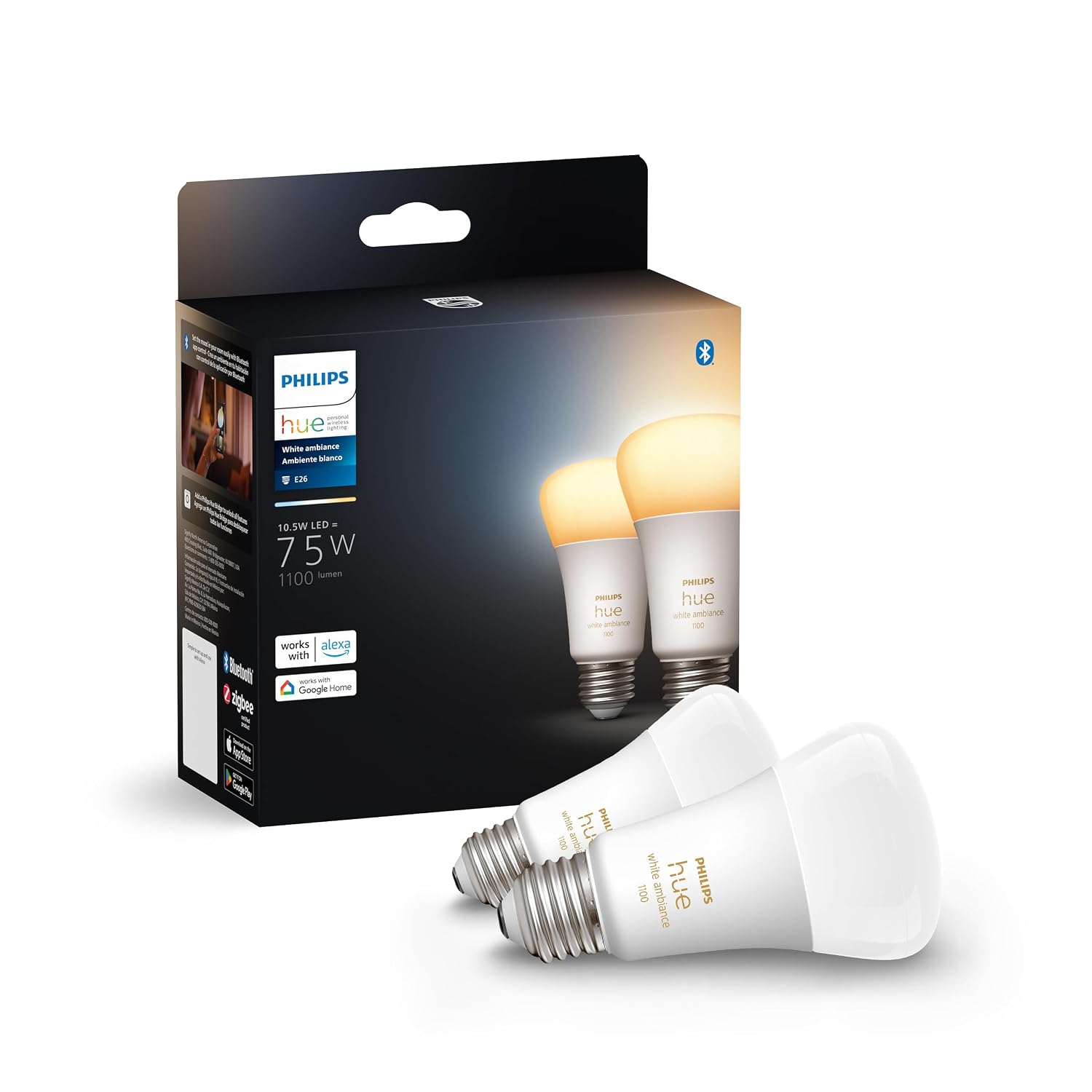
Philips Hue White Ambiance is the default recommendation for most people building circadian-friendly lighting at home. Tunable white bulbs, dependable automations, and a mature app make it easy to run bright cool mornings and warm dim evenings without babysitting switches every night. Circadian lighting succeeds when the schedule happens automatically. Hue’s strength is turning “I know I should dim after sunset” into a house that actually does it across rooms. White Ambiance matters more than flashy color for sleep. Color bulbs can work, but tunable white is the feature that maps to melatonin-friendly evenings and alert mornings. Choose Hue if you want the most practical whole-home system. Skip it if you only need one wake-up lamp or a single bright therapy panel.
Estimated ownership: about $349 in year 1 and
$349 over 3 years.
Assumes a starter Bridge kit plus several White Ambiance bulbs for key rooms. No membership wall.
Philips · Bedside
Best for: Sunrise alarms and gentler mornings without whole-home lighting
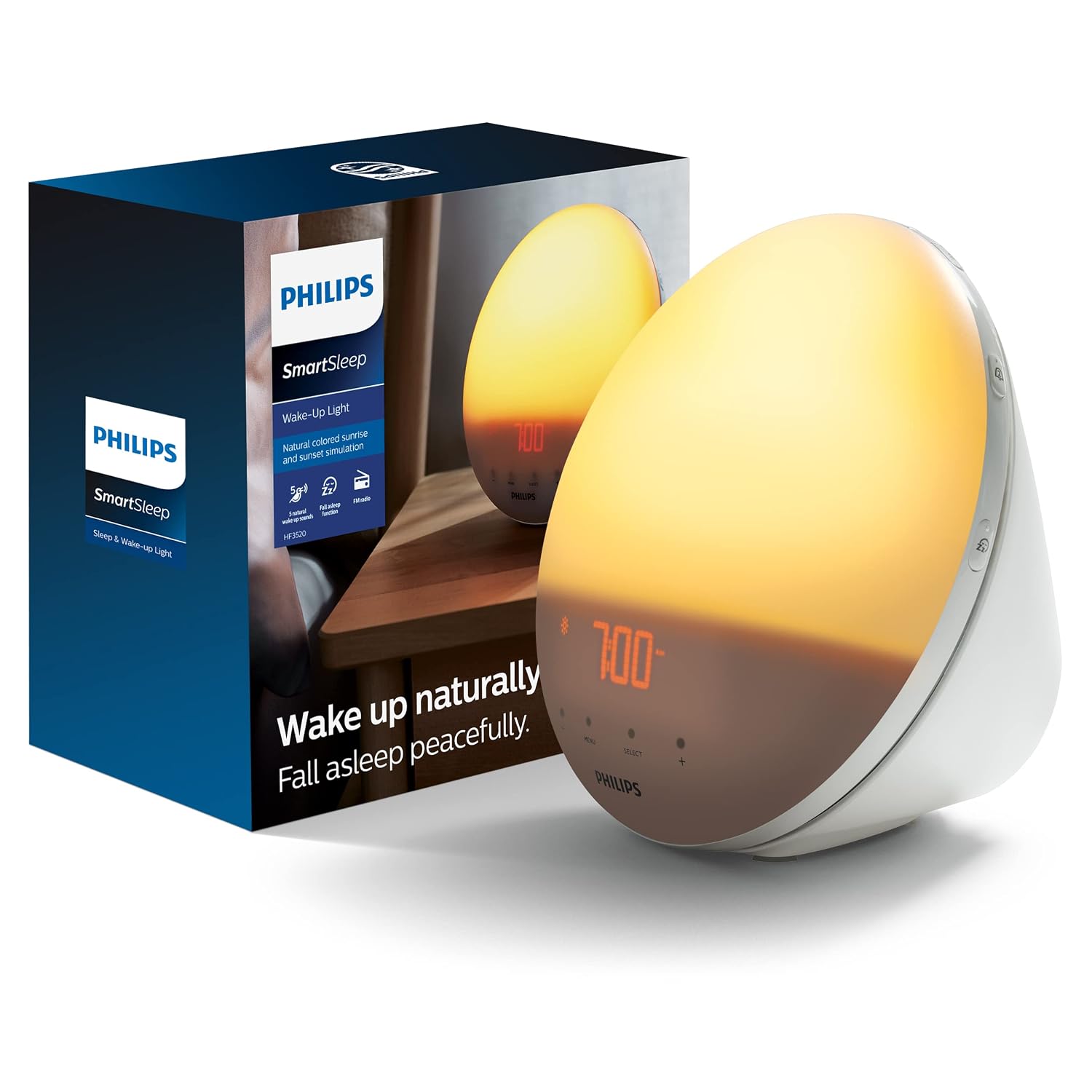
A wake-up light is often the highest-ROI first purchase for people whose main complaint is brutal mornings. Philips SmartSleep models simulate sunrise at the bedside so your alarm is light-led instead of only sound-led. If your evenings are already decent but mornings feel violent, start here before rewiring the whole house. Wake lights help most when placed where light can reach your eyes as you wake. A lamp buried behind a stack of books will underperform. Choose SmartSleep for a focused morning intervention. Skip it if your real problem is late-night bright screens and cold-white kitchen lighting.
Estimated ownership: about $170 in year 1 and
$170 over 3 years.
One-time bedside device cost; no subscription.
LIFX · Bulb
Best for: Bridge-free tunable white bulbs with good brightness
LIFX Day & Dusk is a strong pick when you want circadian-friendly tunable white without buying a bridge. It is especially appealing for smaller homes or renters who want meaningful CCT control with less kit. No-hub bulbs reduce friction, but they shift reliability onto your Wi-Fi. If your network is already overloaded with gadgets, Hue’s Bridge architecture can feel more stable. Day & Dusk is purpose-built for circadian scheduling rather than party colors, which is exactly what most sleep-focused buyers should prioritize. Choose LIFX if you want fewer boxes and a clean bulb-first start. Skip it if you are building a large multi-room system where Hue’s ecosystem density wins.
Estimated ownership: about $120 in year 1 and
$120 over 3 years.
Assumes a four-bulb starter set for bedroom and main living areas.
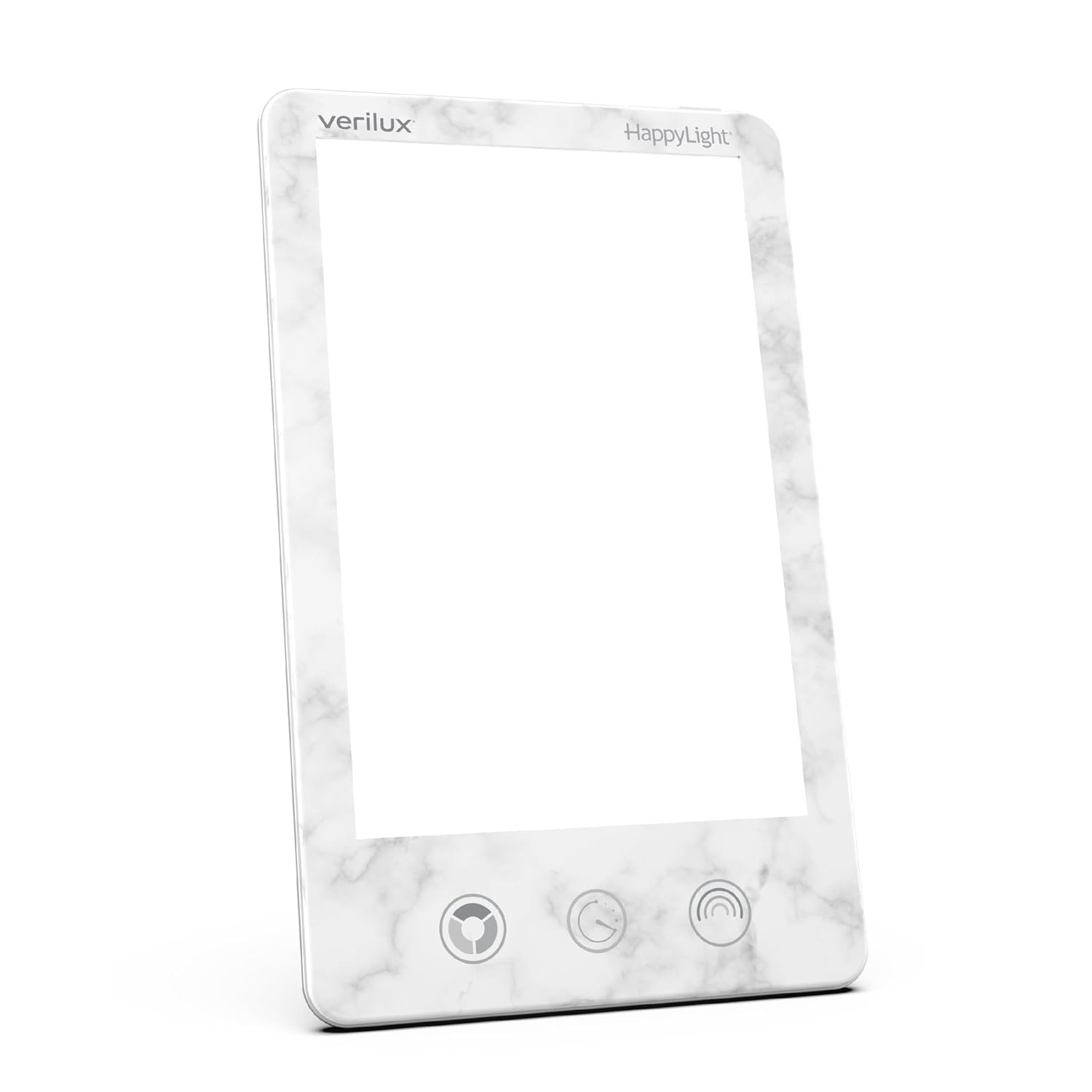
Verilux · Panel
Best for: Bright morning light therapy and winter alertness support
HappyLight-style panels solve a different problem than smart bulbs: delivering a lot of light in the morning when outdoor daylight is scarce. If dark winters leave you sluggish, a bright panel can matter more than color-tuning your hallway sconces. Use bright panels in the morning, not at night. Circadian lighting is about timing as much as spectrum. This is complementary to tunable white house lighting. One product handles morning intensity; the other handles evening restraint. Choose Verilux-class panels for morning photon debt. Skip them if your only issue is late-night overhead glare.
Estimated ownership: about $60 in year 1 and
$60 over 3 years.
One-time panel purchase; no software plan.
Waveform Lighting · Bulb
Best for: Spectrally serious lighting without smart-home theater
Waveform-style circadian lighting is for people who care more about spectrum and color quality than app animations. If you want better light itself—not just a smarter switch—this lane deserves attention. Smart schedules are useless if the evening light is still biologically aggressive. Specialty circadian/high-CRI products attack the source spectrum problem. The tradeoff is convenience. You may combine these fixtures with simple timers or a separate smart layer rather than getting one seamless consumer ecosystem. Choose Waveform-class products when light quality is the priority. Skip them if you want the easiest mainstream app experience first.
Estimated ownership: about $180 in year 1 and
$180 over 3 years.
Assumes several specialty bulbs/fixtures for key daytime and evening zones.
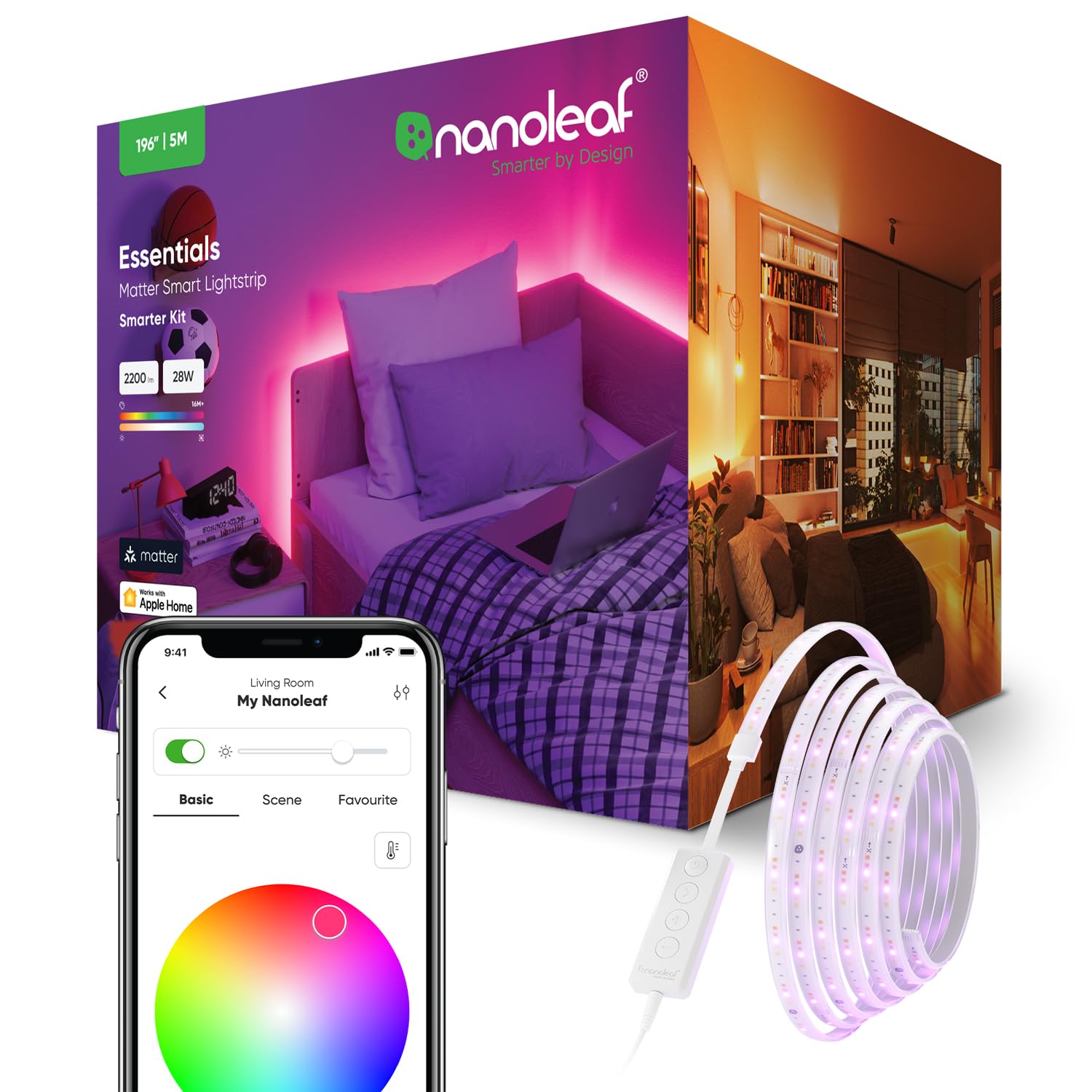
Nanoleaf · Bulb
Best for: Matter/Thread households wanting affordable tunable whites
Nanoleaf Essentials Matter is a practical value option for homes already moving toward Matter and Thread. You get tunable white control without paying Hue kit premiums, as long as your controller story is clean. Matter can simplify multi-platform control, but only if your home already has a reliable controller. Buying Essentials without a plan for Thread/Matter can feel incomplete. For circadian use, focus on warm evening defaults and bright morning scenes rather than decorative RGB effects. Choose Nanoleaf if Matter/Thread is already part of your home stack. Skip it if you want a guided sleep-lighting product with wake-up rituals out of the box.
Estimated ownership: about $100 in year 1 and
$100 over 3 years.
Assumes several Essentials bulbs on an existing Matter/Thread controller.
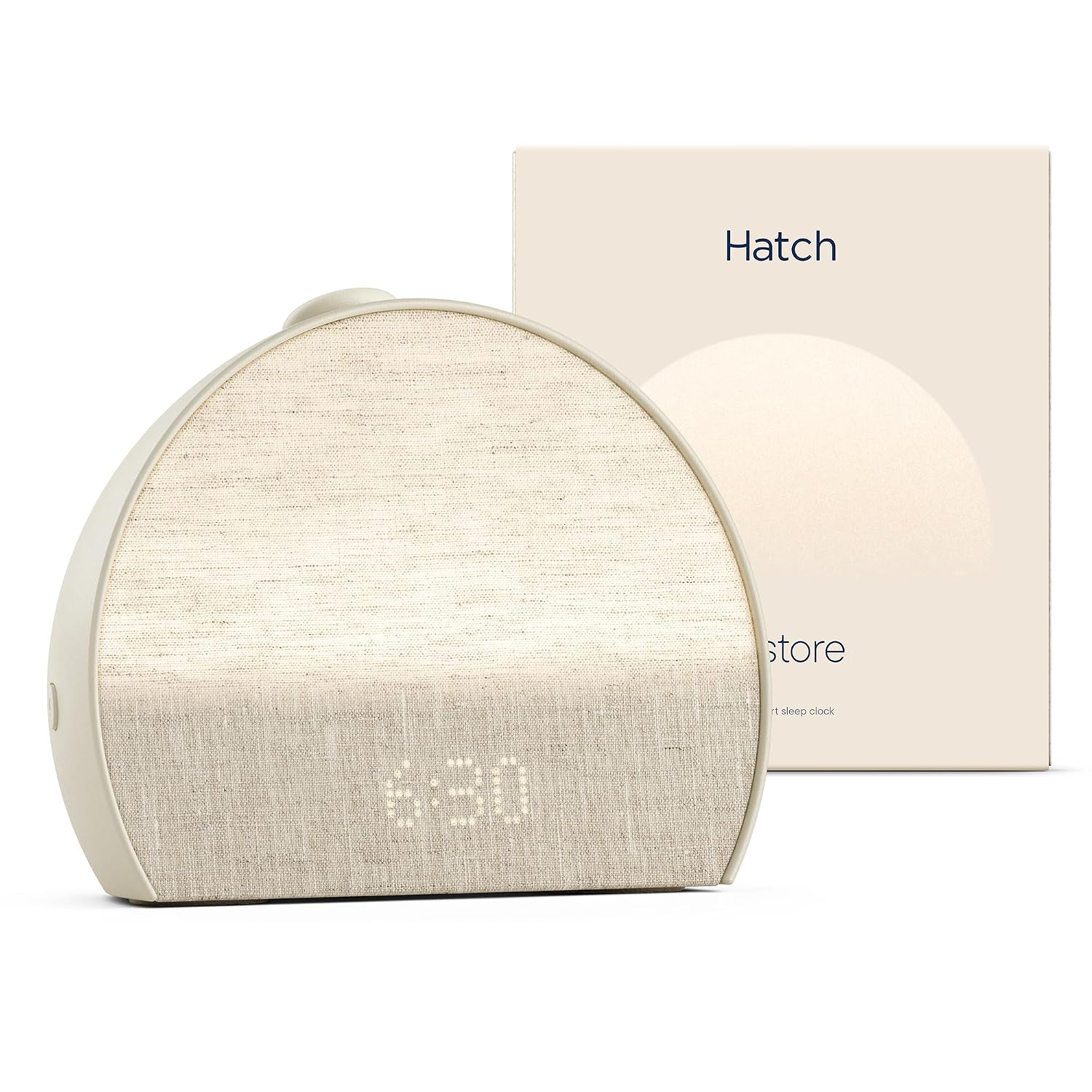
Hatch · Bedside
Best for: Wind-down routines combining soft light and sound
Hatch Restore is less about photometric perfection and more about making evenings and mornings feel intentional. Soft light plus sound can outperform a technically better bulb that nobody bothers to schedule. Behavior design matters. A pleasant bedside ritual often beats a theoretically perfect CCT curve that requires constant app babysitting. Restore is ideal as a bedroom-only layer alongside, not instead of, better household lighting habits. Choose Hatch if ritual adherence is your bottleneck. Skip it if you want rigorous high-lux morning therapy or whole-home tunable white control.
Estimated ownership: about $170 in year 1 and
$170 over 3 years.
Hardware baseline assuming no required membership for core lamp/alarm functions.
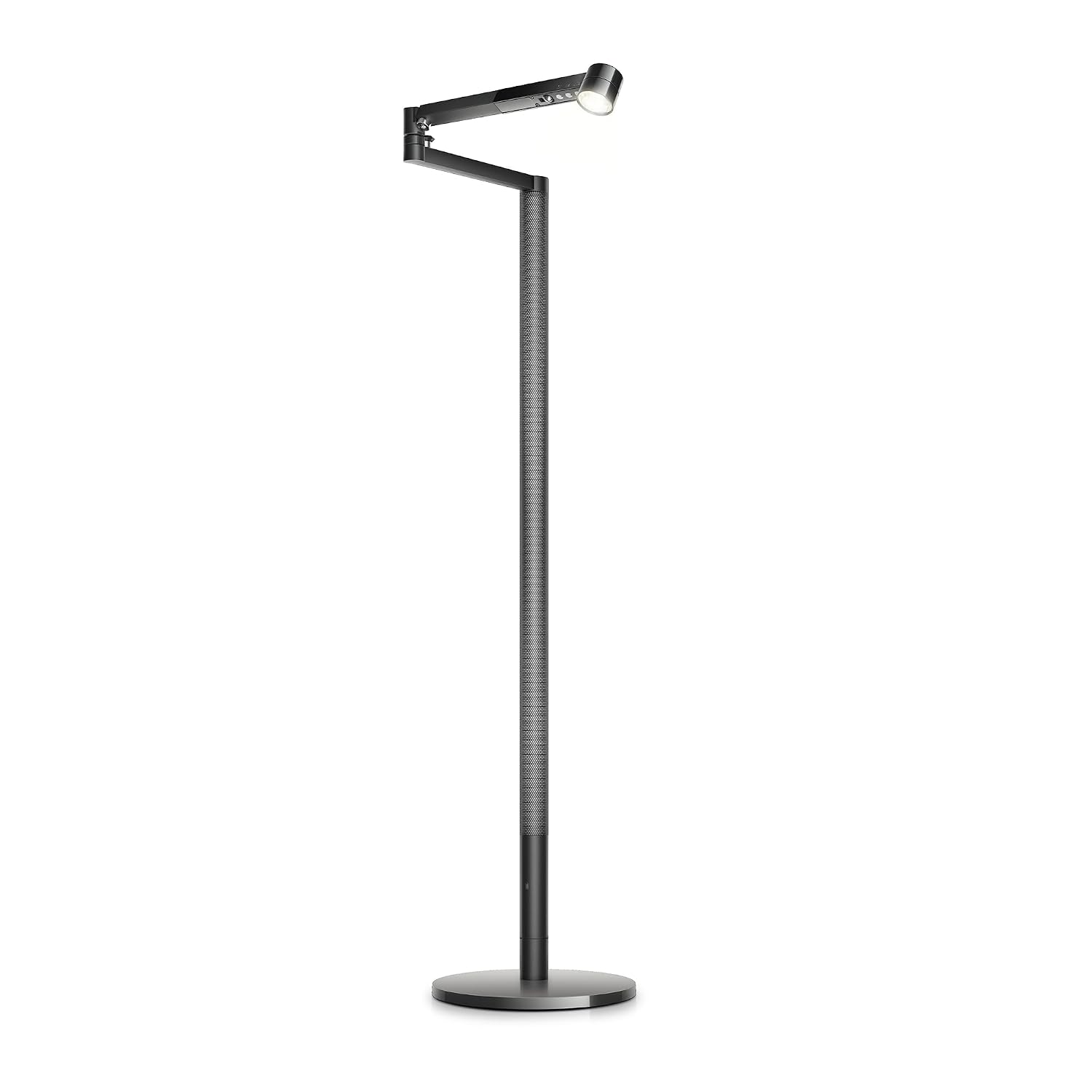
Dyson · Lamp
Best for: Premium local daylight-tracking task and ambient lighting
Dyson Solarcycle Morph (formerly Lightcycle Morph) is a luxury local light that tracks daylight and morphs between task, indirect, feature, and ambient modes. Superb for a desk or reading chair; weak as a whole-home strategy. If one harsh lamp ruins your evenings or workday focus, upgrading that local fixture can help immediately. If the whole apartment is cold-white after 9 p.m., spend on room bulbs first. Morph’s pitch is daylight tracking plus format flexibility: focused task light when you work, orange stem glow for evening wind-down, and precise aiming via 3-point revolve motion. Pair it with the MyDyson app for age and schedule personalization. Choose Solarcycle Morph when one hero lamp matters more than multi-room coverage. Skip it if a Hue starter kit would light more of the house for less money.
Estimated ownership: about $850 in year 1 and
$850 over 3 years.
One premium lamp; Amazon floor listing ~$850. Desk Morph is usually lower. No membership.
Govee · Bulb
Best for: Budget circadian experiments with bulbs and strips
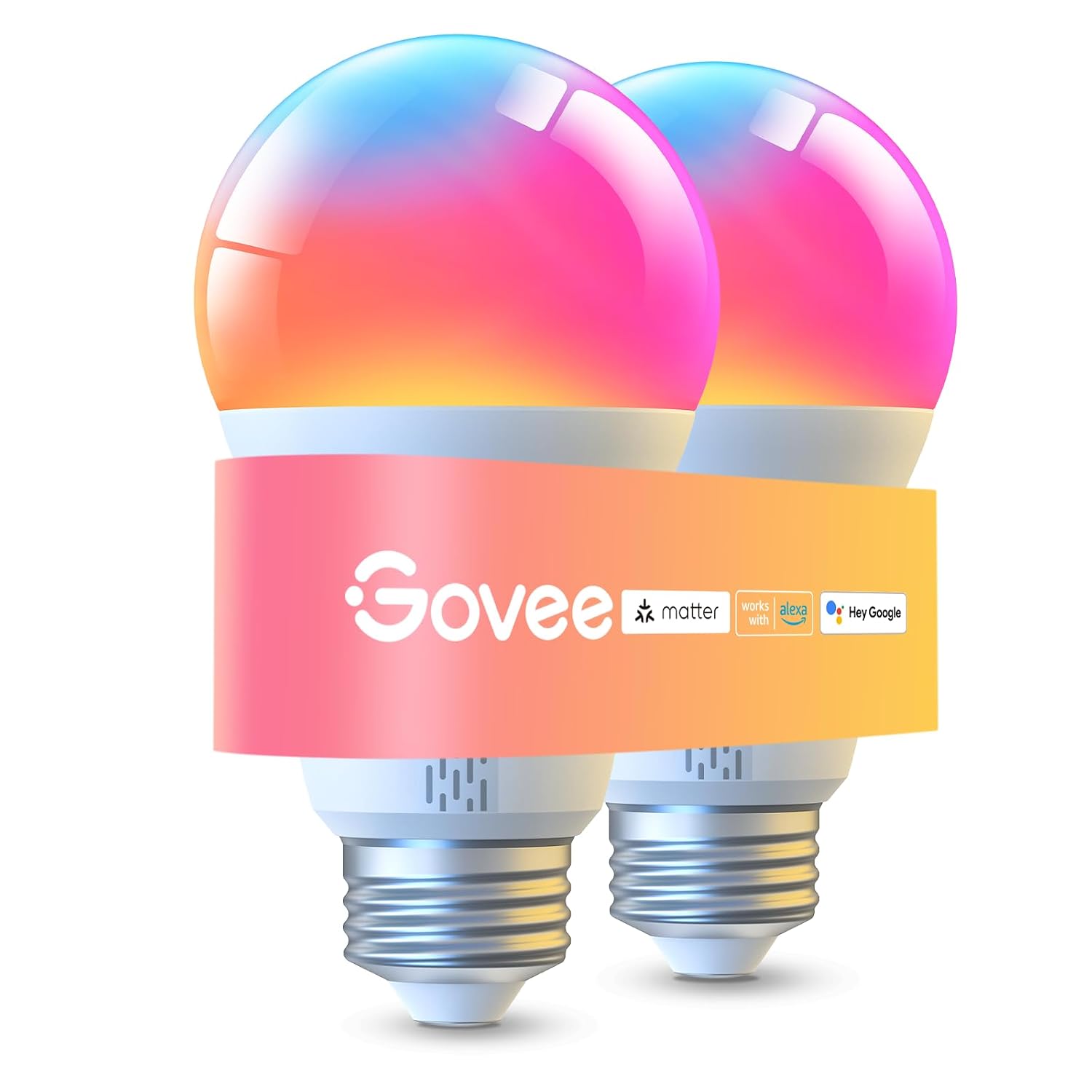
Govee is the best low-cost way to test whether evening warm-dim lighting actually changes your sleep. It will not match Hue’s polish, but it can validate the behavior change before you invest in a whole-home system. Use Govee as a proof-of-concept layer: warm ambient light after sunset, brighter task lighting in the morning, fewer overhead blasts at night. If the experiment works, many people later migrate key rooms to Hue/LIFX and keep Govee for secondary accents. Choose Govee to learn cheaply. Skip it if you already know you want durable whole-home automation.
Estimated ownership: about $80 in year 1 and
$80 over 3 years.
Assumes a bulb + strip starter kit for bedroom ambient lighting.
Detailed reviews
Philips Hue White Ambiance
Pros
Cons
Choose this if
Skip this if
Philips SmartSleep Wake-up Light
Pros
Cons
Choose this if
Skip this if
LIFX Day & Dusk
Pros
Cons
Choose this if
Skip this if
Verilux HappyLight
Pros
Cons
Choose this if
Skip this if
Waveform Circadian Bulbs
Pros
Cons
Choose this if
Skip this if
Nanoleaf Essentials Matter
Pros
Cons
Choose this if
Skip this if
Hatch Restore
Pros
Cons
Choose this if
Skip this if
Dyson Solarcycle Morph
Pros
Cons
Choose this if
Skip this if
Govee Tunable White
Pros
Cons
Choose this if
Skip this if
How to choose the right setup
- Identify the failure mode. Brutal mornings, wired evenings, or both?
- Start where you spend the most evening light hours. Kitchen, living room, and bedroom usually matter first.
- Prefer tunable white over RGB novelty. Sleep benefits come from timing and warmth, not rainbow scenes.
- Automate one win in week one. Example: after sunset, bedroom and living room shift warm and dim.
- Add a morning specialist if needed. Wake light or bright panel.
- Expand only after the habit sticks. Whole-home lighting is a system purchase, not a single SKU.
Quick recommendations by persona
- Whole-home optimizer: Philips Hue White Ambiance
- No-bridge starter: LIFX Day & Dusk
- Matter/Thread household: Nanoleaf Essentials Matter
- Budget tester: Govee
- Morning-only fixer: Philips SmartSleep Wake-up Light
- Bedtime ritual seeker: Hatch Restore
- Winter brightness seeker: Verilux HappyLight
- Spectrum-first enthusiast: Waveform-class circadian bulbs
It means using intensity, color temperature, and timing to support alert mornings and calmer evenings. Practically: brighter, cooler light earlier in the day; warmer, dimmer light after sunset. Smart bulbs help automate that. They do not replace outdoor daylight. Cheaper tunable bulbs can work if you actually use schedules. Hue usually wins for multi-room reliability and automation depth. If you are testing the habit, start cheaper. If you already know evening wind-down matters, Hue is often the lower-friction long-term system. Outdoor morning light is ideal. Indoors, many people benefit from much brighter light than typical lamps provide. A dedicated therapy-style panel or a well-lit morning workspace can help in winter. Exact lux targets vary by product and distance — follow device guidance and prioritize consistency over perfection. Glasses can help as a backup for screens and unavoidable overheads, but fixing the lighting environment is usually better. Dim warm ambient light plus screen reductions beats wearing glasses over a still-blazing cold-white kitchen. Not by default. Color effects are entertainment. For sleep, prioritize tunable white and dimming. A red or amber evening scene can be useful, but only if brightness stays low and the routine is automatic. Buy a wake-up light if mornings are the main pain point. Buy room bulbs/scenes if evenings are the main pain point. Many households eventually want both: a bedside sunrise device plus warmer whole-home evenings. No. Light timing is a powerful lever, but insomnia can involve anxiety, schedule instability, medical issues, or stimulants. Use lighting as part of a broader sleep protocol, and seek clinical care when sleep problems are persistent or severe.Circadian lighting FAQ
What is circadian lighting in a home context in 2026?
+
Do I need Philips Hue, or will cheaper bulbs work?
+
How bright should morning light be?
+
Should I use blue-blocking glasses instead of new lights?
+
Are RGB color bulbs good for sleep?
+
What should I buy first: a wake-up light or house bulbs?
+
Can circadian lighting fix insomnia by itself?
+
This comparison is designed for practical decision-making. Product capabilities, pricing, and memberships change quickly, so treat battery claims, plan costs, and feature availability as moving targets.
Harvard Health, “Blue light has a dark side”
Useful context for why evening short-wavelength light can delay sleep onset for some people.
Lucas et al., measuring melanopic effects of light (CIE / circadian photoreception context)
Supports the idea that intensity, spectrum, and timing all matter — not color temperature alone.
American Academy of Sleep Medicine healthy sleep habits guidance
Helps separate consumer smart-bulb marketing from broader sleep-hygiene recommendations.
Philips Hue lighting documentation
Tunable ranges, Matter support, brightness claims, and kit pricing change by region and generation; verify before purchase.
Affiliate disclosure: some product links on Keersa Health may earn a commission at no extra cost to you.
Editorial recommendations are independent of commercial relationships.
Read our full disclosure.
Sources and editorial notes
Bottom line
The best circadian lighting setup is the one that makes brighter mornings and calmer evenings automatic. For most homes, that means tunable white in the rooms you actually use after dark, plus a wake light or bright panel if mornings are the weak link. Buy the smallest system that changes your daily light pattern — then expand only if the habit proves its value.
Start with the overview if you have not yet: The Sleep Protocol. Related deep dives: blue light blocking, smart beds, wearable trackers, and mouth taping & nasal devices.