Sleep guide · Updated 2026
Wearable vs Clinical Sleep Studies: When to Track, When to Test
A clear 2026 guide to rings, watches, and bed sensors versus HSAT, PSG, actigraphy, and MSLT — what each can answer, and when to stop optimizing and get tested.
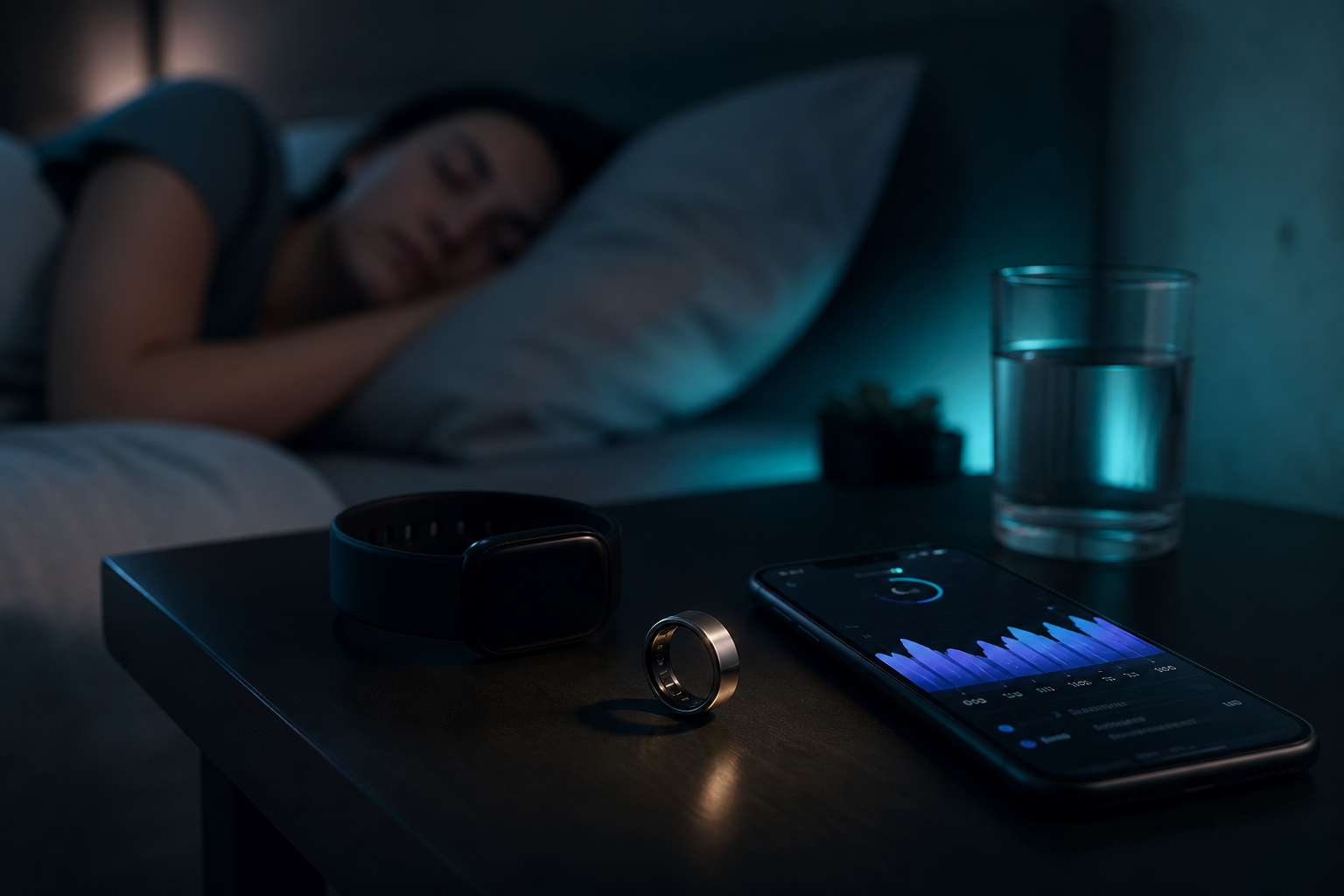
In 2026, a lot of people are staring at a sleep score and wondering if they need a lab. Rings and watches make gorgeous charts. Sleep clinics make diagnoses. Those are not the same job — and mixing them up is how you either panic over “low deep sleep” or wait too long when gasping and sleepiness show up.
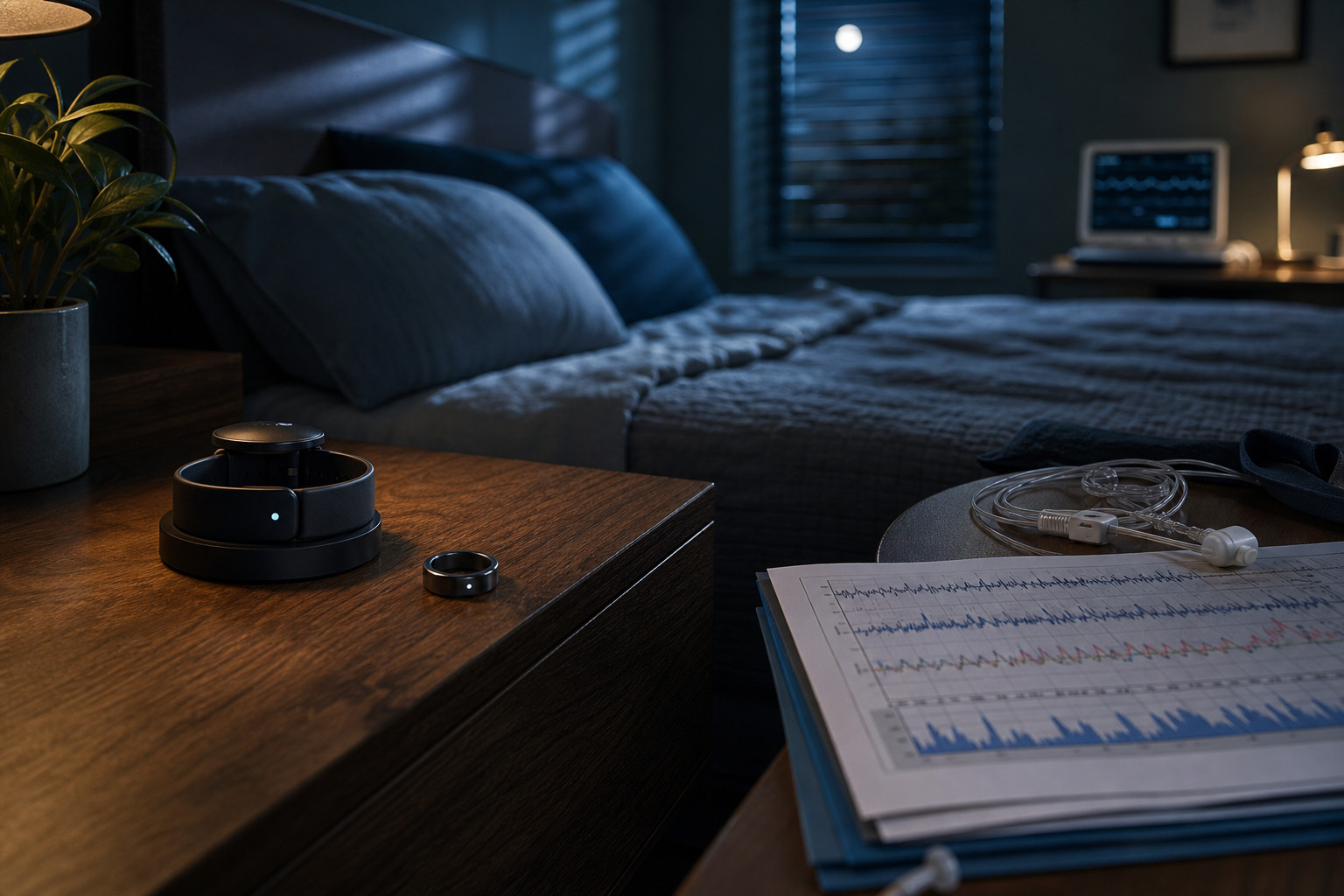
This guide splits the toolkit in two. Consumer wearables — rings, watches, bands, under-mattress sensors, and overnight oximeters — estimate timing, rough stages, and recovery or oxygen trends across many nights. Clinical pathways — home sleep apnea tests (HSAT), in-lab polysomnography (PSG), actigraphy, and MSLT — measure breathing, brain waves, or daytime sleepiness under medical protocols.
Wearables help you see habits and whether a change stuck. Clinical studies help you know whether you have a disorder that needs treatment. Keep those questions separate and the rest of this page gets much simpler.
Key takeaways
- Best multi-night lifestyle tracker: a consumer sleep ring — if you will actually wear it.
- Best if you already wear a watch: your sleep watch or band, used for trends, not verdicts.
- Best no-wearable trend tool: an under-mattress sensor.
- Best narrow DIY oxygen adjunct: a consumer overnight oximeter — with humility, not diagnosis cosplay.
- Best common OSA clinical bridge: a clinician-ordered HSAT.
- Best gold-standard overnight study: in-lab PSG.
- Best diagnosis-to-therapy lab path: split-night / titration PSG when indicated.
- Best multi-day clinical pattern tool: clinical actigraphy.
- Best hypersomnia protocol: MSLT — specialist-directed, not a shopping list item.
- Highest-leverage step for mixed cases: a clinician review of your symptoms plus wearable trends.
Two different questions
Wearables answer: What is happening across many nights, and did my behavior change correlate with better sleep?
Clinical studies answer: Do you meet criteria for a sleep disorder that needs medical treatment?
Mixing those questions creates orthosomnia — score anxiety — on one side and delayed care on the other. A ring is a longitudinal mirror. A sleep study is a diagnostic instrument. You can own both without pretending they are interchangeable.
Red flags that outrank any dashboard
If any of these show up, stop waiting for the app to “confirm” it:
- Gasping, choking, or witnessed breathing pauses
- Stubborn loud snoring with daytime sleepiness
- Sleepiness that threatens driving or work safety
- Sudden muscle weakness with emotion, dream enactment with injury risk, or other specialist red flags
Start with care. Read our sleep apnea beyond CPAP guide only after evaluation is underway — therapy shopping before diagnosis is the wrong order.
How we evaluate pathways
Editorial scores favor tools that match a clear question without false diagnostic confidence. We score across five pillars:
- Question fit (30%) — trends vs diagnosis vs therapy titration.
- Signal quality (25%) — what is actually measured (motion, SpO2, EEG, airflow).
- Actionability (20%) — does the output change care or behavior usefully?
- Access and burden (15%) — cost, convenience, adherence.
- Misuse risk (10%) — false reassurance or score obsession.
Important limitation: Keersa Health scores are editorial synthesis for education. They are not medical advice, insurance rules, or device clearances.
Interactive comparison
Filter by form factor, sort by score or price, and pin up to three options for a focused side-by-side view.
Tradeoff:
Sticker price still matters here — most options are one-time hardware buys, so the three-year estimate mainly reflects purchase price plus expected upkeep.
Estimates are directional and based on common public pricing patterns. Promotions, refurbished units, family plans, and tier changes can move these numbers materially.
3-year cost of ownership
Device
Year 1
3-year estimate
Amazon Price
In-Lab Polysomnography (PSG)
$2,000
$2,000
—
Home Sleep Apnea Test (HSAT)
$400
$400
—
Split-Night / Titration PSG
$2,500
$2,500
—
Multiple Sleep Latency Test (MSLT)
$1,800
$1,800
—
Clinician Review of Wearable Data
$200
$400
—
Clinical Actigraphy
$350
$350
—
Consumer Sleep Ring
$450
$750
$349
Consumer Sleep Watch / Band
$350
$700
$399
Under-Mattress Sleep Sensor
$150
$150
$199.95
Consumer Overnight Pulse Oximeter
$80
$80
$189.99
Who should choose what
Stay with wearables if...
- Your main goal is schedule consistency and experiment feedback
- Daytime function is okay and red flags are absent
- You will actually wear the device for weeks — not three nights and a drawer
Order HSAT / see a clinician if...
- Apnea symptoms are present
- A wearable repeatedly flags breathing issues and symptoms match
- You need a yes/no clinical pathway for OSA treatment decisions
Pursue in-lab PSG if...
- Home testing is inconclusive or inappropriate
- Non-OSA disorders are in the differential
- Your clinician needs EEG-grade staging and a full sensor montage
Ask about actigraphy / MSLT if...
- Circadian timing or insomnia patterns need multi-day documentation
- Severe unexplained sleepiness needs a specialist battery
Below are deeper notes on every option in the comparison table, sorted by editorial score. Jump directly from the table pins or the cost section.
Accredited sleep lab · Lab
Best for: Gold-standard overnight physiologic recording when diagnosis must be definitive
In-lab PSG is the reference overnight study: EEG staging plus breathing, oxygen, and more. Use it when the clinical question needs gold-standard data — not to satisfy curiosity after one “bad” wearable week. PSG answers medical questions; wearables answer longitudinal lifestyle questions. First-night effect is real — labs account for this in interpretation. Bring your medication list and symptom timeline; context improves utility.
Estimated ownership: about $2,000 in year 1 and
$2,000 over 3 years.
Clinical pricing varies wildly with insurance, facility, and study type (diagnostic vs titration).
Clinic / sleep lab ordered · Hsat
Best for: Evaluating suspected OSA at home when a clinician judges HSAT appropriate
HSAT is the usual clinical bridge between “my wearable looks weird” and full in-lab PSG for many OSA pathways. It is ordered and interpreted in a care context — that is the point, and why it is not an Amazon cart item. HSAT is strongest when pre-test probability of OSA is meaningful. A negative HSAT with persistent symptoms often escalates to PSG. Do not buy random “home sleep test” kits without a care pathway if you need medical decisions.
Estimated ownership: about $400 in year 1 and
$400 over 3 years.
Typically a clinical episode cost, often insurance-influenced. Not an Amazon cart item.
Accredited sleep lab · Lab
Best for: Diagnosing significant OSA and starting PAP titration in one lab pathway when criteria are met
Split-night and titration studies exist to move from diagnosis toward treatment efficiently. They are irrelevant as “wearable alternatives” — they are care steps. Eligibility rules vary; your clinician decides. Mask fit and pressure needs are the point — not a sleep score. Home PAP auto-titrating pathways exist too; ask which fits your case.
Estimated ownership: about $2,500 in year 1 and
$2,500 over 3 years.
Clinical episode cost. Often insurance-mediated after OSA pretest probability is high.
Accredited sleep lab · Lab
Best for: Evaluating pathologic sleepiness / narcolepsy-spectrum questions after proper prep
MSLT is a daytime clinical protocol for serious sleepiness questions. No ring score replaces it. Do not self-refer via Amazon. Medication and sleep opportunity before MSLT matter enormously. This is not for routine optimization. If your issue is apnea symptoms, you are usually in HSAT/PSG land first.
Estimated ownership: about $1,800 in year 1 and
$1,800 over 3 years.
Usually paired with overnight PSG in a planned battery. Insurance rules are strict.
Sleep / primary care visit · Service
Best for: Turning weeks of wearable trends into a decision: reassure, optimize, or order testing
The highest-leverage “device” in this guide is often a clinician visit that uses your wearable trends as history — then orders HSAT or PSG when indicated instead of arguing with sleep scores. Summarize; do not export 90 days of screenshots without a narrative. Lead with symptoms and safety flags, then show trends. Ask explicitly whether formal testing is indicated.
Estimated ownership: about $200 in year 1 and
$400 over 3 years.
Visit cost only. Bring a one-page summary: bedtime, wake time, snoring/gasping, sleepiness, meds.
Sleep clinic ordered · Watch
Best for: Mapping sleep-wake patterns over days/weeks for circadian and insomnia workups
Clinical actigraphy is what people wish their smartwatch report was: multi-day rest-activity data interpreted for a medical question (circadian timing, insomnia patterns). Often paired with sleep diaries. Excellent for schedule disorders; weak for apnea diagnosis. Your consumer wearable can complement, not replace, the clinical report.
Estimated ownership: about $350 in year 1 and
$350 over 3 years.
Clinical service fee for a recording window. Consumer watches are related but not equivalent reports.
Various (Oura-class) · Ring
Best for: Multi-night trends, bedtime consistency, and recovery context — not OSA diagnosis
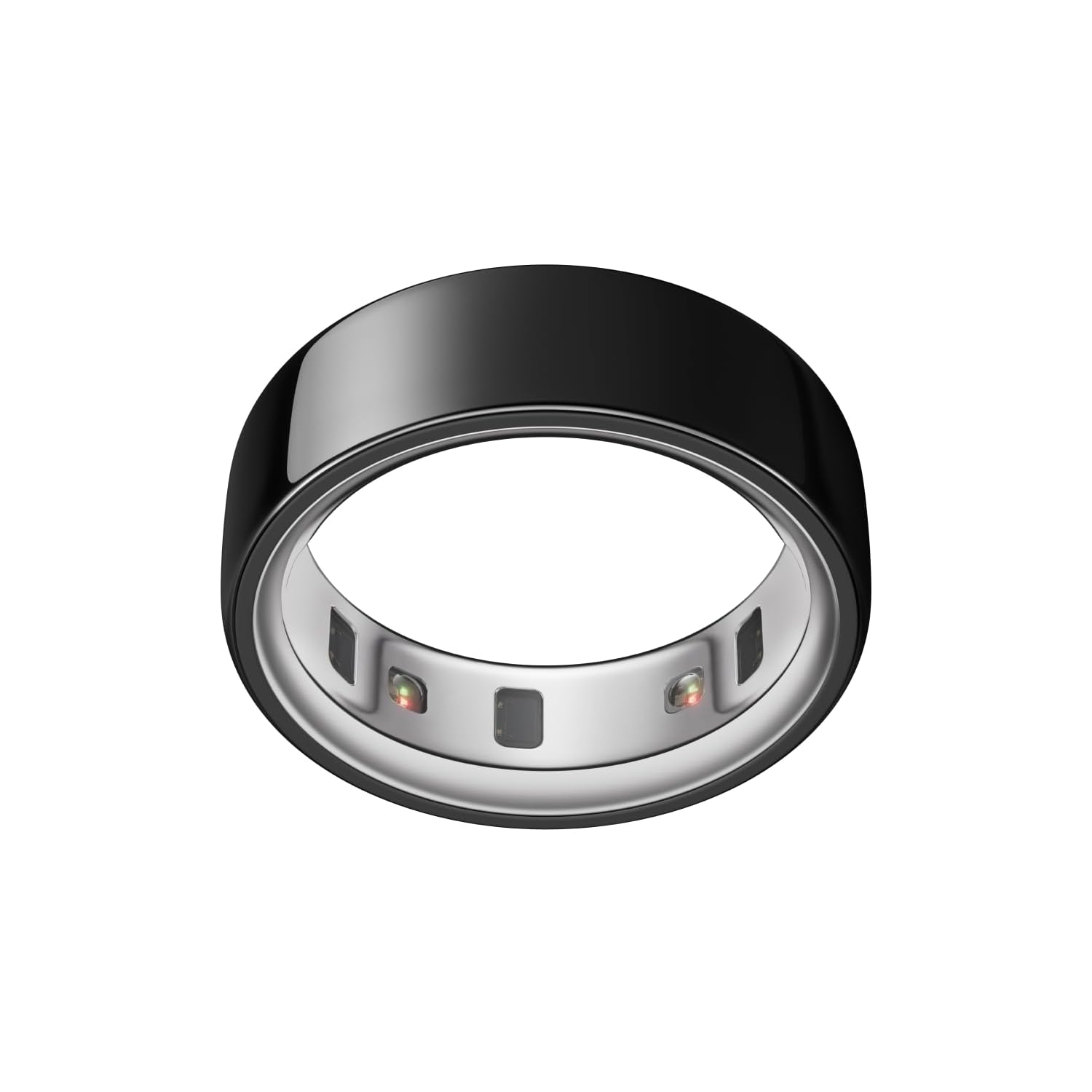
A consumer sleep ring is excellent for seeing patterns across weeks — bedtime drift, alcohol nights, whether earlier light actually helped. It is a mirror for behavior, not a clinic. Escalate when symptoms suggest disordered breathing or another sleep disorder. Use rings to catch schedule drift, alcohol effects, and whether an intervention correlates with better nights. Do not treat “low deep sleep” scores as a diagnosis. For hardware specifics, see our wearable sleep trackers comparison.
Estimated ownership: about $450 in year 1 and
$750 over 3 years.
Hardware plus optional membership. Compare to a single diagnostic study only after you know what question you are asking.
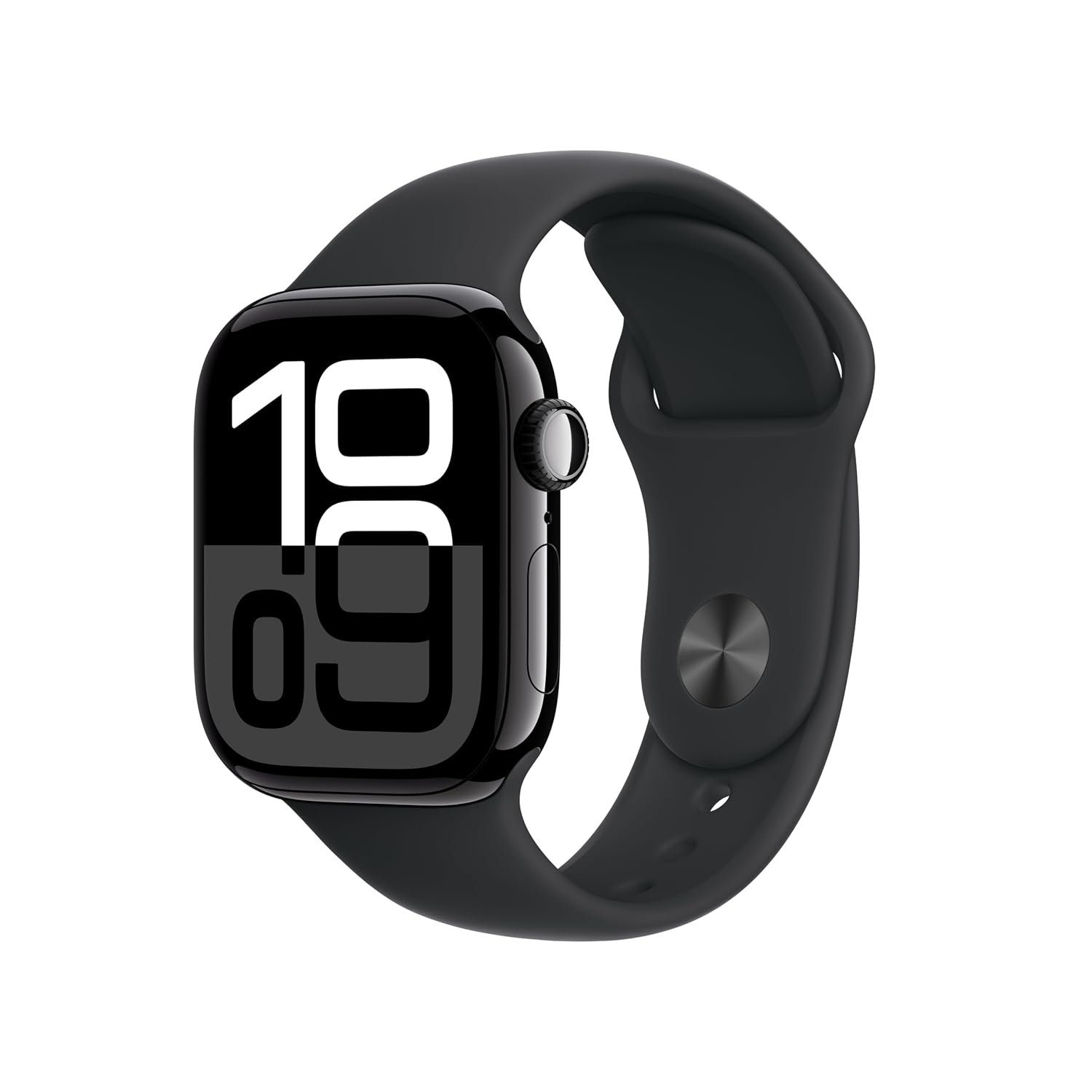
Various (Apple/Garmin/Fitbit-class) · Watch
Best for: People who already wear a watch and want sleep estimates alongside daytime metrics
Watches and bands are fine sleep estimators when adherence is high. They inherit every limitation of consumer staging — useful context for trends, weak as diagnosis. If the watch comes off at night, you do not have sleep data. If the watch comes off at night, you do not have sleep data — rings often win on adherence. SpO2 spot checks are not an overnight diagnostic oximetry study. Charge anxiety can distort bedtime routines.
Estimated ownership: about $350 in year 1 and
$700 over 3 years.
Often bundled with a watch you buy for other reasons. Attribute cost honestly.
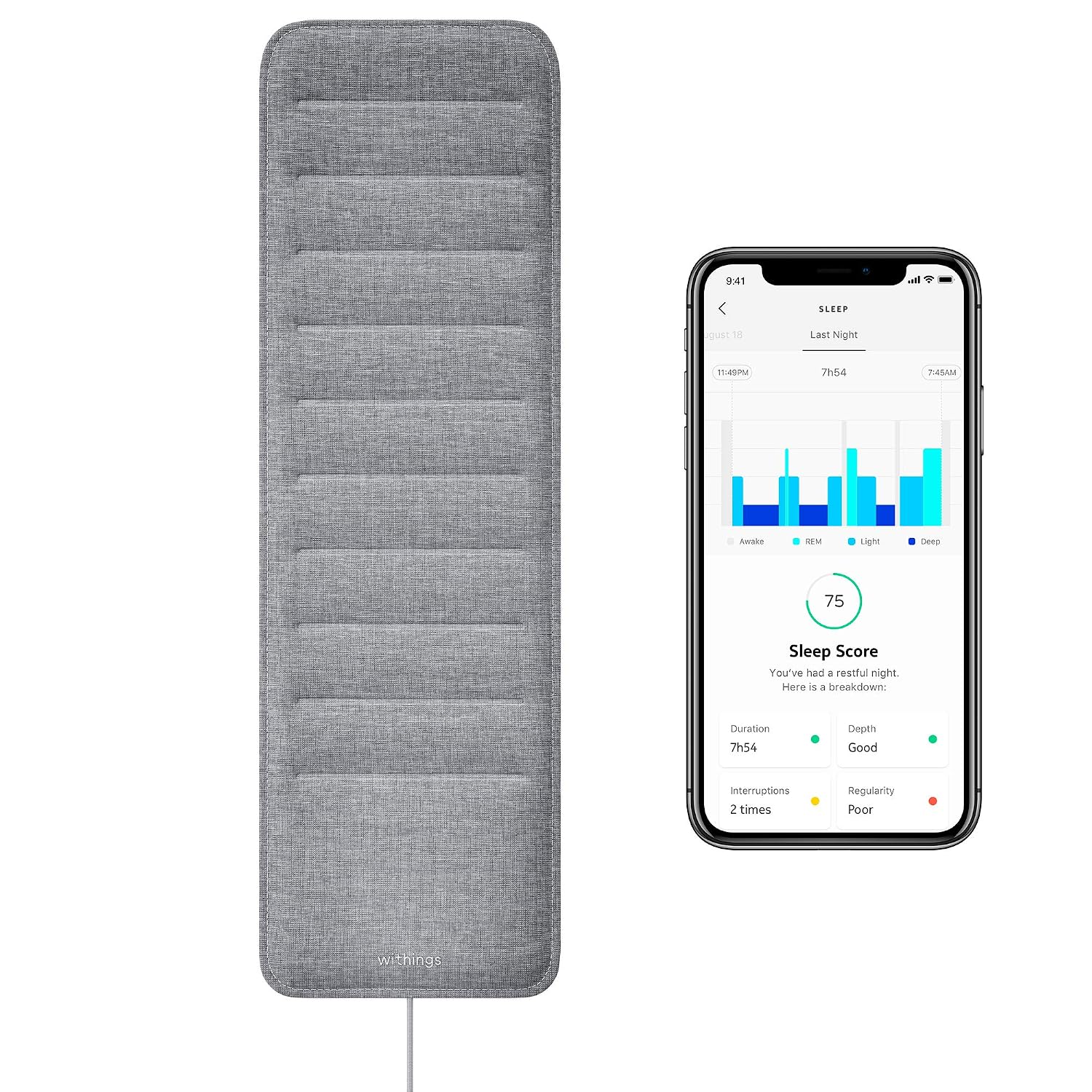
Various (Withings-class) · Sensor
Best for: Tracking without wearing anything — still not a substitute for HSAT/PSG
Bed sensors remove the “I hate wearing things” objection. Treat breathing-disturbance notifications as a prompt to talk to a clinician — not as a home sleep test with a prettier chart. Shared beds complicate who generated which signal. Useful when wearables failed adherence. Escalate promptly if the device repeatedly flags breathing issues and symptoms match.
Estimated ownership: about $150 in year 1 and
$150 over 3 years.
One-time hardware for most models. Risk flags are screening hints, not diagnoses.
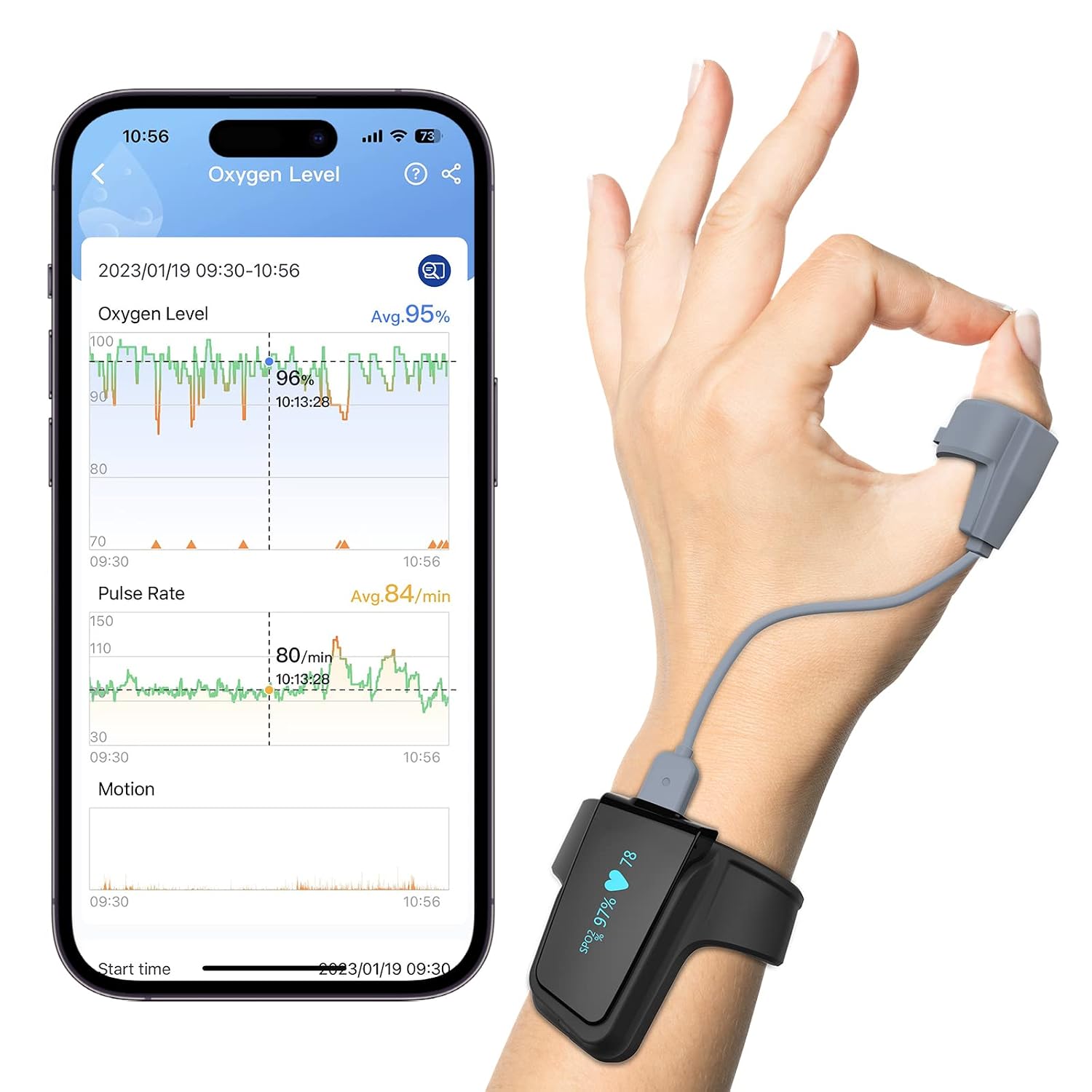
Various · Oximeter
Best for: A narrow SpO2 trend experiment — not a full sleep study
Overnight consumer oximeters answer a narrow question about oxygen patterns. They do not stage sleep or replace home or in-lab apnea testing when indicated — and a calm-looking DIY trace can still miss OSA. Motion and poor perfusion create junk data — context matters. Normal-looking DIY SpO2 does not rule out OSA. Bring concerning recordings to a clinician rather than self-treating.
Estimated ownership: about $80 in year 1 and
$80 over 3 years.
Low hardware cost. Do not delay care while collecting DIY oximetry screenshots.
Detailed reviews

In-Lab Polysomnography (PSG)
Pros
Cons
Choose this if
Skip this if

Home Sleep Apnea Test (HSAT)
Pros
Cons
Choose this if
Skip this if
Split-Night / Titration PSG
Pros
Cons
Choose this if
Skip this if

Multiple Sleep Latency Test (MSLT)
Pros
Cons
Choose this if
Skip this if
Clinician Review of Wearable Data
Pros
Cons
Choose this if
Skip this if
Clinical Actigraphy
Pros
Cons
Choose this if
Skip this if
Consumer Sleep Ring
Pros
Cons
Choose this if
Skip this if
Consumer Sleep Watch / Band
Pros
Cons
Choose this if
Skip this if
Under-Mattress Sleep Sensor
Pros
Cons
Choose this if
Skip this if
Consumer Overnight Pulse Oximeter
Pros
Cons
Choose this if
Skip this if
How to read wearables and studies side by side
- Lead with symptoms and safety. Scores are secondary. Always.
- Prefer multi-week wearable trends over single-night panic. One bad chart is noise; a month of drift is a signal.
- Treat clinical reports as decisions — AHI, diagnoses, next steps — not as a lifestyle grade.
- Do not “average” PSG and Oura. Different instruments, different jobs. Comparing them night-for-night is mostly theater.
- After treatment starts (for example PAP), wearables can help with adherence and lifestyle context while therapy data answers clinical control.
- Keep optimizing the basics either way — start with The Sleep Protocol.
Quick recommendations by persona
- Curious optimizer, no red flags: consumer ring or watch + behavior experiments
- Hates wearables: bed sensor, then clinician if flags or symptoms appear
- Snoring + sleepiness: clinician → HSAT/PSG pathway
- Inconclusive home test: in-lab PSG
- Schedule disorder questions: clinical actigraphy
- Severe unexplained sleepiness: specialist battery (PSG ± MSLT)
- Already tracking, unsure: clinician data review visit
No — not for diagnosing OSA, narcolepsy-spectrum disorders, or other conditions that need validated testing. Wearables are useful for multi-night trends and behavior experiments. Clinical studies answer medical questions with standardized sensors and clinician interpretation. Escalate for gasping, choking, witnessed apneas, stubborn loud snoring with sleepiness, dangerous daytime drowsiness, or when symptoms hang around after you fix the basics. Also escalate when a clinician reviewing your history says testing is indicated — do not wait for your ring to “prove” it first. HSAT focuses on breathing and oxygen signals at home and is often used for straightforward OSA questions. In-lab PSG adds EEG sleep staging and a broader sensor set with technician support — the reference overnight study for many complex questions. Consumer staging and scores are estimates with real error bars. Night-to-night noise, illness, alcohol, and algorithm quirks all matter. Trust multi-week trends and daytime function more than a single “bad” score — and seek care for safety symptoms even if the app looks fine. Yes, if you summarize it. Bring bedtime/wake consistency, snoring or gasping notes, sleepiness, medications, and a short trend highlight. Skip the 90-day screenshot dump. Ask directly whether HSAT, PSG, or another pathway is appropriate. No. DIY SpO2 can be a narrow adjunct, but it lacks the validated event classification and clinical pathway of an ordered HSAT or PSG. A normal-looking DIY overnight trace does not rule out OSA.Wearable vs clinical sleep studies FAQ
Can a wearable replace a sleep study in 2026?
+
When should I escalate from a tracker to a clinical test?
+
What is the difference between HSAT and in-lab PSG?
+
Why does my ring disagree with how I feel?
+
Should I bring wearable data to my doctor?
+
Is a consumer overnight oximeter a home sleep test?
+
This comparison is designed for practical decision-making. Product capabilities, pricing, and memberships change quickly, so treat battery claims, plan costs, and feature availability as moving targets.
AASM clinical practice guideline for diagnostic testing for adult obstructive sleep apnea
Clinical studies remain the reference pathway for diagnosing many sleep disorders; consumer wearables are not a substitute when red flags are present. Supports using wearables for trends and behavior change while documenting limited epoch-by-epoch agreement with PSG.
AASM position statement on clinical use of a home sleep apnea test
Useful for explaining what HSAT can and cannot rule out compared with attended PSG.
de Zambotti et al., wearable sleep technology review (MSSE)
Algorithms and claimed clearances change by firmware generation — verify current labeling.
Baron et al., “Orthosomnia: Are Some Patients Taking the Quantified Self Too Far?” (JCSM)
Behavioral risk when dashboards become the goal instead of restorative sleep.
Affiliate disclosure: some product links on Keersa Health may earn a commission at no extra cost to you.
Editorial recommendations are independent of commercial relationships.
Read our full disclosure.
Sources and editorial notes
Bottom line
Wearables are longitudinal mirrors. Clinical sleep studies are diagnostic instruments. Use rings and watches to improve habits and spot patterns; use HSAT, PSG, actigraphy, and MSLT when medical questions need validated answers. The expensive mistake is either ignoring red flags because the app looks fine — or chasing stage scores instead of getting care.
Start with the overview if you have not yet: The Sleep Protocol. Related deep dives: wearable trackers compared, sleep apnea beyond CPAP, sound environments, mattress materials, and smart beds.