Sleep guide · Updated 2026
The Sleep Protocol: What Actually Improves Sleep
A clear 2026 map of how sleep works — timing, light, temperature, noise, and tracking — and what to fix before you buy another gadget.
Everyone has a sleep protocol in 2026. Some start with a ring. Some start with a supplement stack. Some start with a 40-minute wind-down routine they abandon by Wednesday. This page is the map we wish more people used first: how sleep actually works, which levers move it, and when it is worth opening our deeper guides on lighting, temperature, sound, breathing, and trackers.
The short version is almost insultingly simple. Protect time in bed. Get light early. Dim the evening. Cool and darken the room. Fix the obvious saboteurs. Only then buy hardware for the problem that is still left.
Key takeaways
- Sleep is a system, not a single tip. Circadian timing, sleep pressure, bedroom conditions, and health status all have a vote.
- Order of operations beats gadget stacking. Light and schedule first, then bedroom conditions, then tracking, then specialty devices.
- Morning light anchors the day. Bright, cold-white evenings do the opposite — they keep the brain in daytime mode.
- Cooler, darker, quieter bedrooms outperform most single accessories, including expensive ones.
- Trackers are imperfect mirrors. Useful when they change behavior; harmful when they create score anxiety.
- Red flags need clinicians, not stronger mouth tape or another mattress cover.
How sleep works (short version)
You do not need a polysomnography report to sleep better, but it helps to know what you are steering. Two processes do most of the work every night:
- Circadian timing — your internal clock wants sleep and wake at roughly consistent times. Light is the strongest everyday signal. Morning outdoor light pushes the clock earlier and helps you feel awake when you want to be awake. Bright evenings push it later and make “I should be sleepy now” feel optional.
- Sleep pressure — the longer you are awake, the stronger the drive to sleep. That pressure builds through the day and then drains overnight. Caffeine blocks some of the signal. Long late naps can steal pressure you wanted at bedtime. Stress and arousal can keep you wired even when pressure is high — which is why “I am exhausted but my brain will not shut up” is so common.
Across the night you cycle through lighter sleep, deeper slow-wave sleep, and REM. Those stages all matter. Marketing that promises “more deep sleep” from one mattress or one capsule usually oversimplifies a system that depends on timing, prior wake time, alcohol, heat, and health — not a single product feature.
What “good sleep” looks like in practice
Perfect sleep is a myth. Useful sleep is more concrete:
- You can fall asleep in a reasonable window most nights — often within about 20–30 minutes once lights are out
- You stay asleep without long, frustrating awakenings that feel like the night is over
- You wake near your target time without heroic willpower or three alarms
- Daytime alertness is usable — not Olympic, but not crashing into the afternoon either
If those are mostly true, you are already ahead of a lot of optimization culture. If they are not, start with the order below before you diagnose your mattress foam chemistry.
The order of operations
Buy less at the start. Change the defaults that run every day. This sequence is intentionally boring, because boring is what compounds.
- Protect a consistent sleep window. Same-ish bedtime and wake time beat weekend revenge sleep for most people. You do not need military precision — you need a rhythm your clock can trust.
- Get morning light. Outdoor light early is the highest-leverage free intervention. Ten minutes outside beats another sleep tip video.
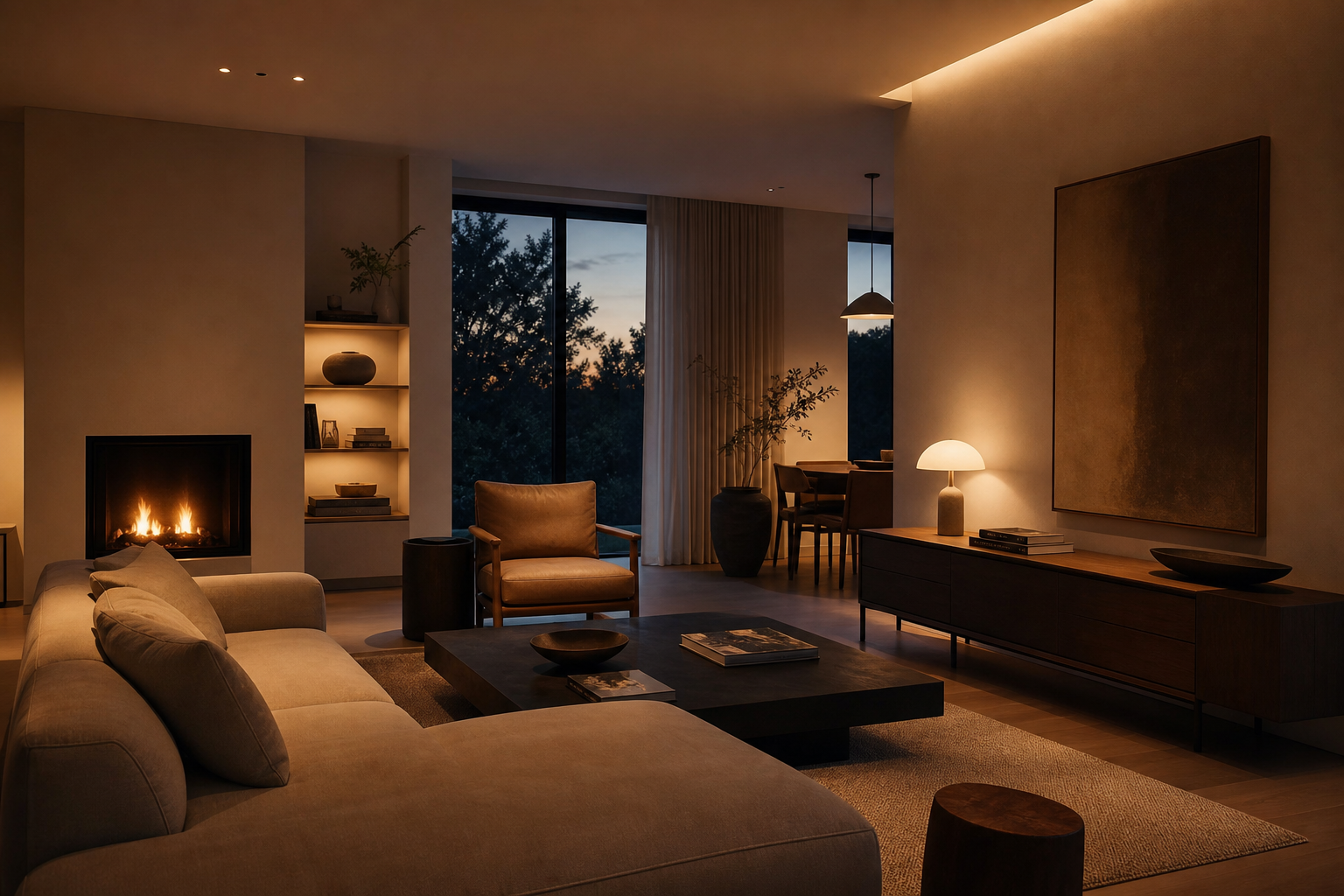
- Dim and warm the evening. Lower overheads, reduce screen glare, and avoid bright cold kitchens after dark when you can. Your living room should stop looking like an office by the last hour of the day.
- Make the bedroom boringly good. Dark, cool, quiet, and comfortable enough that you are not negotiating with the mattress or the streetlight.
- Watch the obvious saboteurs. Late caffeine, alcohol as a sleep aid, giant late meals, and doomscrolling in bed all tax the same system you are trying to repair.
- Add measurement only if it changes behavior. A tracker is a mirror, not a cure. If the score only makes you spiral, it is not helping.
- Add specialty tech for a specific failure mode. Hot sleeper, light-sensitive night owl, noisy apartment, data-driven optimizer — different tools. Buy for the leftover problem, not for the aesthetic of a complete sleep stack.
Light and timing
If you only fix one environmental category, fix light timing. Bright mornings help anchor wakefulness and make evening sleepiness more reliable. Dimmer, warmer evenings help melatonin rise on schedule instead of fighting fluorescent leftovers from the kitchen and the laptop.
Think of light as infrastructure, not décor. Curtains, bulbs, screen schedules, and where you spend the first hour of the day matter more than most people want to admit — because they are free or cheap and require consistency instead of a one-click purchase.
A useful mental model: morning light is a “go” signal; evening brightness is a “stay up” signal. You want a strong go early and a soft landing late. That is why night-shift-looking kitchens after 9 p.m. feel productive in the moment and expensive at 1 a.m.
When you are ready for product-level detail:
- Circadian Lighting for the Home — tunable bulbs, wake lights, therapy panels, and schedules that actually run instead of dying in an unused app.
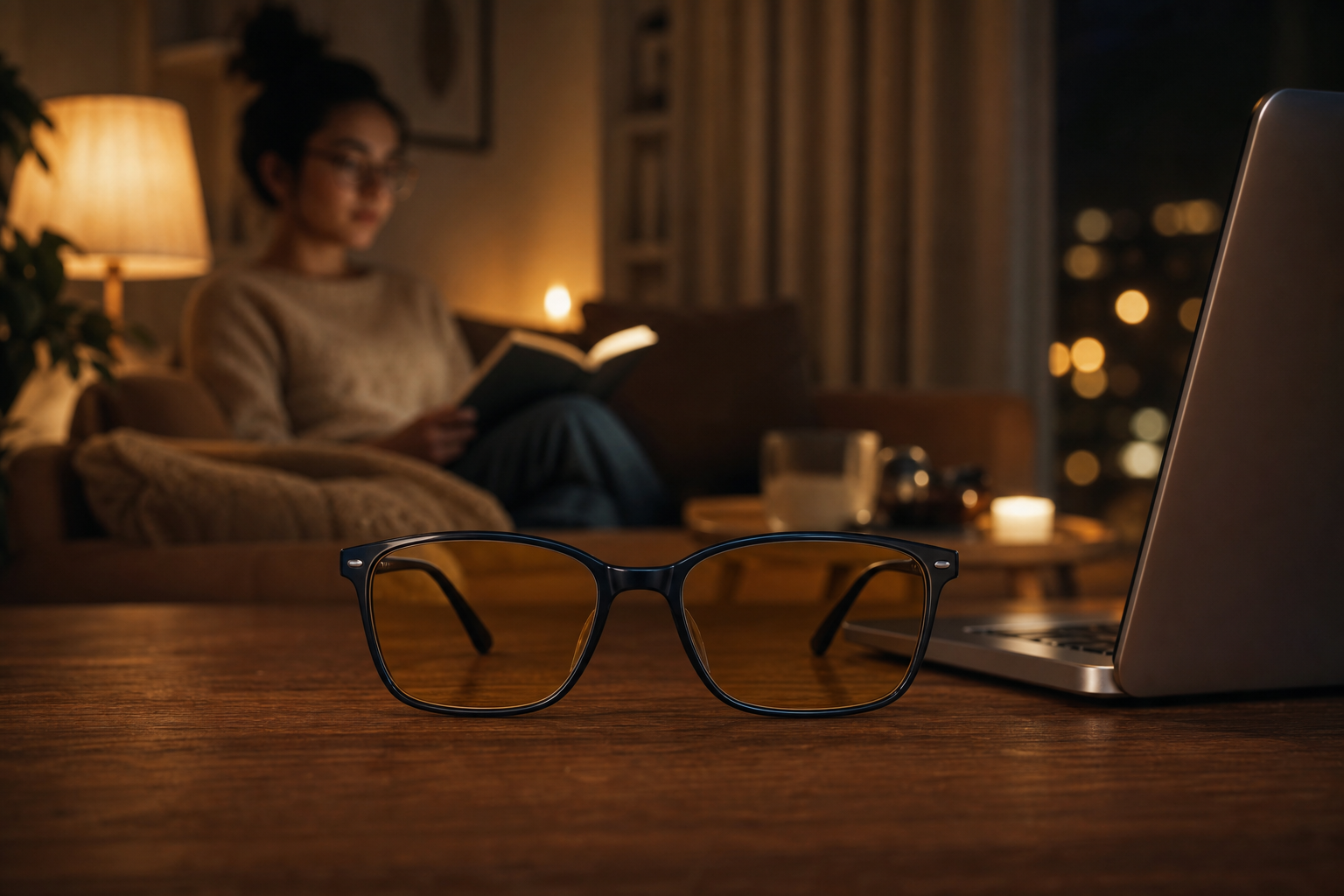
- Blue Light Blocking: Evidence vs Marketing — amber night glasses vs clear computer coatings vs Night Shift/f.lux, and what is worth believing.
Practical rule: change the room first. Use glasses and software as backup when screens or overheads stay bright because work, kids, or life refuse to cooperate.
Temperature
Most people fall asleep easier in a cooler room than a warm one. Your body needs to drop core temperature to initiate sleep; a stuffy bedroom fights that drop. Bedding weight, mattress heat trapping, partner preferences, and climate all matter — which is why “just set the thermostat lower” is incomplete advice for couples and hot sleepers.
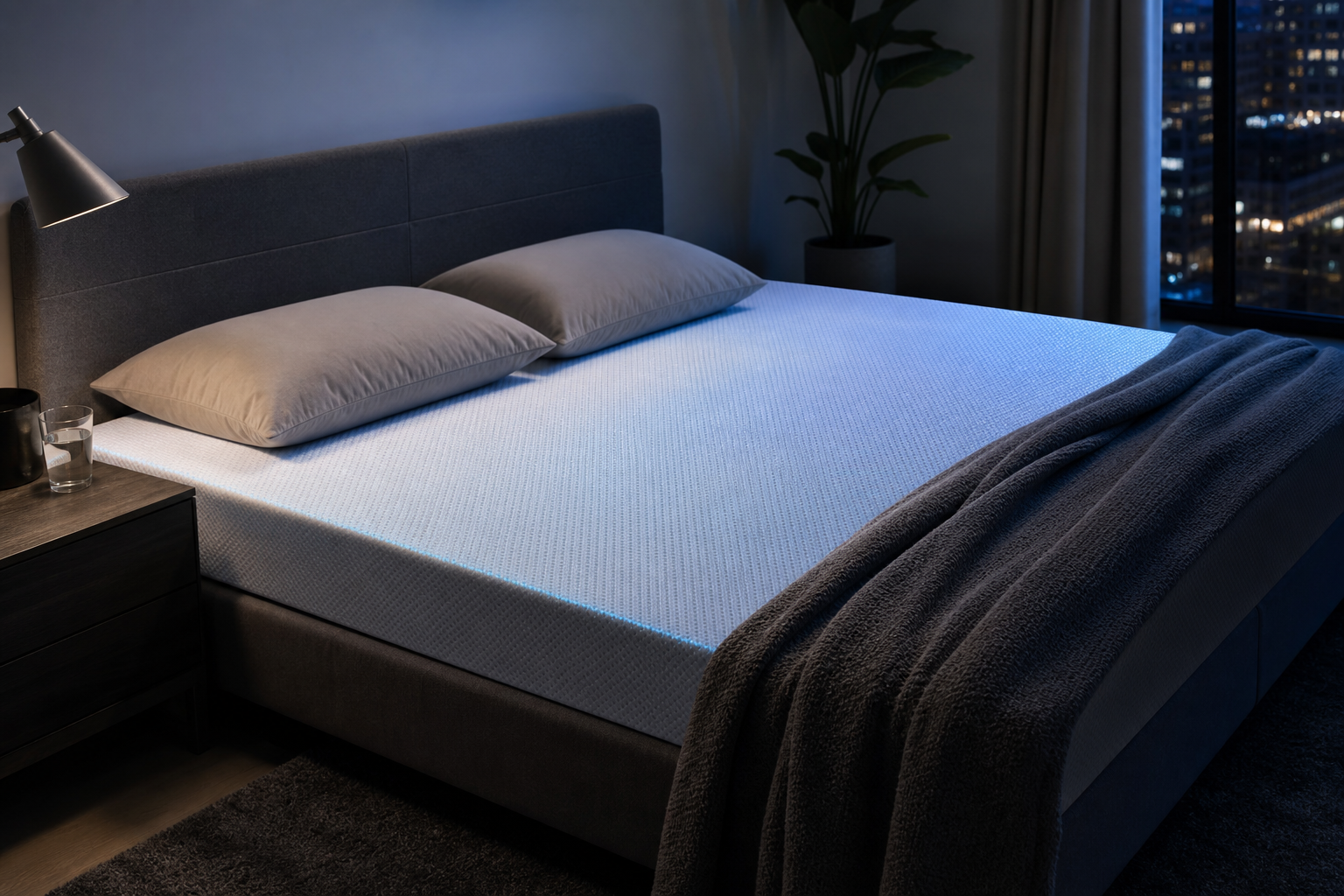
Start cheap: breathable sheets, a fan, less piled-up duvet, and a thermostat that does not keep the room summer-warm overnight. Active cooling and heating beds can help specific households — especially dual-zone couples and people who wake soaked — but they are expensive relative to those first moves.
Deep dive when temperature is clearly your bottleneck:
- Smart Beds and Temperature Regulation — Eight Sleep, mattress covers, climate systems, and who should actually buy them.
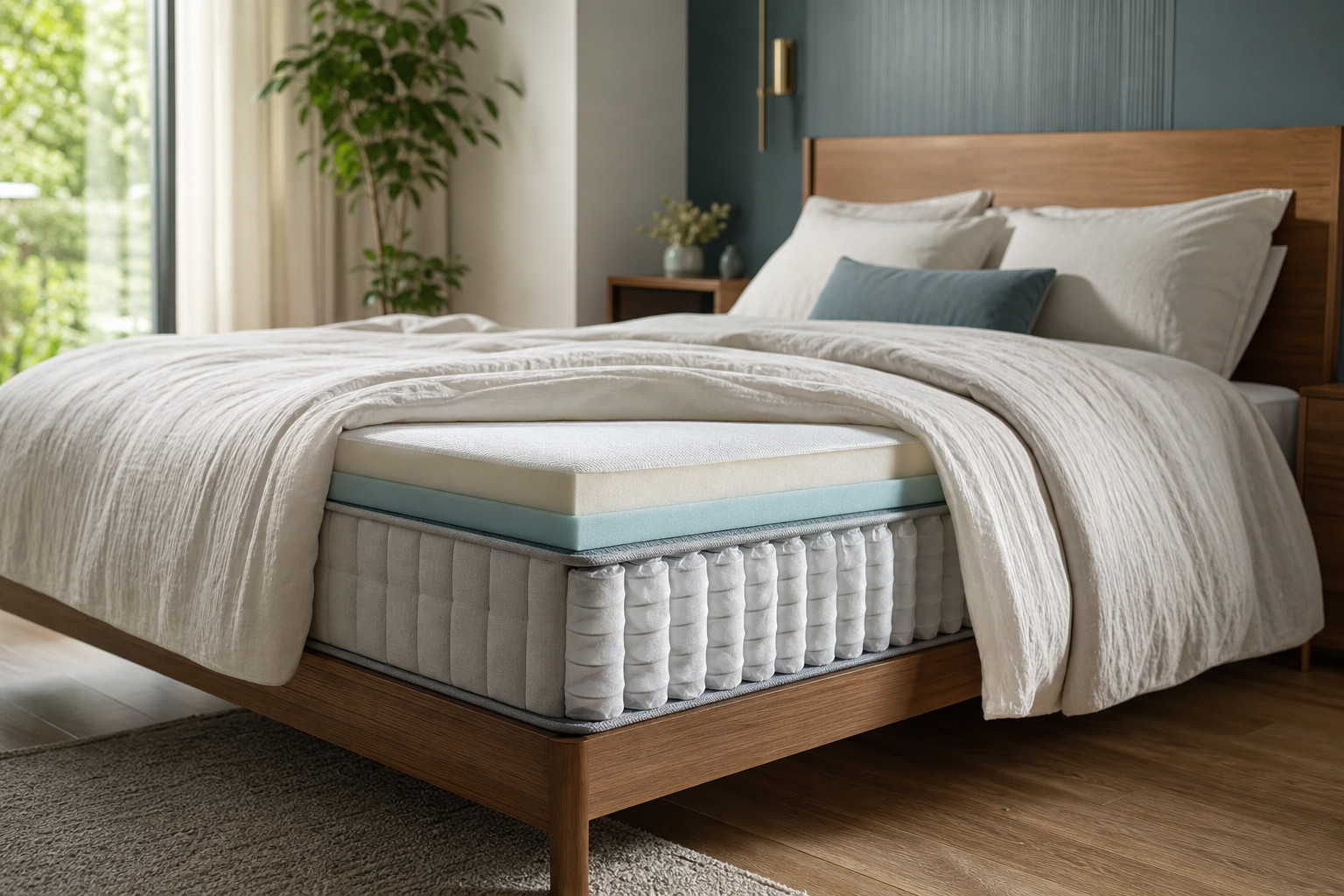
If the sleep surface itself is wrong — hammocking support, pressure points, or a foam that sleeps like a furnace — fix materials and firmness before buying climate gear. A cooling cover on a bad mattress is still a bad mattress with better marketing.
- Mattress Materials and Sleep Architecture — memory foam, latex, hybrids, grids, and toppers without “deep sleep” mythology.
Sound and noise
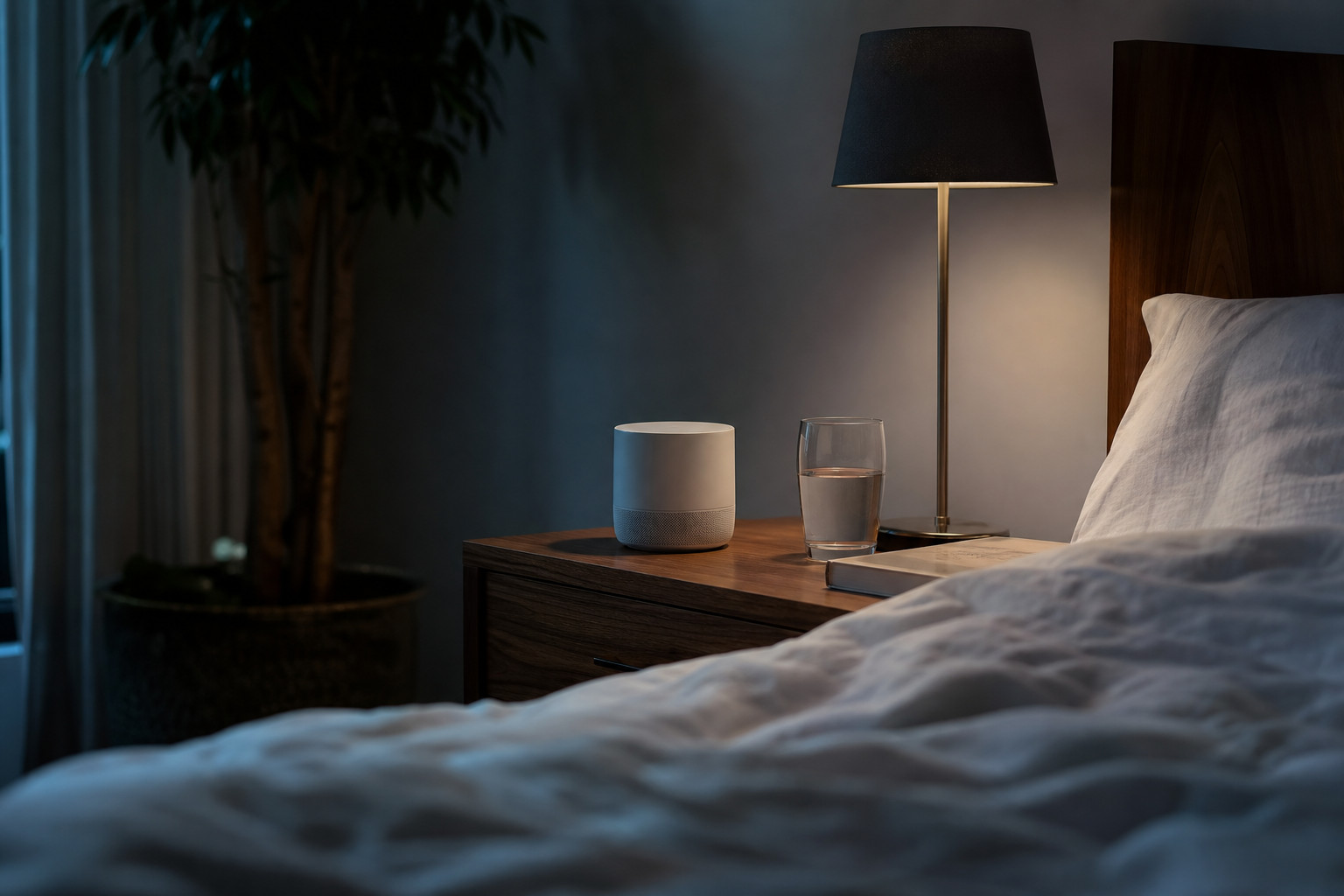
A quiet bedroom is ideal. Many homes are not quiet. Intermittent noise — doors, traffic, hallway conversations, a partner’s late snack — is especially good at yanking you out of lighter stages. Continuous masking (fan machines, non-looping digital noise) can make those spikes less startling by raising the floor of sound. Earplugs attenuate instead of adding audio.
Neither is a cure for insomnia disorder or apnea. Louder is also not better, especially near infants or anyone who needs to hear an alarm. Aim for steady and boring, not immersive spa theater.
Deep dive when noise is the remaining failure mode:
- Sound Environments for Sleep — Dohm vs LectroFan vs SNOOZ, earplugs, sleepbuds, and when “closed-loop” audio is still an experiment.
Tracking without the anxiety spiral
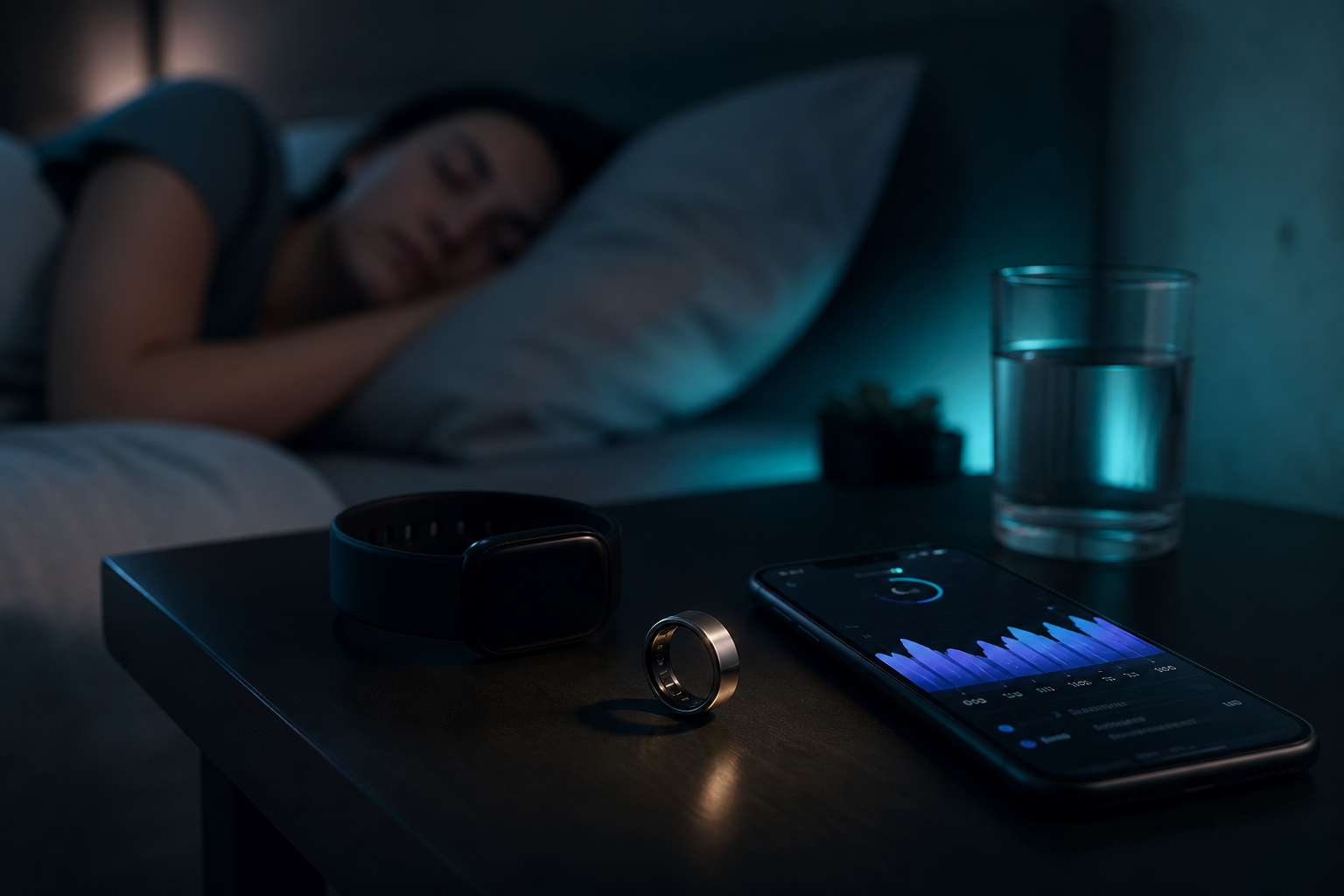
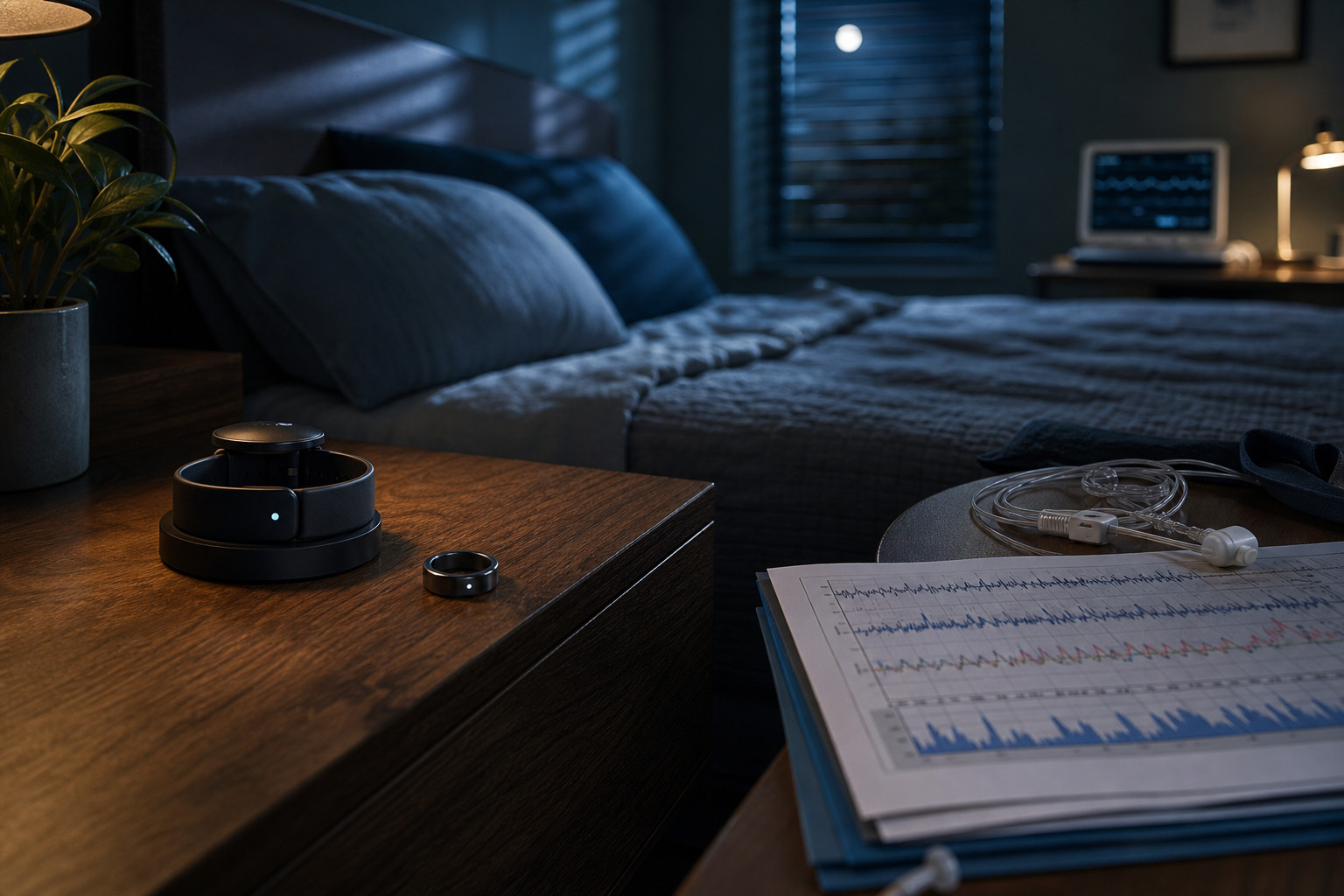
Wearables estimate sleep. They do not observe it like a lab. That distinction matters. A ring or watch can still be useful: it catches bedtime drift, rough recovery trends, and whether a change (earlier light, less alcohol, cooler room) correlates with better nights. The danger is orthosomnia — fretting over scores, stages, and “efficiency” until the dashboard becomes another reason you cannot fall asleep.
Use trackers like a weekly weather report, not a nightly report card. Look for patterns across days. Ignore one weird night. If a metric never changes what you do the next evening, it does not earn a permanent seat on your wrist.
Read the comparison when you want hardware specifics:
- Wearable Sleep Trackers Compared — rings, watches, and under-mattress sensors, with costs and metric realism.
When the question is diagnosis rather than trends — apnea, unexplained sleepiness, inconclusive home data — separate consumer charts from clinical testing:
- Wearable vs Clinical Sleep Studies — HSAT, PSG, actigraphy, MSLT, and when to escalate.
Breathing and medical flags
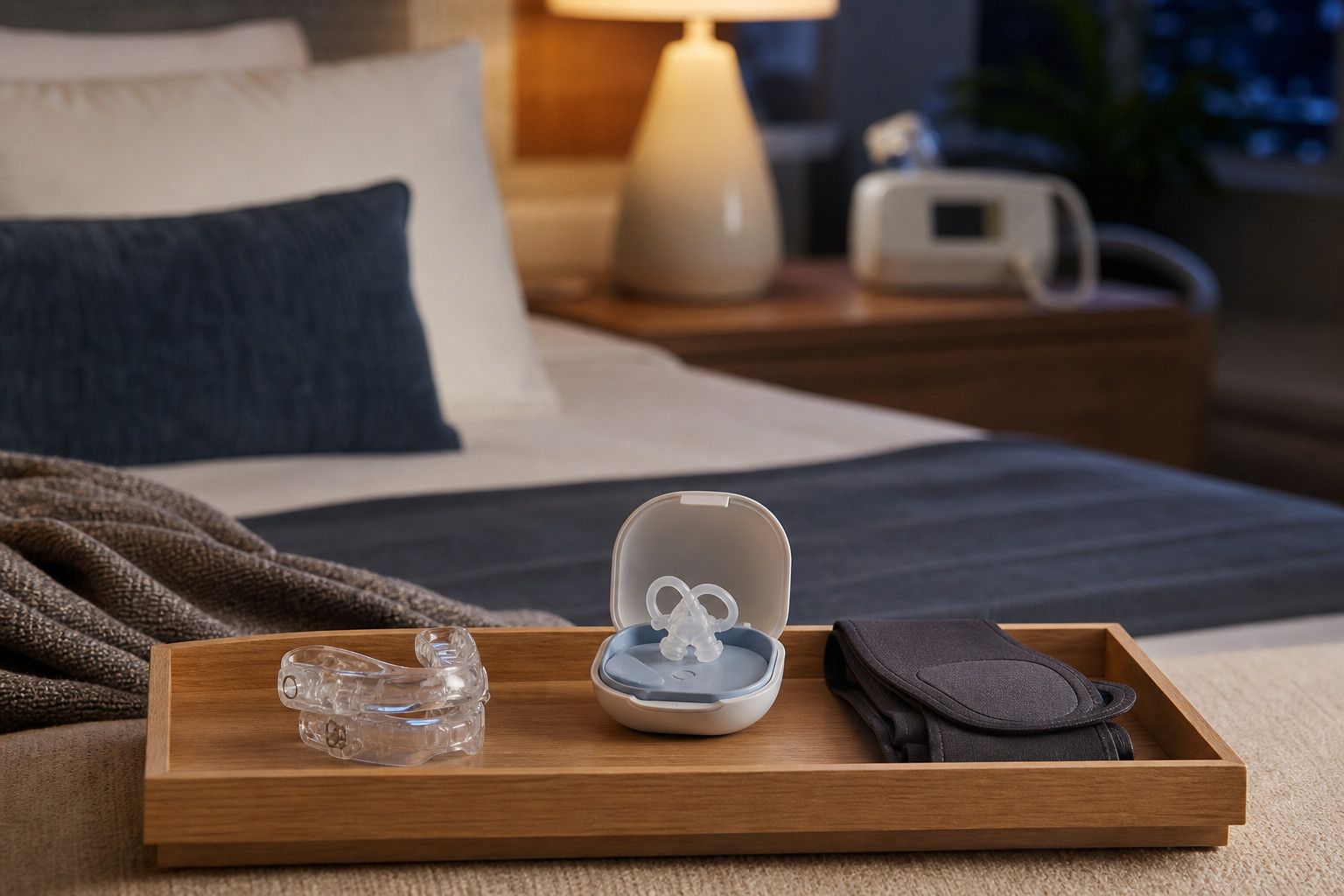
Mouth breathing, snoring, gasping, and unrefreshing sleep can point beyond “sleep hygiene.” Optimization content should not delay care for suspected sleep apnea or chronic insomnia. Loud nightly snoring and witnessed breathing pauses are clinical signals — not a cue to buy stronger mouth tape.
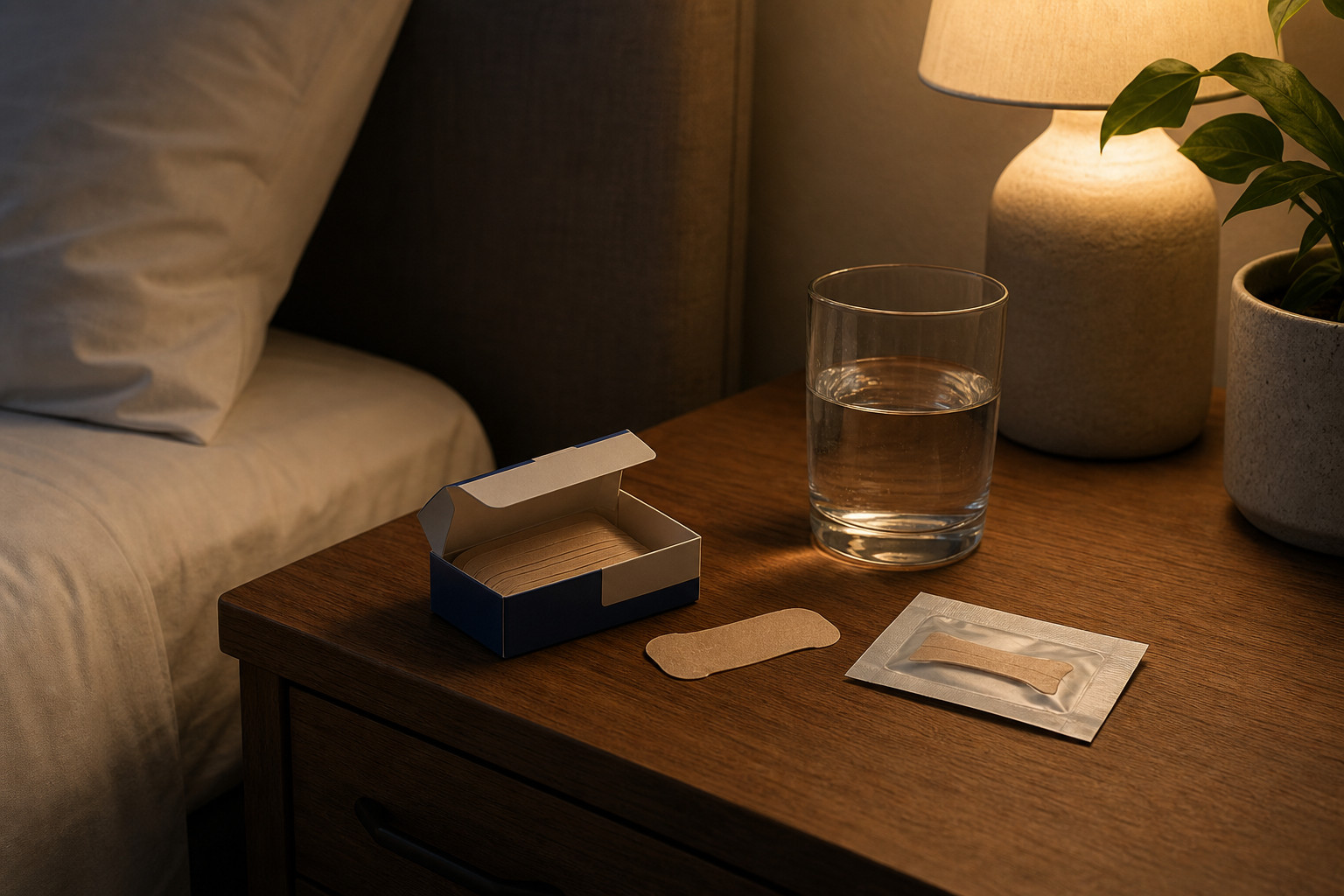
If the issue looks more like dry mouth, mild mouth-breathing snoring, or a congested nose — and red flags are absent — start with nasal airflow and cautious taping experiments. Congestion first, tape second, ego never.
- Mouth Taping and Nasal Breathing Devices — safety rules, strips, dilators, and who should skip them.
If gasping, witnessed apneas, or diagnosed OSA are in play, skip DIY tape and open the therapy comparison:
- Sleep Apnea Tech Beyond CPAP — oral appliances, EPAP, positional tools, monitoring, and implants after diagnosis.
A simple weekly protocol
You do not need a perfect week. You need defaults that survive a normal one.
- Every morning: outdoor light within the first hour when possible — walk the dog, stand on a balcony, drink coffee outside. Cloudy counts.
- Every evening: dim major rooms after sunset; warm display schedules on. Make the house look like nighttime before you ask your brain to feel it.
- Most nights: screens get less bright and less stimulating in the final hour. Boring content beats another work Slack thread in bed.
- Bedroom: cool, dark, and quiet enough that you are not negotiating with the environment — use masking or earplugs if the building is the problem.
- Once a week: pick one lever to adjust — caffeine cutoff, bedtime, thermostat, or light schedule — not five. Sleep improves from patience more often than from overhaul.
- Only then: consider a tracker, cooling bed, or specialty glasses for a remaining failure mode you can name in one sentence.
Where to go next
Use this page as the map. Open a deep dive when you already know which lever you are pulling:
- Circadian lighting — automate better mornings and evenings at home.
- Blue light blocking — separate useful night filters from marketing.
- Smart beds — decide if thermal control is worth the cost.
- Mattress materials — foam, latex, hybrids, and firmness without hype.
- Sound environments — masking, earplugs, and when audio gadgets help (or do not).
- Sleep trackers — choose measurement tools without buying hype.
- Wearable vs clinical studies — know when trends are enough and when to get tested.
- Mouth taping & nasal devices — safety-first options for mouth breathing and congestion.
- Sleep apnea beyond CPAP — oral appliances, EPAP, positional therapy, and implants.
Protect a consistent sleep and wake window, get outdoor light in the morning, and make evenings dimmer and quieter. Give those changes a couple of weeks before you shop for cooling beds, rings, or specialty glasses. Most people skip the free levers and buy the expensive ones. Most healthy adults land best around 7–9 hours. Your exact need is personal, but living under about 7 hours most nights is a common drag on mood, appetite control, and daytime performance. If sleep still feels broken after you protect time in bed — or if you snore loudly, gasp, or fight chronic insomnia — that is a clinical question, not a shopping question. No. A tracker can keep you honest about bedtime drift and show whether a change (earlier light, less alcohol) lines up with better nights. It cannot fix a bright bedroom, a late caffeine habit, or untreated apnea. Buy one when you already know what question you want the data to answer — then read our wearable comparison. Usually not by itself. Total evening brightness, late schedules, caffeine, stress, and a warm bedroom often matter as much or more. Blue-light tools help most as backup when screens and cold-white overheads stay on late. Room dimming beats another pair of amber glasses for most people — see our evidence-vs-marketing guide. Get care for loud chronic snoring, witnessed breathing pauses, gasping, restless legs, stubborn insomnia, or daytime sleepiness that affects driving or work safety. Home protocols are for optimization. They are not a diagnosis, and they should not delay evaluation when red flags show up. Environment first — lighting and temperature — then optional tracking, then niche tools for a specific failure mode. A better light schedule or cooler bed usually beats another dashboard. Our deep dives cover each category once you know which lever you are actually pulling.Sleep protocol FAQ
What should I fix first if my sleep is mediocre in 2026?
+
How much sleep do most adults need?
+
Do I need a wearable to improve sleep?
+
Is blue light the main reason I sleep poorly?
+
When should I see a clinician instead of optimizing at home?
+
What is a sensible order for buying sleep technology?
+
This comparison is designed for practical decision-making. Product capabilities, pricing, and memberships change quickly, so treat battery claims, plan costs, and feature availability as moving targets.
American Academy of Sleep Medicine healthy sleep habits
Useful baseline for healthy sleep ranges and when persistent problems warrant clinical evaluation.
Harvard Health, “Blue light has a dark side”
Supports the order-of-operations emphasis on morning light, evening dimming, and consistent schedules.
AASM clinical practice guideline for diagnostic testing for adult OSA
Helps separate environmental sleep optimization from medical sleep disorders that need professional care.
Keersa Health Sleep category guides
Product comparisons linked from this overview; capabilities and pricing change — verify before purchase.
Affiliate disclosure: some product links on Keersa Health may earn a commission at no extra cost to you.
Editorial recommendations are independent of commercial relationships.
Read our full disclosure.
Sources and editorial notes
Bottom line
The best sleep protocol is boring on purpose: consistent timing, morning light, calmer evenings, and a cool dark bedroom. Technology helps when it reinforces those defaults — not when it replaces them. Start here, then open the comparison guides only for the specific problem you can still name after the basics are in place.