Sleep guide · Updated 2026
Mattress Materials and Sleep Architecture: Foam, Latex, Hybrids & Firmness
A detailed 2026 guide to mattress materials — memory foam, polymer grids, latex hybrids, innerspring hybrids, and toppers — separating comfort preference from physiologic sleep outcomes.
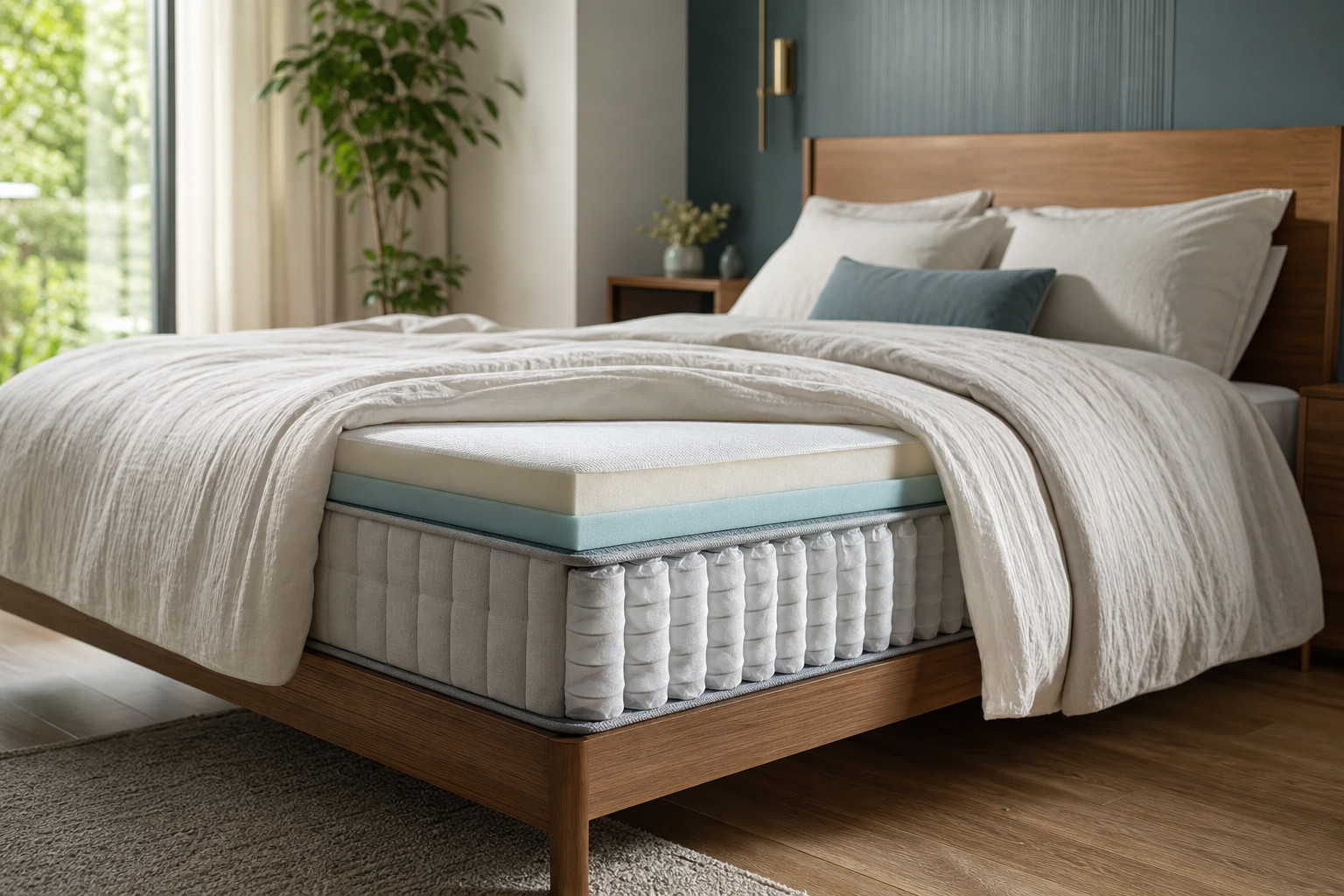
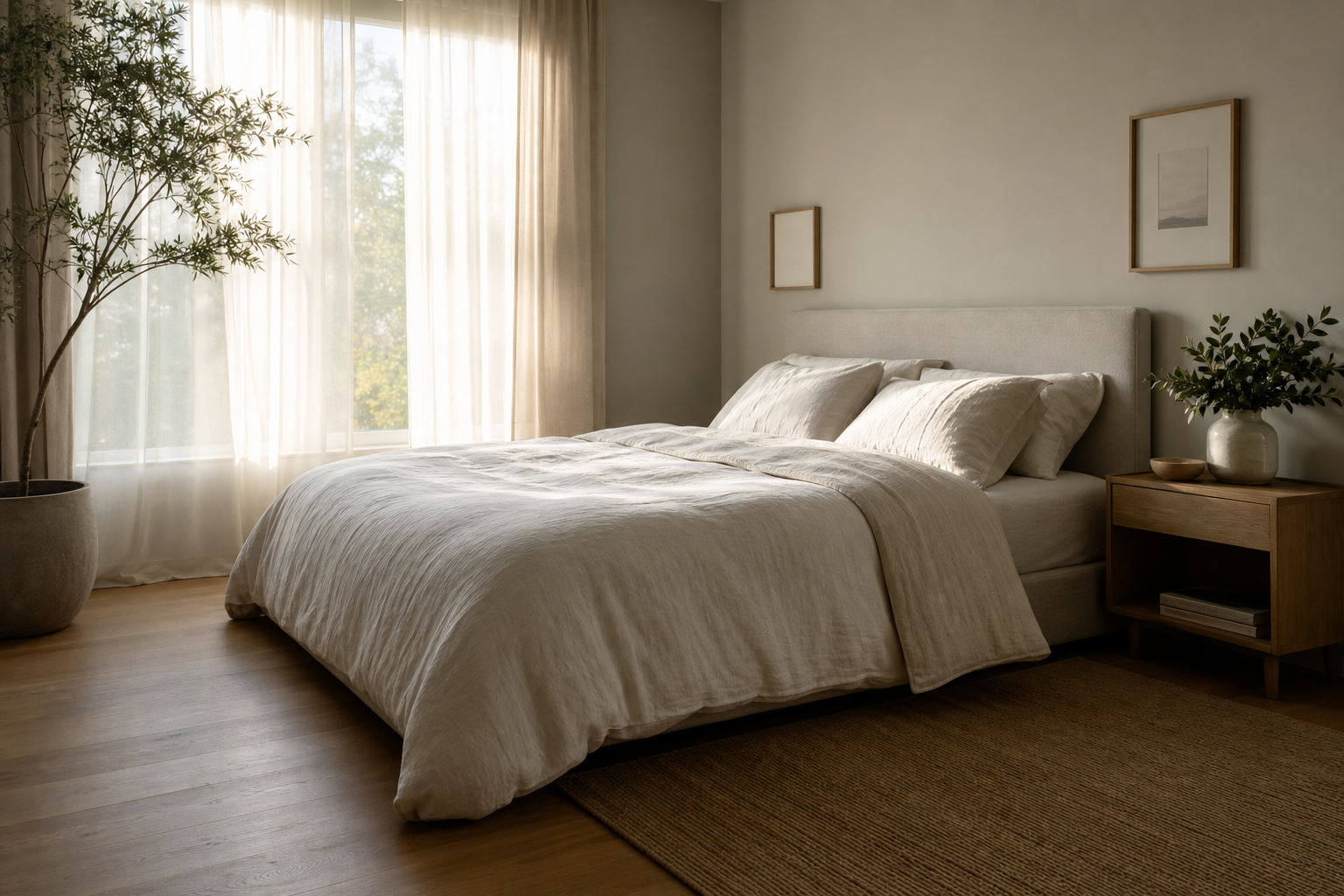
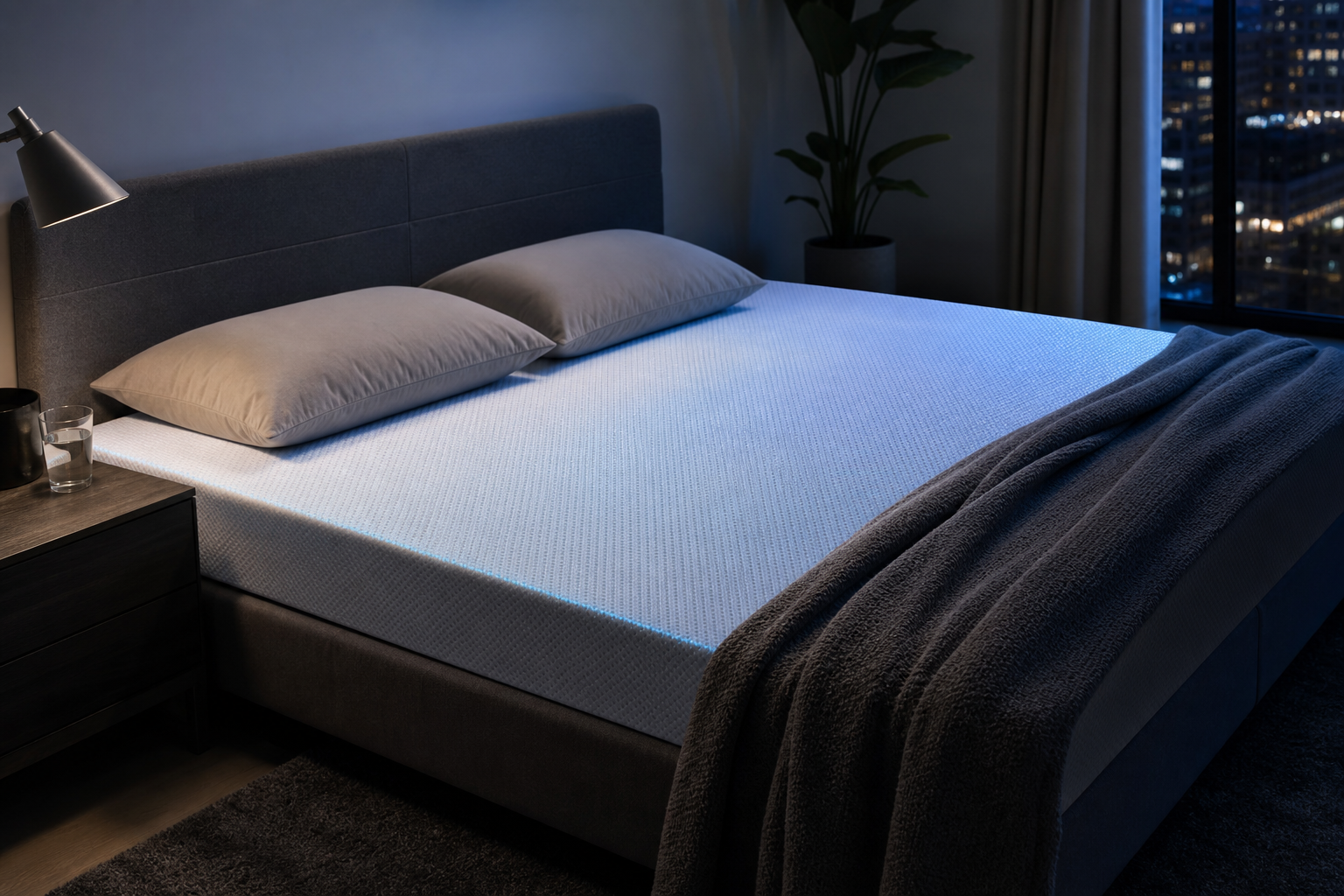
Mattress materials shopping has become a construction arms race in 2026, driven by side sleepers hunting pressure relief, hot sleepers chasing cooler foams and grids, and couples who want motion isolation without a hotel-firm bed. The market sells foam hugs, coil bounce, latex buoyancy, polymer grids, and toppers as if each one rewires overnight physiology. This guide compares the major constructions — and separates comfort physics from “deep sleep” marketing.
What you are usually choosing is a construction class, not a sleep-stage pill. Memory foam contours and isolates motion. Polymer grids aim for pressure relief with more airflow than dense foam. Latex and latex hybrids feel buoyant and often sleep cooler. Innerspring hybrids combine coil support with comfort layers. Toppers change only the surface — a cheaper experiment before replacing the whole bed.
A better mattress can reduce awakenings from pressure points, heat, or partner motion. It will not independently “increase REM” if evenings stay bright, caffeine runs late, or apnea is untreated. Treat materials as sleep environment infrastructure — closer to temperature and darkness than to a wearable score.
Key takeaways
- Best memory-foam contour: TEMPUR-Adapt.
- Best non-foam pressure grid: Purple Mattress.
- Best luxury innerspring/hybrid classic: Saatva Classic.
- Best natural latex hybrid: Avocado Green.
- Best mid-market all-rounder hybrid: Brooklyn Bedding Signature.
- Best support-leaning luxury hybrid: WinkBed.
- Best trial-oriented hybrid: Nest Alexander Hybrid.
- Best cheap foam experiment: Zinus Green Tea.
- Best cooler surface tweak: Talalay latex topper.
- Biggest rule: fix support and firmness before buying sleep-stage mythology.
Comfort preference vs physiologic outcomes
A mattress can reduce pressure points, cut partner-motion awakenings, and change overnight heat load. Those are real. What it usually cannot do is independently “increase REM” on a chaotic schedule with bright evenings and late caffeine. Think of materials as environment infrastructure — closer to temperature and darkness than to a wearable score.
- Contour redistributes pressure (foam, latex, grids).
- Support resists hammocking (coils, denser cores, right firmness).
- Thermal behavior affects continuity for hot sleepers (foam often warmer; latex/hybrids often airier).
- Motion isolation matters for couples more than solo sleepers.
How we evaluate mattress materials
Editorial scores favor constructions that solve a stated complaint without pretending to be clinical sleep therapy. We score across five pillars:
- Pressure and alignment fit (30%) — can the surface match sleeping position and body weight?
- Thermal realism (20%) — heat claims vs construction physics.
- Durability and support longevity (20%) — useful life vs price tier.
- Couple practicality (15%) — motion transfer and edge use.
- Ownership value (15%) — price, trial sanity, and upgrade path (topper vs replace).
Important limitation: Keersa Health scores are editorial synthesis of construction classes and publicly described products. They are not lab certifications. Foams, coils, and covers change by generation.
Interactive comparison
Filter by form factor, sort by score or price, and pin up to three options for a focused side-by-side view.
Tradeoff:
Sticker price still matters here — most options are one-time hardware buys, so the three-year estimate mainly reflects purchase price plus expected upkeep.
Estimates are directional and based on common public pricing patterns. Promotions, refurbished units, family plans, and tier changes can move these numbers materially.
3-year cost of ownership
Device
Year 1
3-year estimate
Amazon Price
Saatva Classic
$1,700
$1,700
—
TEMPUR-Adapt
$2,200
$2,200
$2,299
Avocado Green Mattress
$1,600
$1,600
—
Purple Mattress
$1,400
$1,400
$1,599
WinkBed
$1,500
$1,500
—
Brooklyn Bedding Signature Hybrid
$1,000
$1,000
$1,098.75
Talalay Latex Mattress Topper
$350
$350
$419.40
Nest Bedding Alexander Hybrid
$1,200
$1,200
$109.99
Gel Memory Foam Topper
$120
$240
$52.99
Zinus Green Tea Memory Foam
$250
$500
$199
Material classes that actually matter
Memory foam
Slow-response contour and strong motion isolation. Great for pressure-sensitive side sleepers who like a hug. Common tradeoff: heat and a “stuck” feeling for combination sleepers.
Polymer grids (Purple-style)
Pressure relief with faster response and more airflow than dense foam. Polarizing feel — try before you commit emotionally to marketing demos.
Latex (and latex hybrids)
Buoyant resilience, often cooler than viscoelastic foam, with a materials story some shoppers prefer. Not a deep sink. Confirm latex allergy risk if relevant.
Innerspring and hybrids
Coil support, bounce, and airflow. Better edge sitting and less “quicksand,” with more motion transfer than all-foam. Firmness SKU choice is the whole game.
Toppers
Cheap experiments when the core is intact. Latex for cooler plush; memory foam for deeper hug. Dead cores need replacement, not another slab of foam.
Who should buy what
Choose memory foam if...
- Shoulder/hip pressure wakes you on firmer beds
- Partner motion is a major complaint
- You already know you like slow contour
Choose a hybrid/innerspring if...
- You run hot on foam
- You want bounce and easier position changes
- You sit on the edge to dress
Choose latex if...
- You want buoyant pressure relief without foam hug
- Materials sourcing matters to you
- Heat is a foam deal-breaker
Choose a topper if...
- Support is fine but the surface is wrong
- You want a reversible test
- Budget says “tune, don’t replace” — for now
Below are deeper notes on every option in the comparison table, sorted by editorial score. Jump directly from the table pins or the cost section.
Saatva · Hybrid
Best for: Shoppers who want a luxury innerspring/hybrid with real coil support and white-glove delivery
Saatva Classic is the hybrid/innerspring default in this guide: support and airflow with a traditional mattress personality. Choose it when foam hug is the problem, not when you need maximum motion isolation. Coils create buoyancy and edge usability that many foam mattresses lack. Firmness SKUs matter more than brand slogans — lumbar needs differ for stomach vs side sleepers. If heat is still an issue after a breathable hybrid, fix room temperature before buying a climate cover.
Estimated ownership: about $1,700 in year 1 and
$1,700 over 3 years.
One-time purchase with delivery service baked into the brand model for many orders.
Tempur-Pedic · Foam
Best for: Pressure-sensitive sleepers who want deep contouring memory foam
TEMPUR-Adapt is the reference memory-foam experience: slow-response contouring that can unload shoulders and hips for side sleepers. Buy it for pressure relief and stillness — not for the coolest sleep surface in the category. Memory foam changes how pressure maps across bony contact points. That can help side sleepers, but “deeper sink” is not automatically better spinal alignment for every body. Heat is the recurring foam complaint. Breathable covers help; they do not turn dense foam into a coil hybrid. If you already like TEMPUR feel and mainly need cooling, see the smart beds guide for ActiveBreeze — this article is about material architecture, not climate appliances.
Estimated ownership: about $2,200 in year 1 and
$2,200 over 3 years.
One-time mattress purchase. Protectors and foundations are extra.
Avocado · Latex
Best for: Buyers who want natural latex hybrid materials with organic-leaning certifications
Avocado Green is the latex-hybrid pick for people who want buoyant pressure relief and a cleaner materials brief. It is a poor match if you specifically crave slow memory-foam hug. Latex (especially Talalay/Dunlop distinctions) changes resilience and contour speed versus viscoelastic foam. “Natural” is not a sleep-stage drug — it is a materials and sourcing preference layered on ordinary support physics. Latex protein allergy is uncommon but real; confirm materials if you have known rubber allergies.
Estimated ownership: about $1,600 in year 1 and
$1,600 over 3 years.
One-time purchase. Organic/natural configs cost more — buy the construction you will feel, not the label alone.
Purple · Grid
Best for: Hot sleepers who want pressure relief without classic memory-foam hug
Purple’s grid is the clearest alternative to memory foam in mainstream DTC: pressure relief with more airflow and a faster response. Try it if foam hug feels trapping — not if you specifically want that sink. The grid compresses under bony points while staying more supportive under broader weight — a different pressure story than viscoelastic foam. Cooling claims are mostly about airflow and material feel, not active refrigeration. Sit/edge use differs by model; if you dress sitting on the bed edge nightly, test that behavior.
Estimated ownership: about $1,400 in year 1 and
$1,400 over 3 years.
One-time purchase. Higher Purple tiers cost substantially more for similar core ideas.
WinkBed · Hybrid
Best for: Heavier bodies and shoppers wanting a denser luxury hybrid with targeted models
WinkBed is the support-leaning luxury hybrid for people who crush softer foam beds. It is less about novel materials and more about durable coil-and-foam architecture that holds shape. Body weight changes which firmness “reads” medium. Heavier sleepers often need denser support cores than marketing firmness names imply. Edge support matters if you sit to dress or sleep near the perimeter. If pressure points remain after a supportive hybrid, consider a latex topper before another full replacement.
Estimated ownership: about $1,500 in year 1 and
$1,500 over 3 years.
One-time purchase. Model choice matters more than the umbrella brand name.
Brooklyn Bedding · Hybrid
Best for: A balanced DTC hybrid with multiple firmness choices without luxury-brand pricing
Brooklyn Signature Hybrid is the pragmatic all-rounder: enough contour for many side sleepers, enough coil support for back sleepers, and less brand tax than flagship luxury hybrids. Hybrids succeed when foam comfort depth and coil gauge match your sleeping position — not because “hybrid” is magic. If you share a bed, test motion transfer expectations; hybrids sit between foam isolation and spring bounce. Rotate on schedule if the manufacturer recommends it; foam comfort layers still develop body impressions over years.
Estimated ownership: about $1,000 in year 1 and
$1,000 over 3 years.
One-time purchase. Mid-market hybrid pricing before tax/protector.
Various (Talalay latex) · Topper
Best for: Fixing pressure points or feel without replacing a still-supportive mattress core
A Talalay latex topper is the highest-ROI materials tweak when your mattress support is fine but the surface is too firm or too hot. It is not a miracle fix for sagging coils or a hammocked foam core. Diagnose first: sagging middle → replace mattress; surface-too-firm → topper candidate. Thickness changes geometry — side sleepers often want more plush than back sleepers. Memory-foam toppers contour more but often sleep hotter; latex is the cooler common upgrade path.
Estimated ownership: about $350 in year 1 and
$350 over 3 years.
One-time topper cost. Far cheaper than a full replacement when the core is still intact.
Nest Bedding · Hybrid
Best for: Shoppers who want a tunable hybrid with a long trial mindset
Nest Alexander Hybrid is a sensible mid-premium hybrid when you value trial flexibility and balanced foam-plus-coil feel. It will not invent a new material class — it executes the standard hybrid brief well. Long trials help only if you sleep on the bed consistently and change one variable at a time (sheets, protector, foundation). Foundations matter: a sagging platform makes any hybrid feel wrong. If you wake with lumbar fatigue, go firmer/supportive before blaming “hybrid” as a category.
Estimated ownership: about $1,200 in year 1 and
$1,200 over 3 years.
One-time purchase. Use the trial to validate firmness, not to collect mattresses.
Various · Topper
Best for: A cheap contour experiment when you want more hug without buying a TEMPUR
Gel memory-foam toppers are the budget contour test. Use them to learn whether you like foam hug before financing a flagship foam mattress — and skip them if heat is already your enemy. “Gel” marketing rarely equals active cooling. Putting plush foam on a soft base can create hammocking and lumbar strain. If the topper helps but heat hurts, try latex next — not a thicker foam slab.
Estimated ownership: about $120 in year 1 and
$240 over 3 years.
Cheap consumable-tier bedding. Replace if it softens or sleeps too hot.
Zinus · Foam
Best for: A cheap first foam experiment, guest rooms, and short-term setups
Zinus Green Tea is the honest budget foam: prove the foam category before spending TEMPUR money. It is not the endgame mattress for most nightly adult sleepers. Off-gassing is common with new foam — ventilate. If it softens quickly or sleeps hot, that is category feedback, not a reason to swear off all foam forever. Guest room and studio setups are where this price tier shines.
Estimated ownership: about $250 in year 1 and
$500 over 3 years.
Assume earlier replacement than premium hybrids. Still rational for temporary needs.
Detailed reviews

Saatva Classic
Pros
Cons
Choose this if
Skip this if
TEMPUR-Adapt
Pros
Cons
Choose this if
Skip this if
Avocado Green Mattress
Pros
Cons
Choose this if
Skip this if
Purple Mattress
Pros
Cons
Choose this if
Skip this if

WinkBed
Pros
Cons
Choose this if
Skip this if
Brooklyn Bedding Signature Hybrid
Pros
Cons
Choose this if
Skip this if
Talalay Latex Mattress Topper
Pros
Cons
Choose this if
Skip this if
Nest Bedding Alexander Hybrid
Pros
Cons
Choose this if
Skip this if
Gel Memory Foam Topper
Pros
Cons
Choose this if
Skip this if
Zinus Green Tea Memory Foam
Pros
Cons
Choose this if
Skip this if
How to choose without getting marketed
- Name the failure mode. Pressure, heat, sagging support, or partner motion — pick one primary.
- Match sleeping position and body weight. Labels like “medium” are not universal.
- Prefer construction over buzzwords. Gel, copper, and “sleep architecture” print on law tags do not override foam density and coil design.
- Use trials honestly. Sleep on it for weeks with your real pillows and room temperature.
- Topper before replacement when the core is alive. Replace when the middle hammocks.
- Only then add climate gear. If feel is right and heat remains, open smart beds & temperature.
Quick recommendations by persona
- Pressure-sensitive side sleeper: TEMPUR-Adapt or Purple
- Hot sleeper leaving foam: Avocado Green or Saatva Classic
- Support-first / heavier body: WinkBed
- Balanced mid-budget hybrid: Brooklyn Signature
- Trial maximizer: Nest Alexander Hybrid
- Cheap foam test: Zinus Green Tea
- Too-firm but supportive bed: Talalay latex topper
- Budget contour test: gel memory-foam topper
Indirectly. Materials change pressure, heat, and awakenings — which can improve continuity. They do not reliably “add deep sleep” like a drug. Expect better comfort and fewer tosses when firmness and heat match you; do not expect stage-score miracles. Different jobs. Memory foam contours and isolates motion. Hybrids add coil support and airflow. Latex is buoyant and often cooler than dense foam. Match the complaint (pressure, heat, sagging support) instead of chasing a universal winner. Firm enough that your spine does not hammock, soft enough that shoulders and hips are not stabbed. Side sleepers often need more surface plush; stomach sleepers often need more support. Body weight changes how a labeled “medium” actually feels. Yes — if the core still supports you and the surface is merely too firm or too hot. No — if the middle is collapsed. Toppers tune the comfort layer; they do not rebuild a dead support core. They can be better for materials preferences, certifications, and some latex feel/airflow goals. “Natural” is not a proven deep-sleep upgrade by itself. Buy construction you will sleep on, then enjoy the sourcing story as a bonus. When the mattress feel is already right and heat is the remaining bottleneck. See our smart beds guide. Do not buy climate gear to compensate for a sagging or wildly wrong firmness first.Mattress materials FAQ
Do mattress materials change sleep architecture in 2026?
+
Memory foam vs hybrid vs latex — which is best?
+
How firm should my mattress be?
+
Should I buy a topper before replacing the mattress?
+
Are organic or natural mattresses better for sleep?
+
When should I add a cooling smart cover instead?
+
This comparison is designed for practical decision-making. Product capabilities, pricing, and memberships change quickly, so treat battery claims, plan costs, and feature availability as moving targets.
Radwan et al., systematic review of mattress design, sleep quality, pain, and spinal alignment
Supports firmness matching and pressure-relief goals while leaving large individual variability — comfort preference is not the same as a physiologic lab endpoint.
Caggiari et al., “What type of mattress should be chosen…” literature review (PMC)
Useful for heat retention, motion transfer, and durability tradeoffs by construction class, with medium-firm surfaces often favored.
National Sleep Foundation sleep-quality / environment framing
Mattress choice sits inside a broader sleep environment — it does not replace schedule, light, or medical evaluation.
Tempur-Pedic mattress materials documentation
Foam densities, coil gauges, cover fabrics, and trial policies change by SKU and generation — verify current specs before buying.
EPA overview of volatile organic compounds (VOCs) and indoor air quality
Ventilate new mattresses; consider off-gassing/VOC comfort for sensitive buyers and verify current labeling.
Affiliate disclosure: some product links on Keersa Health may earn a commission at no extra cost to you.
Editorial recommendations are independent of commercial relationships.
Read our full disclosure.
Sources and editorial notes
Bottom line
Mattress materials reshape pressure, heat, and motion — the boring physics that decide whether you stay asleep. They do not replace consistent timing, morning light, or a cool dark room. Pick a construction that matches your failure mode, validate firmness with a real trial, and use toppers before expensive replacements when the core still works.
Start with the overview if you have not yet: The Sleep Protocol. Related deep dives: smart beds & temperature, sound environments, wearable trackers, circadian lighting, and blue light blocking.