Sleep guide · Updated 2026
Sound Environments for Sleep: White Noise, Pink Noise & Masking Tools
A detailed 2026 guide to sleep sound environments — mechanical fans, digital non-looping machines, earplugs, sleepbuds, and closed-loop-style stimulation — with volume safety and who should buy what.
Sound environments for sleep are standard kit in 2026 for city sleepers, new parents, travelers, and couples who disagree about bedroom noise. The category mixes mechanical fan machines, digital white/pink/brown noise, bedtime ritual devices, earplugs, in-ear sleepbuds, and experimental acoustic wearables. This guide compares the major options — and puts volume safety and problem-fit ahead of “biohacking audio” hype.
Sleep sound tools either add a steady blanket of noise or reduce what reaches your ears. Mechanical fan machines and digital noise generators mask intermittent hallway, HVAC, or street sounds. Bedside ritual devices combine audio with wind-down scenes. Earplugs attenuate close-range noise. Sleepbuds put masking only in your ears so a partner can keep the room quiet. A smaller set of experimental wearables claim closed-loop or neuromodulation effects — usually not where beginners should start.
What they do for you is make abrupt noises less startling, or make a loud environment quieter — so sleep continuity improves when sound is the real bottleneck. They do not fix caffeine timing, a hot room, or untreated apnea, and louder is not better for hearing safety.
Key takeaways
- Best mechanical classic: Yogasleep Dohm Classic.
- Best digital non-looping default: LectroFan Evo.
- Best smart real-fan option: SNOOZ.
- Best bedtime ritual combo: Hatch Rest+.
- Best adaptive digital step-up: Sound+Sleep SE.
- Best cheap experiment: Homedics Sound Spa.
- Best attenuation baseline: Mack’s Pillow Soft.
- Best reusable earplugs: Loop Quiet.
- Best personal masking for couples: Ozlo Sleepbuds.
- Biggest rule: match the tool to the noise problem — do not buy neuromodulation first.
Masking vs attenuation
Masking adds continuous sound so intermittent noise is less startling. Attenuation reduces what reaches the ear (earplugs). Many bedrooms need one; some need both. Neither replaces a consistent sleep window, a dark cool room, or clinical care for apnea and insomnia disorders.
- Choose masking when hallway doors, HVAC cycles, or street noise poke you awake.
- Choose attenuation when close-range snoring or travel noise overwhelms speakers — or when you refuse more audio in the room.
- Choose personal buds when one partner needs masking and the other needs quiet.
How we evaluate sleep sound tools
Editorial scores favor products that solve a real acoustic problem without unsafe volumes or miracle claims. We score across five pillars:
- Masking quality (30%) — steady, non-annoying sound that covers intermittent noise.
- Usability overnight (20%) — controls in the dark, timers, partner conflicts, travel.
- Safety and volume realism (20%) — distance, infant considerations, hearing common sense.
- Evidence alignment (15%) — claims match mechanisms (masking ≠ slow-wave therapy).
- Ownership cost (15%) — hardware price, consumables, and optional app spend.
Important limitation: Keersa Health scores are editorial synthesis. They are not audiology prescriptions. Firmware, sound catalogs, and dB behavior change by SKU.
Interactive comparison
Filter by form factor, sort by score or price, and pin up to three options for a focused side-by-side view.
Tradeoff:
Sticker price still matters here — most options are one-time hardware buys, so the three-year estimate mainly reflects purchase price plus expected upkeep.
Estimates are directional and based on common public pricing patterns. Promotions, refurbished units, family plans, and tier changes can move these numbers materially.
3-year cost of ownership
Device
Year 1
3-year estimate
Amazon Price
Yogasleep Dohm Classic
$50
$50
$49.99
LectroFan Evo
$60
$60
$65.95
Mack’s Pillow Soft Silicone Earplugs
$40
$120
—
SNOOZ Smart White Noise Machine
$100
$100
$99.99
Sound+Sleep SE
$100
$100
$142.95
Loop Quiet
$30
$75
$24.95
Hatch Rest+
$100
$160
$69.99
Ozlo Sleepbuds
$350
$450
$279
Elemind Sleep Headband
$400
$500
$11.11
Homedics Sound Spa
$25
$25
$21.59
Who should buy what
Choose a mechanical fan machine if...
- You hate looping nature tracks
- You want set-and-forget masking
- Organic fan character matters more than spectrum menus
Choose a digital non-looping machine if...
- You want white, pink, brown, and fan libraries
- You need a timer or headphone jack
- Travel size matters
Choose Hatch-style ritual devices if...
- Bedtime friction (especially with kids) is the bottleneck
- Soft light cues plus sound help the wind-down
- Pure masking already works and you want routine support
Choose earplugs if...
- You want attenuation without adding speaker noise
- You travel or share thin walls
- You need a cheap first experiment
Choose sleepbuds if...
- A bedside speaker wakes your partner
- You tolerate in-ear devices overnight
- You already know masking helps
Treat closed-loop wearables as optional experiments if...
- Light, schedule, temperature, and simple masking are already solid
- You understand consumer stimulation ≠ clinical protocols
- You can abandon an expensive wearable without drama
Below are deeper notes on every option in the comparison table, sorted by editorial score. Jump directly from the table pins or the cost section.
Yogasleep · Machine
Best for: People who want organic, non-looping fan noise without apps or menus
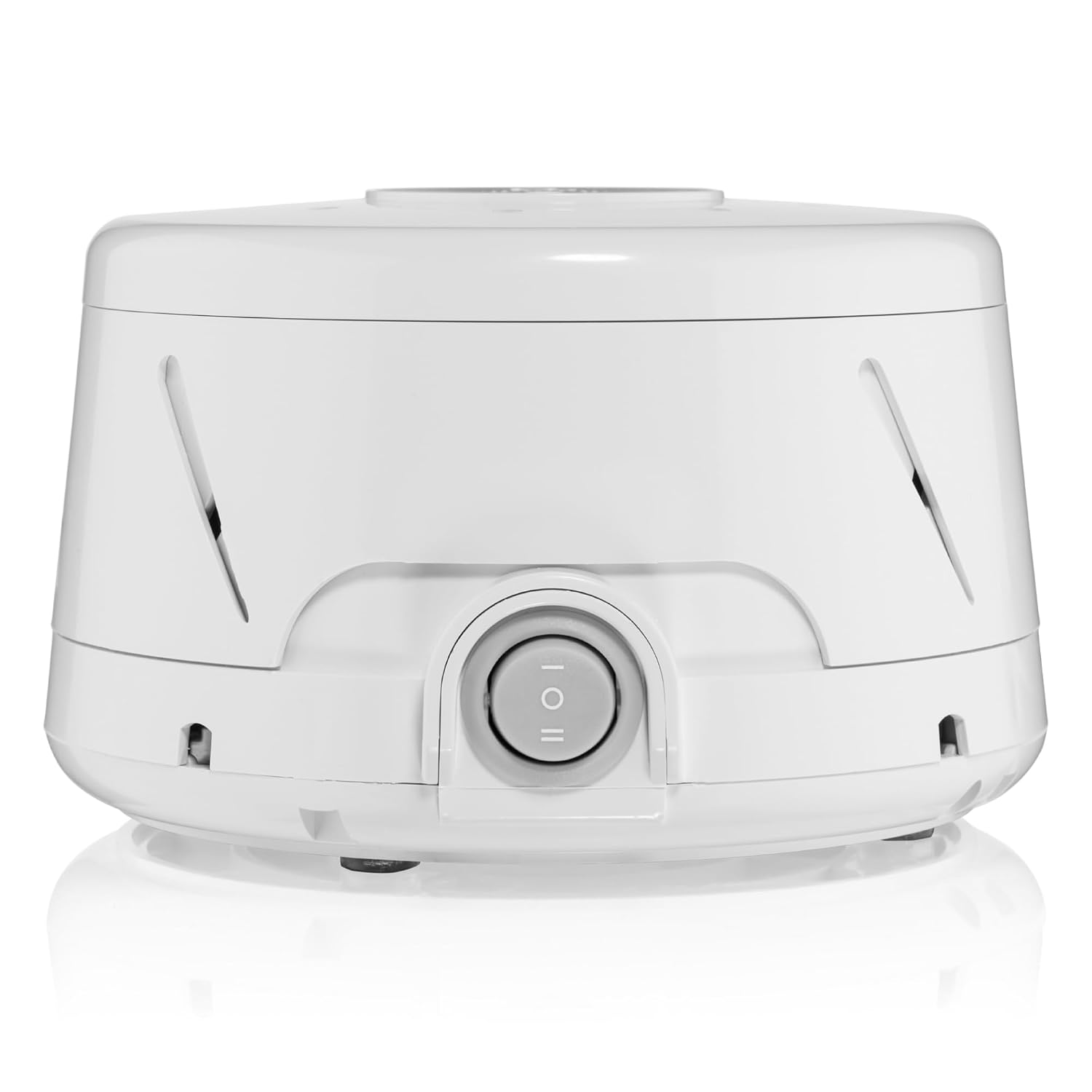
The Dohm Classic remains the reference mechanical masker: a real fan pushing air, not a recorded loop. If you hate digital “white noise” tracks that breathe or repeat, start here before buying a feature-packed speaker. Masking works when the sound is steady enough to raise the floor under intermittent noise — doors, traffic, hallway voices — without becoming a new distraction. Mechanical fans create slight organic variation that many sleepers prefer to compressed audio loops. Keep volume modest and the unit a few feet from the pillow; louder is not deeper sleep.
Estimated ownership: about $50 in year 1 and
$50 over 3 years.
One-time purchase if the motor lasts. No membership and no consumables.
Adaptive Sound Technologies · Machine
Best for: Sleepers who want non-looping white, pink, brown, and fan sounds in one compact box
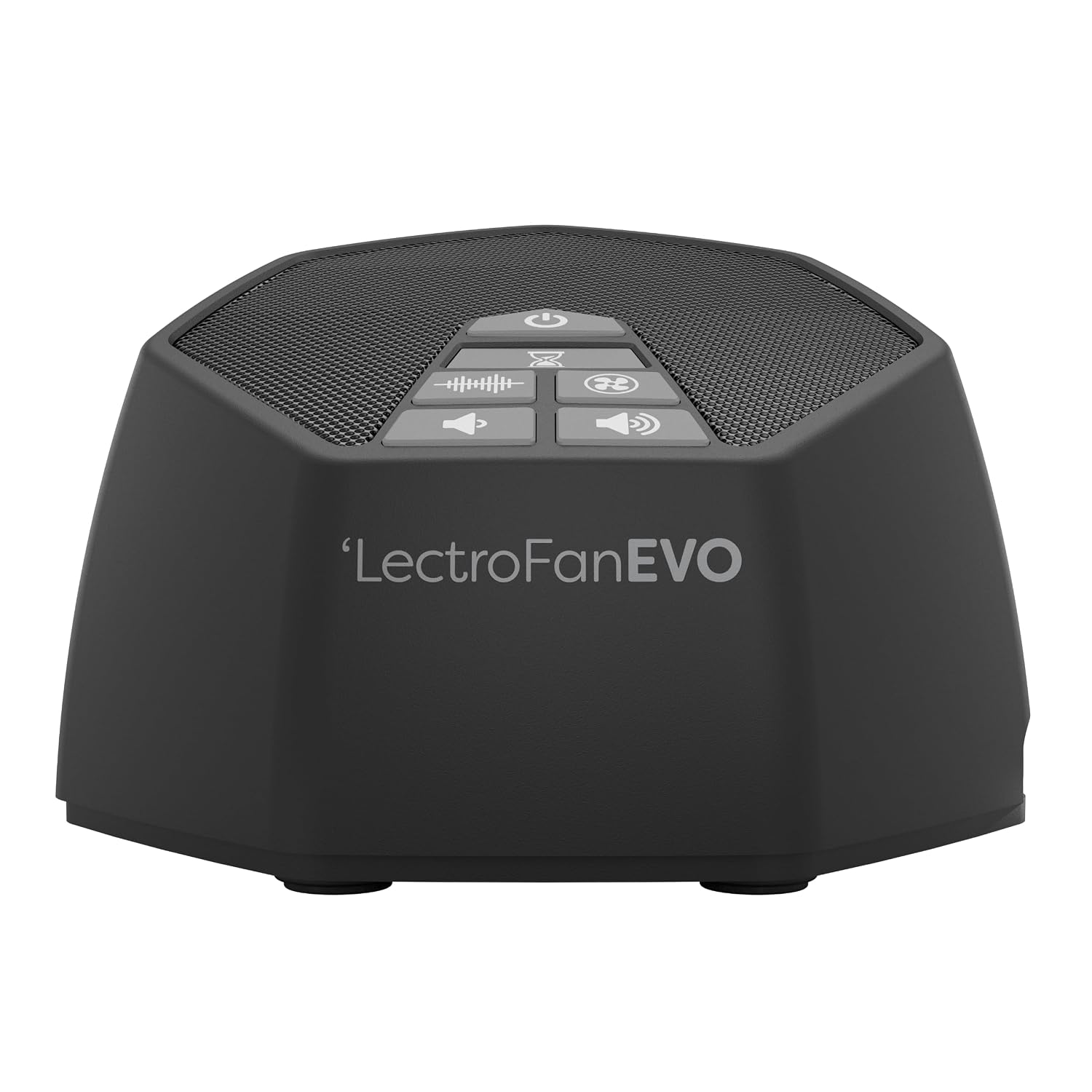
LectroFan Evo is the best default digital sound machine in this comparison: non-looping spectrum options, a timer, and enough volume for most bedrooms without dragging you into an app ecosystem. Non-looping synthesis matters because repeating nature tracks become noticeable after a week of nights. Use white/pink/brown variants as tools: brighter spectra mask speech better; darker spectra often feel softer at the same volume. Headphone jack helps partners who disagree on masking — just avoid unsafe in-ear volumes overnight.
Estimated ownership: about $60 in year 1 and
$60 over 3 years.
One-time purchase. No subscription; optional headphones if you want private masking.
Mack’s · Earplugs
Best for: Side sleepers who need attenuation instead of adding more sound
Mack’s Pillow Soft is the highest-ROI attenuation tool in the guide: mold it, sleep, wash, repeat. Pair with a machine only if you need both seal and soft masking. Attenuation reduces energy at the ear; masking raises the noise floor. Different problems call for different tools. Mold carefully so the plug is flush and comfortable for side sleeping. Do not use earplugs as a reason to ignore alarm needs or safety-critical sounds in your household.
Estimated ownership: about $40 in year 1 and
$120 over 3 years.
Assume replacing packs a few times a year. Still cheaper than most machines.
SNOOZ · Machine
Best for: Households that want real-fan character plus phone control and a timer
SNOOZ sits between classic Dohm simplicity and smart-home convenience: a real fan for organic noise, plus phone control when you do not want to fumble a dial in the dark. If you like mechanical noise but share a bed with someone who tweaks volume nightly, remote control earns its keep. Do not confuse “smart” with better sleep physiology — the fan is still doing the masking work. Night-light features are optional ambience; keep them dim if light sensitivity is part of your problem.
Estimated ownership: about $100 in year 1 and
$100 over 3 years.
One-time hardware cost. App control does not require a paid membership.
Adaptive Sound Technologies · Machine
Best for: Light sleepers who want adaptive volume that rises with household noise
Sound+Sleep SE is the pick when static volume fails because the house is unevenly loud. Adaptive boosting is useful — just do not confuse it with EEG closed-loop slow-wave stimulation. Adaptive masking helps when snoring or street noise spikes; it is still ordinary audio, not neuromodulation. Start conservative so the machine does not chase every floor creak into a loud night. If you only need steady noise, LectroFan Evo usually covers the job for less money.
Estimated ownership: about $100 in year 1 and
$100 over 3 years.
One-time purchase. Adaptive features are on-device, not a subscription.
Loop · Earplugs
Best for: People who want reusable, lower-profile earplugs they will actually wear
Loop Quiet is the reusable earplug for people who abandoned foam. Expect comfort and habit stickiness more than maximum industrial attenuation. Tip fit matters more than brand mythology — try sizes before judging the product. Great travel companion when hotel HVAC or hallways are the enemy. If you need maximum seal for severe snoring, moldable silicone often still wins.
Estimated ownership: about $30 in year 1 and
$75 over 3 years.
Hardware plus occasional tip replacements. Still low versus machines and buds.
Hatch · Bedside
Best for: Families building a wind-down ritual with sound + soft light cues
Hatch Rest+ wins when the problem is bedtime friction — kids or adults who need a cue — more than when the problem is a noisy street. For pure masking, Dohm/LectroFan/SNOOZ are tighter tools. Treat Hatch as a routine appliance: same cue, same time, boring consistency. Keep light output low overnight; sound is the sleep tool, light is the wind-down/wake cue. If you mainly want circadian lighting infrastructure, see our circadian lighting guide for Hatch Restore and wake lights.
Estimated ownership: about $100 in year 1 and
$160 over 3 years.
Hardware plus optional content. Score assumes light optional spend, not a mandatory membership.
Ozlo · Earbuds
Best for: Side sleepers who need personal masking without blasting a shared bedroom speaker
Ozlo Sleepbuds are the personal-masking escalations when a bedside speaker wakes your partner or fails against close-range snoring. Fit and overnight comfort decide everything. In-ear masking is localized: useful for couples, risky if buds dig into your pinna on a side pillow. Keep volumes conservative; earbuds can deliver high levels without sounding “loud” in the room. This is still masking audio, not medical tinnitus therapy or apnea treatment.
Estimated ownership: about $350 in year 1 and
$450 over 3 years.
Hardware first year; budget tip wear / eventual replacement over three years.
Elemind · Headband
Best for: Experimenters interested in acoustic neuromodulation — not first-line bedroom masking
Elemind is the “closed-loop adjacent” curiosity in this guide: interesting if you already optimized the room and want a research-flavored experiment. It is not how most people should buy their first sound tool. Lab closed-loop auditory stimulation for slow waves is not the same thing as a consumer headband — calibrate expectations. Fix intermittent noise with masking/attenuation first; neuromodulation gadgets do not replace a quiet-enough room. If sleep apnea, insomnia disorder, or circadian failure dominate, specialty audio wearables are the wrong aisle.
Estimated ownership: about $400 in year 1 and
$500 over 3 years.
Hardware plus possible app/plan costs. Treat as experimental specialty spend.
Homedics · Machine
Best for: A cheap first experiment before committing to a better masker
Homedics Sound Spa is the honest budget tester: prove that masking helps your bedroom before you spend LectroFan/SNOOZ money. Expect loops and limited fidelity. Use it as a two-week experiment, not as the end of the search. If looping nature tracks annoy you, that is data — graduate to non-looping digital or mechanical fans. Watch volume near infants; cheap speakers still get loud.
Estimated ownership: about $25 in year 1 and
$25 over 3 years.
Disposable-tier experiment cost. Upgrade if you keep using masking nightly.
Detailed reviews
Yogasleep Dohm Classic
Pros
Cons
Choose this if
Skip this if
LectroFan Evo
Pros
Cons
Choose this if
Skip this if
Mack’s Pillow Soft Silicone Earplugs
Pros
Cons
Choose this if
Skip this if
SNOOZ Smart White Noise Machine
Pros
Cons
Choose this if
Skip this if
Sound+Sleep SE
Pros
Cons
Choose this if
Skip this if
Loop Quiet
Pros
Cons
Choose this if
Skip this if
Hatch Rest+
Pros
Cons
Choose this if
Skip this if
Ozlo Sleepbuds
Pros
Cons
Choose this if
Skip this if
Elemind Sleep Headband
Pros
Cons
Choose this if
Skip this if
Homedics Sound Spa
Pros
Cons
Choose this if
Skip this if
How to choose without getting marketed
- Name the noise. Intermittent spikes favor masking. Close-range snoring often needs attenuation or personal audio.
- Run a cheap test. Homedics or Mack’s beats a $350 wearable as a first question.
- Prefer non-looping. If a track “breathes” every 90 seconds, you will notice it by week two.
- Keep volume boring. Place machines off the nightstand edge closest to your ear; protect infant sleep spaces.
- Escalate only for a failure mode. Partner conflict → buds. Variable noise → adaptive digital. Ritual friction → Hatch.
- Do not outsource insomnia care to speakers. Persistent sleep onset problems need a broader protocol — start with The Sleep Protocol.
Quick recommendations by persona
- Apartment light sleeper: Dohm Classic or LectroFan Evo
- App-friendly mechanical fan fan: SNOOZ
- Parents building a wind-down: Hatch Rest+
- Uneven street/hallway noise: Sound+Sleep SE
- Budget tester: Homedics Sound Spa
- Side sleeper who wants quiet: Mack’s Pillow Soft
- Reusable earplug upgrader: Loop Quiet
- Couple with asymmetric needs: Ozlo Sleepbuds
- Curious after basics: Elemind (optional, not first)
It can help when the problem is intermittent environmental noise — doors, traffic, hallway voices, partner movement. Steady masking raises the floor so spikes are less likely to wake you. It is less helpful for insomnia driven by anxiety, schedule chaos, or untreated sleep apnea. There is no universal winner. Brighter spectra often mask speech better; darker spectra can feel softer at similar volumes. Pick what you can ignore overnight. Non-looping sources usually beat compressed nature loops. Different strengths. Mechanical fans (Dohm, SNOOZ) sound organic and never “loop.” Digital units (LectroFan, Sound+Sleep) offer spectrum variety, timers, and travel size. Choose by ear and use case, not brand mythology. Quieter than you think. Keep the device away from the pillow, especially for infants, and avoid cranking volume to compete with every sound. Masking should fade into the background — if you are noticing it all night, turn it down or change the sound. Attenuation (earplugs) reduces energy at the ear. Masking (machines/buds) adds steady sound. Start cheap: silicone earplugs or a basic machine. Escalate to sleepbuds when a shared bedroom speaker is the conflict. Usually no. Fix the room and try simple masking/attenuation before experimental wearables. Consumer “closed-loop” products are not the same as lab slow-wave stimulation protocols.Sound environments for sleep FAQ
Does white noise actually improve sleep in 2026?
+
White vs pink vs brown noise — which is best?
+
Is a mechanical fan better than a digital sound machine?
+
How loud should a sleep sound machine be?
+
Should I use earplugs, a machine, or sleepbuds?
+
Are closed-loop auditory stimulation devices worth buying first?
+
This comparison is designed for practical decision-making. Product capabilities, pricing, and memberships change quickly, so treat battery claims, plan costs, and feature availability as moving targets.
Supports masking and experimental closed-loop ideas while leaving large gaps between lab protocols and consumer gadgets.
Hugh et al., “Infant Sleep Machines and Hazardous Sound Pressure Levels” (Pediatrics)
Useful safety framing: keep devices quieter and farther from cribs than marketing photos often imply.
American Academy of Pediatrics noise-exposure guidance for families
Explains why steady masking can help against hallway doors, traffic, and partner snoring more than silence alone — while urging low volume and distance for infants.
Yogasleep Dohm product documentation
Sound catalogs, timers, app features, and dB claims change by firmware and SKU — verify current packaging.
CDC / NIOSH noise and hearing-loss prevention
Bedroom machines should stay well below workplace hazardous levels; louder is not better overnight.
Affiliate disclosure: some product links on Keersa Health may earn a commission at no extra cost to you.
Editorial recommendations are independent of commercial relationships.
Read our full disclosure.
Sources and editorial notes
Bottom line
Sound environments help most when they solve a concrete noise problem: intermittent household sound, travel chaos, or partner conflict. Start with mechanical or non-looping digital masking, or cheap attenuation. Keep volumes modest. Save sleepbuds and experimental headbands for clear failure modes — not as a substitute for dark, cool, consistent nights.
Start with the overview if you have not yet: The Sleep Protocol. Related deep dives: circadian lighting, smart beds, wearable trackers, blue light blocking, and sleep apnea beyond CPAP.