Fitness & Mobility guide · Updated 2026
Force Plates for Everyday Athletes: Jump Metrics, Mats & What Amazon Can Actually Sell You
A detailed 2026 guide to force plates and practical jump-testing tools everyday athletes can buy — education force platforms, contact mats, and wearables — with clear limits versus pro dual-plate systems.
Force plates for everyday athletes are having a mainstream moment in 2026 — CMJ testing clips, return-to-play talk, and “what’s my RSI?” questions are no longer limited to college weight rooms. The catch: the dual wireless systems coaches lust after (VALD ForceDecks, Hawkin Dynamics, KINVENT) are usually quote, lease, or specialty channels. This guide compares the popular options everyday athletes can actually buy — especially Amazon-reachable tools — and separates true force platforms from contact mats and wearables.
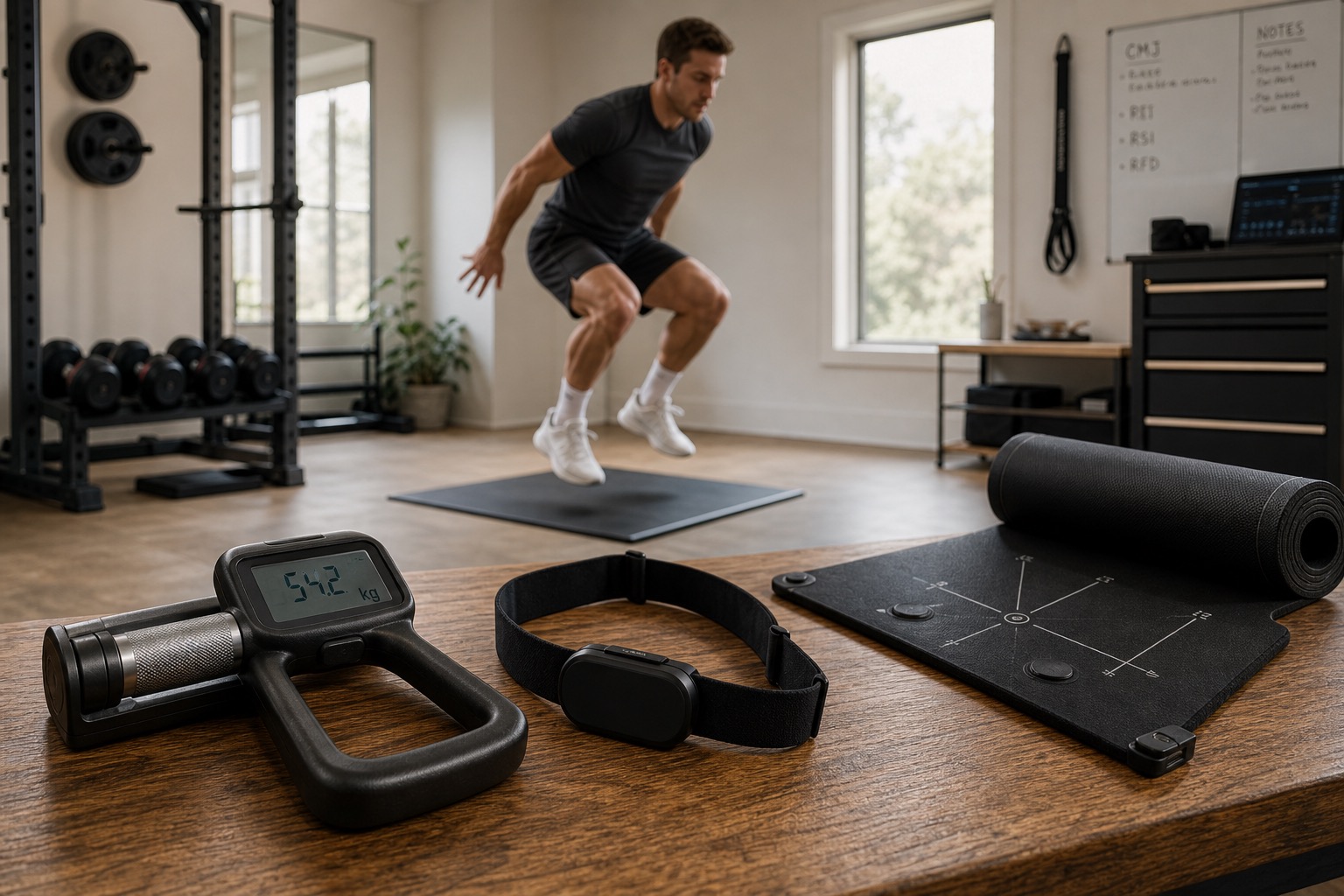
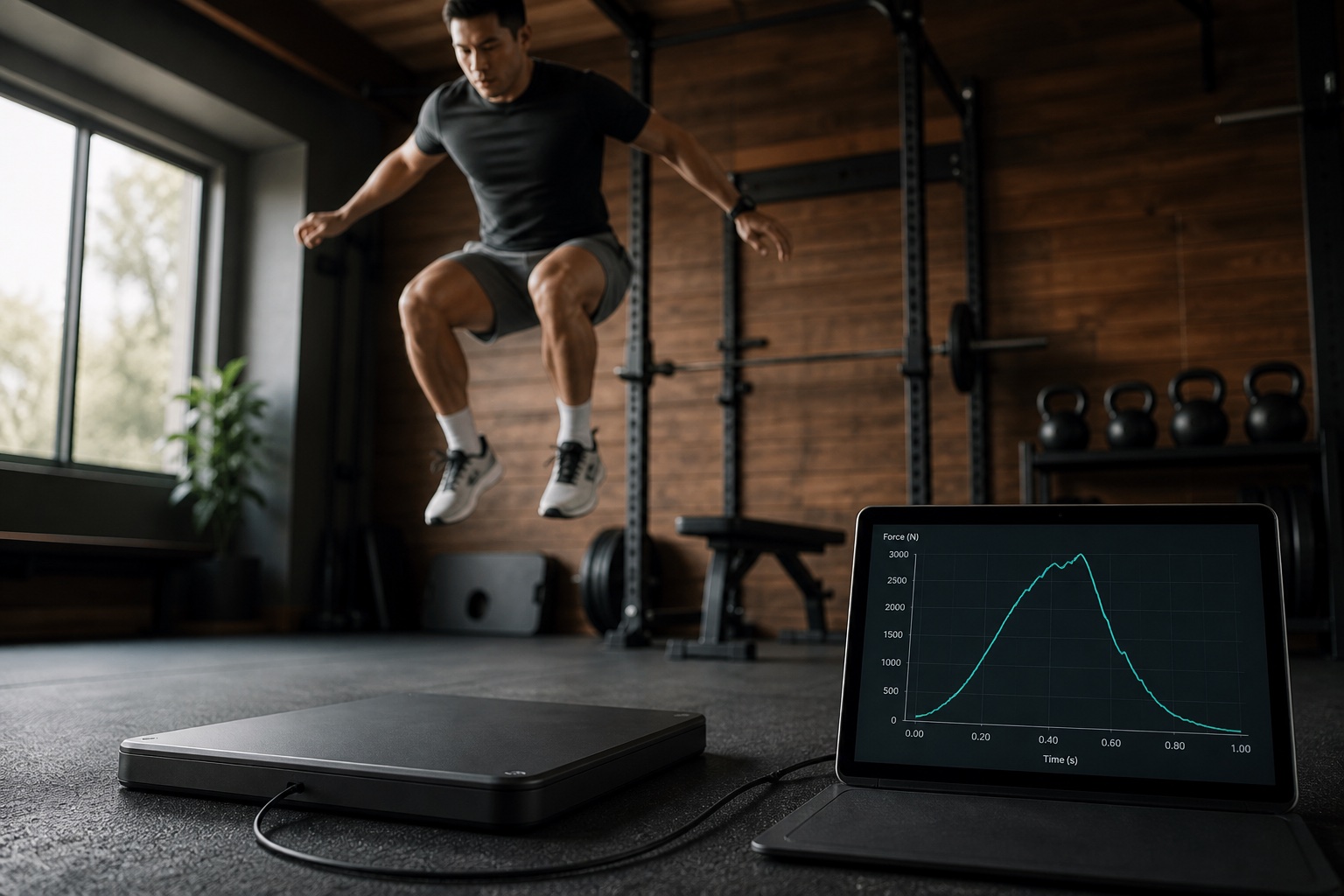
A force plate measures ground reaction force over time. A contact mat times flight and contact. A jump wearable estimates height and volume from a sensor on your body. All three can improve training decisions. Only the first produces a force-time curve.
What these tools do for you is turn lower-body power into a weekly signal you can trend — if you pick the tool that matches the question. They do not replace coaching judgment, and they are not medical diagnostics for injury.
Key takeaways
- Best true force platform on a retail path: Vernier Go Direct Force Plate — real GRF without a clinic lease.
- Best high-rate education platform alternative: PASCO Wireless Force Platform.
- Best modern contact mat: Plyomat — jump height, contact time, RSI, no subscription.
- Best wireless team mat: Skyhook Contact Mat (specialty retail, not Amazon).
- Best classic no-app mat: Just Jump System.
- Best cheap portable start: VERT Jump wearable.
- Biggest buying mistake: paying force-plate money for flight-time questions — or expecting a $150 wearable to replace dual-plate force data.
How we evaluate force plates and jump tools
Editorial scores favor tools that change training decisions for non-pro athletes, not lab prestige. We score each option across five pillars:
- Signal honesty (25%) — does it measure force, time contacts, or estimate from a wearable?
- Training usefulness (25%) — jump suite quality, RSI, asymmetry cues, and whether you will use it weekly.
- Workflow friction (20%) — setup time, software, multi-athlete throughput.
- Ownership cost (15%) — hardware plus subscriptions or leases.
- Buyability (15%) — can an everyday athlete actually purchase it without a sales call?
Important limitation: Keersa Health scores are editorial synthesis based on publicly documented capabilities and established sports-science distinctions between force plates and flight-time tools. They are not lab certifications. SKUs, firmware, and marketplace stock change — verify before buying.
What force plates actually measure
A force plate’s raw output is force versus time. From that curve you can derive peak force, impulse, rate of force development, landing forces, and jump height — depending on the test and software. Dual plates add independent left/right force for asymmetry analysis in the same repetition.
That is why pro systems cost real money. It is also why a contact mat that only times flight can look “good enough” when your only KPI is vertical jump height.
Metrics that matter most for everyday athletes
- Countermovement jump height — the universal progress metric.
- Contact time and RSI — reactive quality for plyometric work.
- Force-time / RFD — only if you own a true force platform and will read the curve.
- Asymmetry — dual-plate force asymmetry beats vibes; treat wearable “imbalance” cues as hints.
- Adherence — the system you test with weekly beats a better system in a closet.
Interactive comparison
Filter by form factor, sort by score or price, and pin up to three options for a focused side-by-side view.
Tradeoff:
Sticker price still matters here — most options are one-time hardware buys, so the three-year estimate mainly reflects purchase price plus expected upkeep.
Estimates are directional and based on common public pricing patterns. Promotions, refurbished units, family plans, and tier changes can move these numbers materially.
3-year cost of ownership
Device
Year 1
3-year estimate
Amazon Price
Vernier Go Direct Force Plate
$1,149
$1,249
$49.99
Plyomat Portable Jump Mat
$950
$950
$78.99
PASCO Wireless Force Platform
$849
$949
—
Skyhook Contact Mat
$1,389
$1,389
—
Just Jump System
$850
$850
$869.95
VERT Jump
$149
$199
$199.99
Form factor decides the signal. A platform measures force. A mat times flight/contact. A wearable estimates jumps from body motion.Force platforms vs contact mats vs wearables
Choose a true force platform if...
Choose a contact mat if...
Choose a jump wearable if...
Wait on pro dual plates if...
Below are deeper notes on every option in the comparison table, sorted by editorial score. Jump directly from the table pins or the cost section.
Vernier · Platform
Best for: True force-time curves on a single plate without a clinic lease
The Vernier Go Direct Force Plate is the strongest Amazon-reachable entry into true force-plate data for serious hobbyists, high-school/college labs, and coaches who want force-time curves without signing a three-year ForceDecks-style lease. It measures human-scale ground reaction force for jumps, landings, and quiet standing — then graphs the curve in Vernier software. This is a real force plate: load cells under a standing surface, not a flight-time switch mat. You get peak force, impulse, and hang-time style outputs from the force-time signal — which is the core advantage over Just Jump-class tools. It is still a single platform. True left/right asymmetry testing usually needs dual plates (or careful sequential protocols). Everyday athletes who mainly want CMJ height trends may be overbuying here. Choose Vernier if you care about the force curve itself and are comfortable with education-lab software. Skip it if you only need fast roster jump height and RSI for a team.
Estimated ownership: about $1,149 in year 1 and
$1,249 over 3 years.
Assumes hardware plus occasional Graphical Analysis Pro if you want advanced analysis. No required cloud lease.
Plyomat · Mat
Best for: Modern contact-mat testing with RSI and no subscription
Plyomat is what many coaches buy when they want Just Jump convenience with more honest modern timing and app workflows. It remains a contact mat: excellent for jump height, contact time, and RSI — not a substitute for dual force plates when you need force curves. For everyday athletes, Plyomat sits in the practical middle: more analytics than a dumb mat, far cheaper and lighter than commercial dual force plates. If your Amazon search returns thin inventory, buy from the manufacturer. Affiliate search links still help discovery when marketplace stock appears. Choose Plyomat for team jump/RSI testing without subscriptions. Skip it if your primary question is peak force or RFD from a force-time curve.
Estimated ownership: about $950 in year 1 and
$950 over 3 years.
One-time hardware with free software. Confirm current kit contents (controller + mats) before buying.
PASCO · Platform
Best for: High sample-rate force platform work with PASCO software
PASCO’s Wireless Force Platform is another true force platform path for everyday athletes and coaches who want ground-reaction force data without a pro sports-science lease. High sample-rate burst modes matter if you care about rate of force development and impact peaks, not just jump height. PASCO competes with Vernier in the education force-platform niche. The practical question is software comfort and which marketplace listing you can actually buy today. Like Vernier, this is not VALD/Hawkin dual-plate testing. Treat it as a serious single-platform measurement tool you can grow into with protocols — not a one-tap athlete kiosk. Choose PASCO if you already use SPARKvue/Capstone or want high-rate sampling for jump/impact labs. Skip it if a contact mat already answers your training questions.
Estimated ownership: about $849 in year 1 and
$949 over 3 years.
Hardware-focused estimate. Add the 2-axis model or handles if your testing needs them.
Skyhook · Mat
Best for: Wireless team jump testing with roster tracking
Skyhook is a coach-favorite wireless contact mat for teams that want app-based rosters and jump protocols without paying annual software seats. It is not an Amazon product — buy through specialty strength-and-conditioning retailers. It competes with Plyomat/Just Jump in the practical jump-lab lane, not with VALD dual force plates. Everyday athletes usually meet Skyhook through a coach, facility, or specialty store rather than a marketplace cart. Contact-mat RSI is useful. It is still not left/right force from independent load cells. Choose Skyhook for wireless team operations. Skip it if a cheaper Amazon-listed mat or a true force platform better matches your question.
Estimated ownership: about $1,389 in year 1 and
$1,389 over 3 years.
One-time system cost. Confirm BrainBot/controller bundle contents when ordering from specialty retailers.
Power Systems / Probotics · Mat
Best for: Simple, durable team jump-height testing with a handheld readout
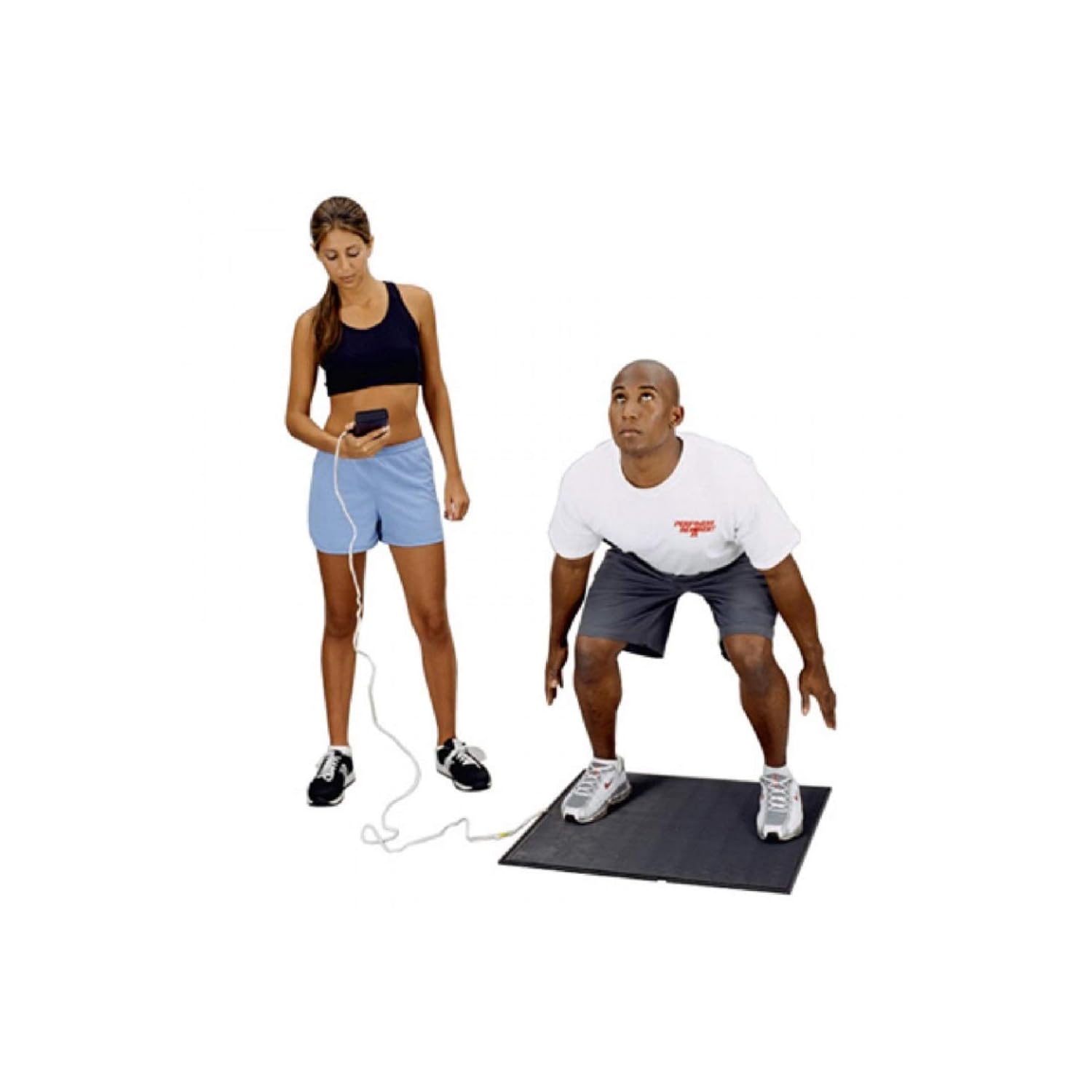
Just Jump is the contact-mat classic many coaches still buy because it is simple: stand on the mat, jump, read height and hang time. It is not a force plate. It times ground contact/flight and estimates jump height — useful for trends, incomplete for force-curve or true bilateral force asymmetry. Contact mats are popular Amazon-reachable tools for everyday athletes precisely because true dual force plates are expensive and rarely sold like retail gadgets. Know the accuracy caveat: older Just Jump firmware is known to inflate heights relative to modern force plates. Use it for consistency inside one system, not as a lab absolute. Choose Just Jump if you want rugged no-app testing. Skip it if you specifically need force-time curves, RFD, or dual-plate asymmetry.
Estimated ownership: about $850 in year 1 and
$850 over 3 years.
One-time hardware. No subscription — the main cost is buying quality and accepting flight-time limitations.
VERT · Wearable
Best for: Portable jump count, height estimates, and landing feedback anywhere
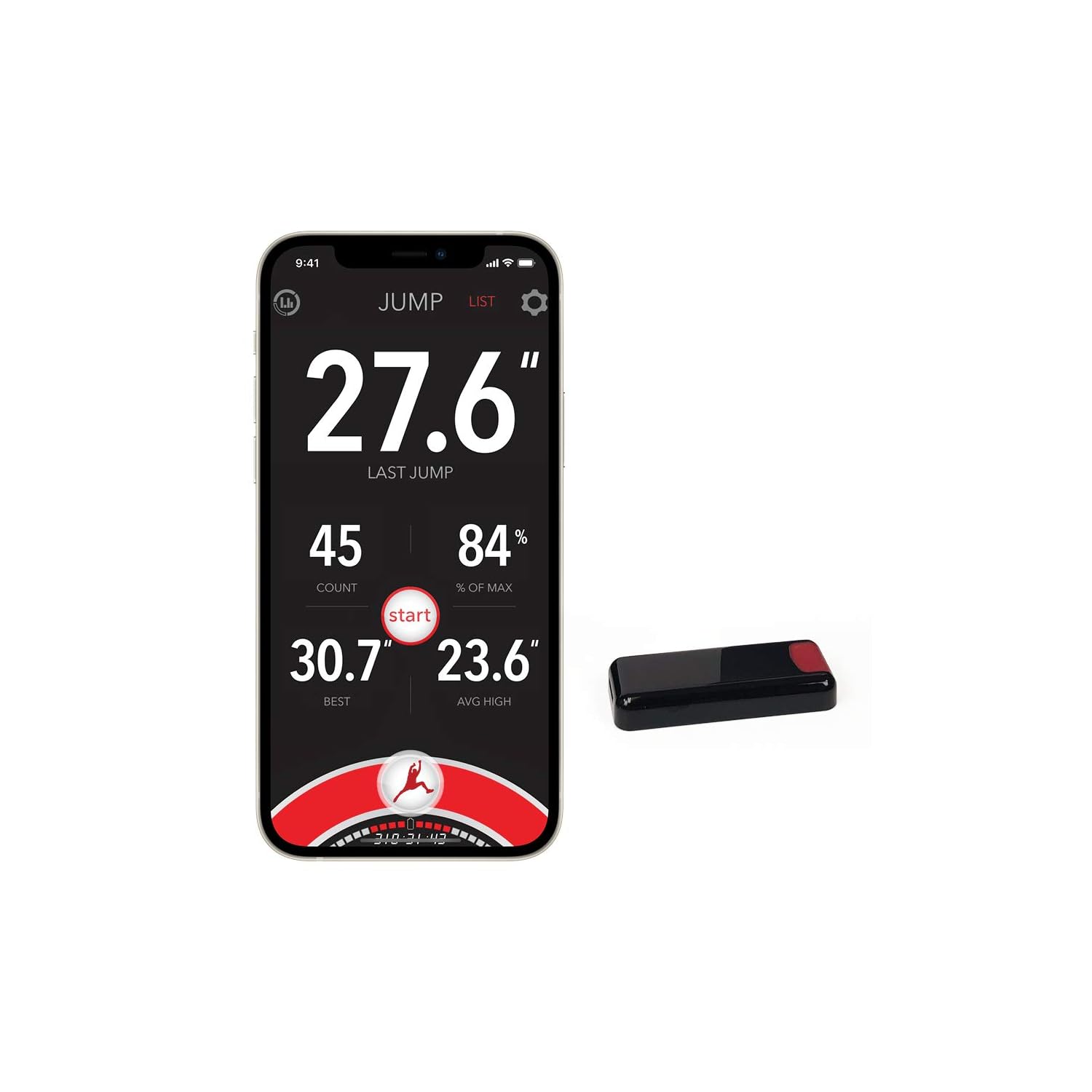
VERT Jump is the everyday-athlete on-ramp: clip it on, jump in practice, and get height/count/landing feedback without buying plates or mats. It is popular precisely because Amazon-friendly force plates are rare — but it should not be confused with ground-reaction force measurement. Wearable jump trackers answer adherence and volume questions beautifully. They do not replace force-time curves or dual-plate asymmetry diagnostics. Use VERT to build jump-volume awareness and rough progress trends. Escalate to a contact mat or force platform when decisions depend on contact time quality or force metrics. Choose VERT if portability and price dominate. Skip it if your buying question is literally “which force plate.”
Estimated ownership: about $149 in year 1 and
$199 over 3 years.
Low hardware cost. Budget for eventual replacement and confirm current app/cloud terms.
Detailed reviews
Vernier Go Direct Force Plate
Pros
Cons
Choose this if
Skip this if
Plyomat Portable Jump Mat
Pros
Cons
Choose this if
Skip this if
PASCO Wireless Force Platform
Pros
Cons
Choose this if
Skip this if
Skyhook Contact Mat
Pros
Cons
Choose this if
Skip this if
Just Jump System
Pros
Cons
Choose this if
Skip this if
VERT Jump
Pros
Cons
Choose this if
Skip this if
How to choose the right setup
- Write the question. Height trends, RSI, force curve, or dual-plate asymmetry?
- Respect Amazon reality. If you need dual commercial plates, budget for specialty sales — not a Prime-day gadget.
- Buy the cheapest tool that answers the question. Wearable → contact mat → education force platform → pro dual plates.
- Standardize the protocol. Same shoes, same warm-up, same jump cues, same surface.
- Trend for weeks, don’t chase one max. Noise is normal; decisions need repeats.
- Escalate only when stuck. If height stalls and you still lack force insight, then consider a true platform.
Quick recommendations by persona
- Force-curious DIY athlete: Vernier Go Direct Force Plate
- High-rate lab tinkerer: PASCO Wireless Force Platform
- Team coach, no subscriptions: Plyomat
- Wireless roster testing: Skyhook (specialty retail)
- Simple handheld mat: Just Jump
- Budget practice tracker: VERT Jump
Yes, but mostly education-grade single platforms (Vernier, PASCO) or specialty channels — not the dual wireless systems pro teams lease. Amazon rarely carries VALD ForceDecks, Hawkin Dynamics, or KINVENT K-Deltas as simple add-to-cart kits. Everyday buyers usually choose an education force platform, a contact mat, or a wearable jump sensor. No. A force plate measures ground reaction force over time (a force-time curve). A contact/switch mat times when you leave and land, then estimates jump height and contact metrics. Mats are excellent for throughput and RSI trends. They do not give peak force or rate of force development the way a force plate does. For true left/right force asymmetry during the same jump, yes — independent load cells under each foot. A single plate or a contact mat can still flag movement issues indirectly, but they are not the same as dual-plate force asymmetry used in return-to-sport testing. For fast force events and RFD, sports-science guides often treat ~1000 Hz as a practical target. Education platforms advertise high burst rates; confirm the exact model. Contact mats care more about timing resolution than force sampling because they are not sampling force. No. VERT is a wearable IMU that estimates jump height, count, and landing characteristics. It is popular and useful for practice volume. It is not ground-reaction force measurement. Start with a validated contact mat or a reputable wearable if budget is tight. Buy a true force platform when your decisions depend on force-time metrics (peak force, impulse, RFD) rather than height alone. You are paying for dual high-capacity plates, high-rate acquisition, athlete software, support, and often a subscription/lease model. That stack is built for clinics and teams. Everyday athletes usually do not need the full stack on day one.Force plates for everyday athletes FAQ
Can everyday athletes buy real force plates in 2026?
+
Is a jump mat the same as a force plate?
+
Do I need dual plates for asymmetry?
+
What sampling rate matters?
+
Is VERT a force plate?
+
What should I buy first if I only care about vertical jump progress?
+
Why are pro force plates so expensive?
+
This comparison is designed for practical decision-making. Product capabilities, pricing, and memberships change quickly, so treat battery claims, plan costs, and feature availability as moving targets.
Defines the CMJ force-time phases (weighing through landing) and why force-curve analysis goes beyond jump height alone. Supports using force-time and related CMJ metrics — not height alone — when monitoring neuromuscular status. Shows Just Jump is reliable but systematically overestimates jump height versus a force platform; includes a correction equation for practitioners. Classic practitioner framing for why contact time and RSI matter in reactive/plyometric testing.
VALD Health, “Buyer’s Guide to Force Plates”
Industry guidance on sampling rate (~1000 Hz), load capacity, and dual-plate use cases — useful context even when commercial systems are lease/quote channels rather than Amazon retail.
SimpliFaster, “A Strength Coach’s Guide for Buying Force Plates”
Practical coach-facing overview of commercial force-plate ecosystems (including Hawkin and VALD) versus simpler field tools.
Vernier, Go Direct Force Plate product documentation
Force range, wireless/USB options, and software features change by SKU; verify before purchase.
PASCO, Wireless Force Platform (PS-3229) product documentation
Sample-rate and load ratings are manufacturer claims; confirm the exact model in any marketplace listing.
Plyomat, “Jump Mat vs Force Plate” comparison overview
Manufacturer-facing summary of what contact mats can and cannot replace relative to force plates; useful for everyday-athlete buying decisions.
Affiliate disclosure: some product links on Keersa Health may earn a commission at no extra cost to you.
Editorial recommendations are independent of commercial relationships.
Read our full disclosure.
Sources and editorial notes
Bottom line
Everyday athletes do not need a six-figure performance lab to get useful lower-body data. They do need honesty about sensors: force plates measure force; mats time contacts; wearables estimate. Buy the cheapest tool that answers your real question, test it weekly, and only escalate when the next decision genuinely requires a richer signal.
Related: Wearable HRV and Training Readiness and Blood Flow Restriction Training Devices.