Blog · Updated 2026
Sports Recovery for Young Athletes: What Actually Helps After Practice, Games, and Lifts
A practical deep dive for high-school, college, and early-career athletes: how sleep, training load, easy movement, and a shortlist of recovery technologies fit together — without buying a recovery room.
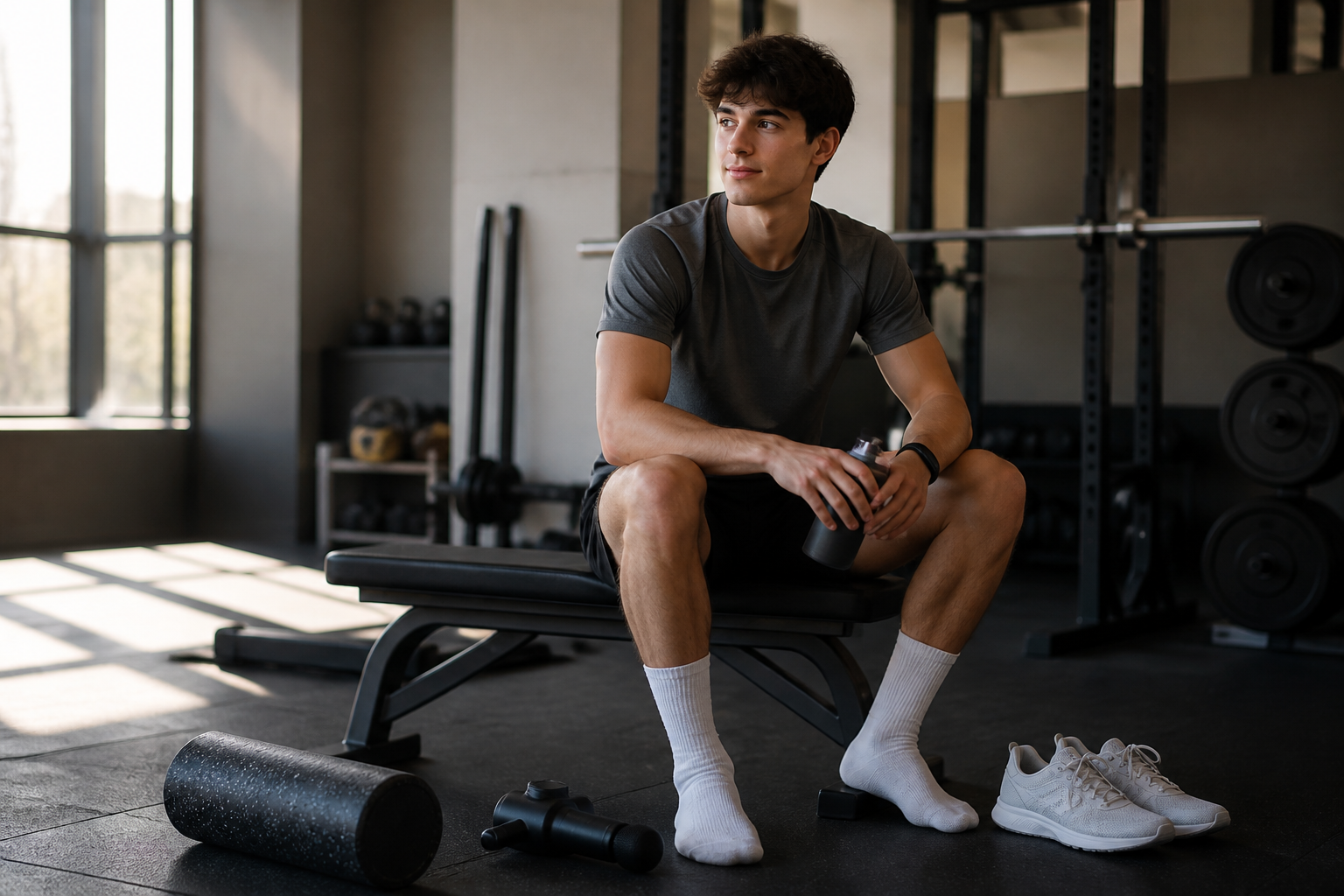
Sports recovery for young athletes is noisy right now. Locker rooms talk about Normatec, cold plunges, red light, and readiness scores the way older seasons talked about foam rollers and ice bags. Some of that tech earns a place. A lot of it arrives before the basics that still decide whether you feel ready for tomorrow’s practice.
This post is a deep dive for high-school, college, and early-career athletes (roughly teens through mid-20s): how recovery actually works, which health technologies help, which ones can quietly hurt adaptations, and how to use Keersa’s Recovery, Sleep, Fitness, and Heat & Cold guides as one system instead of a shopping list.
Start with the category map if you want the short version: The Recovery Protocol. Stay here if you want the athlete-specific playbook.
Key takeaways
- Sleep and training load beat gadgets for younger athletes with early practices, late games, travel, and school stress.
- Active recovery is usually a walk or easy spin — not another hard “flush” session. See Active Recovery vs Passive Modalities.
- Massage-class tools (rollers, guns) are among the better-supported consumer options for soreness and perceived fatigue.
- Compression boots are useful rituals for legs and travel — buy after cheaper tools prove weekly use.
- Cold is a timing tool, not a nightly dessert after every lift. Read Cold Exposure Timing Around Training.
- Wearables help when they change decisions (push, deload, sleep), not when they create score anxiety.
- Buy in stages. Use Building a Recovery Toolkit once Stage 0 is boring.
Why younger athletes struggle with recovery (even when they are “in shape”)
Younger athletes often recover poorly for structural reasons, not because they lack a recovery membership:
- Calendar collision: school, jobs, social life, two-a-days, and travel compress sleep before any device gets a chance.
- Stealth-hard easy days: pickup games, extra shooting, “just a flush run,” and weekend tournaments erase intended recovery.
- Fueling gaps: under-eating relative to training volume makes every modality feel magical for a week and useless by month two.
- Novelty stacking: buying boots, a plunge, and a panel in the same month without changing bedtime or session density.
- Score chasing: treating a single HRV or sleep number as a moral grade instead of a trend that should change tomorrow’s plan.
Health technology helps when it supports a named job — sleep protection, local stiffness, leg drainage comfort, competition turnaround, or honest readiness. It fails when it becomes a substitute for those jobs.
The athlete order of operations
Use this sequence before you open a shopping cart. It matches the Recovery category hierarchy and keeps devices honest:
- Protect sleep and load. The Sleep Protocol first. If nights are broken, boots will not rescue the week.
- Make easy days easy. Walks, light mobility, true rest. Framework: Active Recovery vs Passive Modalities.
- Add cheap mechanical tools. Foam roller and/or budget percussion — Percussion Massage Devices and Mobility Tools That Earn a Place.
- Add compression if the ritual sticks. Pneumatic Compression Boots; know the clinical context via Normatec and Medical Compression Compared.
- Time heat and cold deliberately. The Thermal Protocol, Designing a Heat and Cold Routine, and cold-timing rules above.
- Use readiness tech to change plans. Wearable HRV and Training Readiness plus Wearable Sleep Trackers Compared.
- Stage specialty capital last. Red light, PEMF, float, mild HBOT — only with a remaining job. Start with Building a Recovery Toolkit.
Stage 0: sleep, fueling, and load management
If you only remember one section, remember this one. Sleep loss impairs multiple performance and recovery outcomes; younger athletes are especially exposed because bedtime is socially flexible and morning alarms are not.
Practical Stage 0 standards:
- Pick a sleep window you can keep most nights — consistency beats one heroic 10-hour catch-up sleep after a doubleheader.
- Count hard sessions honestly. Games, scrimmages, and “optional” lifts count. So do long travel days.
- Eat enough for the work. Under-fueled athletes feel every gadget more and adapt less.
- Upgrade the sleep environment only after timing is stable — circadian lighting, sound, and bed temperature are useful, not first.
Deep dives when Stage 0 needs tools:
- The Sleep Protocol — order of operations for sleep itself.
- Wearable Sleep Trackers Compared — rings, watches, and bedside sensors.
- Smart Beds and Temperature Regulation — when thermal control is worth money.
- Circadian Lighting for the Home and Blue Light Blocking: Evidence vs Marketing — evening light without wellness theater.
- Sound Environments for Sleep — dorms, travel, and noisy houses.
After practice and games: move, rest, or use a device?
Recovery shopping loves passive modalities. Meta-analytic work on post-exercise techniques still puts massage-class interventions near the top for DOMS and perceived fatigue, with active recovery, compression, and immersion also showing symptom benefits. That is a feel better / manage soreness lane — not proof that gadgets build fitness.
Cool-down honesty matters too: an active cool-down can help how you feel acutely, but narrative reviews caution that it often does not clearly beat passive rest for next-day performance. Translation for athletes:
- Use a short easy cool-down when it leaves you better for tomorrow.
- Choose true rest when you are fried, under-slept, or already over-moved.
- Use devices as add-ons for local soreness, travel logistics, or nervous-system downshift — not as mandatory penance.
Scenario shortcuts (full matrix in the active-recovery guide):
- Heavy lift / hypertrophy block: food, sleep, easy walk later if stiff. Skip aggressive immediate cold. Optional local percussion.
- Game day or tournament: prioritize sleep and fueling between rounds. Compression or massage for comfort is fine. Cold may help turnaround — time it on purpose.
- Long aerobic day: easy movement tomorrow usually beats total couch lock for stiffness.
- High skill / CNS day: protect sleep; quiet rest beats doomscrolling and “one more open gym.”
Read the full decision framework: Active Recovery vs Passive Modalities.
Mechanical health tech: rollers, guns, and mobility tools
For most younger athletes, the first recovery devices that earn money are mechanical and portable.
Foam rollers and mobility tools
Rollers and bands are cheap, travel well, and support stiffness management when used with intent. They do not replace progressive loading. Start here before financing a recovery closet — details in Mobility Tools That Earn a Place.
Percussion massage guns
Guns are local massage-class tools. Useful jobs:
- Pre-session stiffness without a long warm-up window
- Post-session hotspots (quads, calves, glutes, shoulders)
- Travel days when a full massage is unavailable
Buy on amplitude, stall force, noise, and whether you will actually pack it — not on influencer unboxings. Ladder and product context: Percussion Massage Devices.
Student budget rule: a well-reviewed budget gun you use three times a week beats a premium gun that lives in a backpack pocket.
Compression tech: boots, wraps, and honest expectations
Sequential pneumatic compression is popular in locker rooms for a reason: it is passive, repeatable, and feels productive after legs take a beating. Treat it as a comfort and readiness ritual, not a medical therapy, unless a clinician is directing care.
What matters more than logo glow:
- Chamber design and usable pressure range
- Session length you will actually finish
- Whether the device fits your travel and roommate reality
Guides:
- Pneumatic Compression Boots — consumer ladder and session design.
- Normatec and Medical Compression Compared — athlete IPC vs clinical compression classes.
If you are still choosing between a gun and boots, pick the job you have: local hotspot versus full-limb ritual. Many athletes do not need both in year one.
Heat and cold: recovery-adjacent, timing-critical
Sauna and cold are not “Recovery category devices” first — they are thermal stress with their own protocols. Younger athletes still run into them constantly at facilities and in TikTok recovery stacks.
Cold after training
Cold water and cryotherapy can reduce soreness and help short turnaround. Immediate post-lift cold can also blunt aspects of the adaptive response you wanted from the session. If the block is hypertrophy or strength, delay aggressive cold; if the block is tournament survival, cold may be the right tool.
Deep dive: Cold Exposure Timing Around Training.
Plunges, cryo, and contrast
- Cold Plunge Setup Guide — stock tanks to premium plunges.
- Cryotherapy Chambers vs Cold Water — cost and convenience vs immersion.
- Contrast Therapy Protocols — heat–cold sequencing.
- Designing a Heat and Cold Routine — weekly templates.
- Safety, Contraindications, and Monitoring — non-negotiable for unsupervised athletes.
If you wear a ring or watch in the plunge or sauna, expect noisy signals — see Wearables During Thermal Stress.
Readiness wearables: HRV, sleep scores, and when to deload
Younger athletes are sold recovery scores as coaching. The useful version is quieter:
- Track trends across days, not one scary morning.
- Pair low readiness with a real change: sleep earlier, cut extras, move the hard session.
- Ignore vanity metrics that never change behavior.
Core guides:
- Wearable HRV and Training Readiness — push vs deload decisions.
- Wearable Sleep Trackers Compared — what overnight metrics can and cannot claim.
- The Performance Protocol — where measurement fits training order of operations.
- Force Plates for Everyday Athletes — jump/asymmetry monitoring when you have access.
A wearable that never changes your calendar is jewelry with a subscription.
Specialty modalities: red light, PEMF, float, mild HBOT
These are later-stage tools. They can be interesting. They are usually the wrong first purchase for a student-athlete budget.
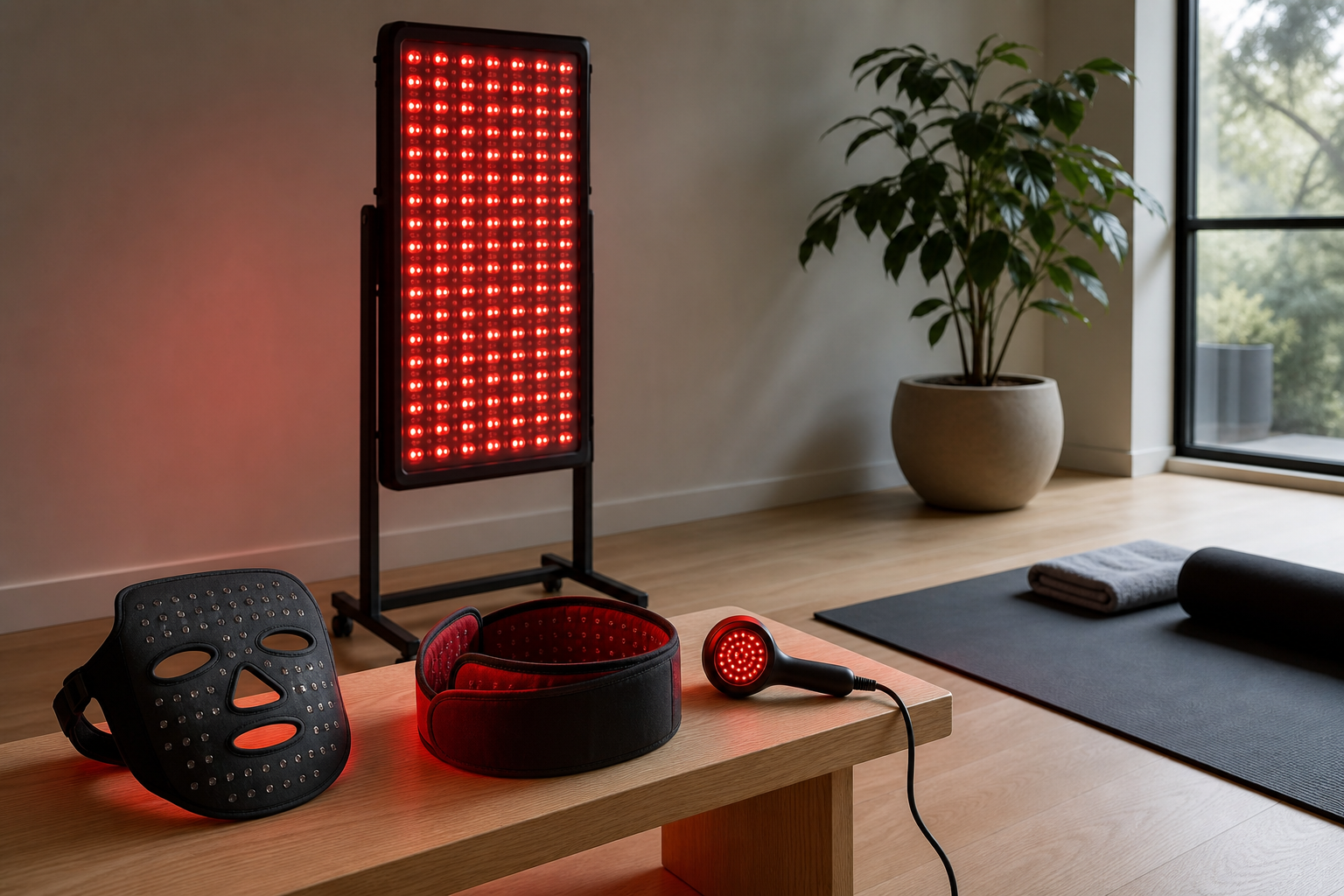
- Red light / photobiomodulation: parameter problem (wavelength, irradiance, coverage). Learn dosing before buying a wall. Red Light Therapy: Mechanisms and Use Cases, form factors, and Choosing a Red Light Panel.
- PEMF: mats and wearables with mixed consumer claims — PEMFs and Pulsed Electromagnetic Fields.
- Float tanks: clearer short-term stress/anxiety lane than muscle-repair marketing — studio first via Float Tanks and Sensory Deprivation.
- Mild soft hyperbaric chambers: not clinical HBO₂. Class confusion is a buying hazard — Hyperbaric Oxygen for Non-Clinical Users.
Validate specialty sessions before ownership fantasies.
Sample recovery weeks for younger athletes
These are templates, not prescriptions. Adjust for sport, position, and clinical guidance.
In-season team sport (soccer, basketball, lacrosse)
- Nightly: protect the sleep window; track only if the data changes bedtime.
- After games: food + short easy cool-down or true rest; optional local percussion on hotspots.
- Next day: easy walk or light mobility; optional compression if legs are heavy.
- Hard practice days: no bonus “punishment” cardio; save intensity for the plan.
- Optional weekly: one deliberate thermal session if facility access exists and timing fits goals.
Strength / hypertrophy block
- Sleep and protein first.
- Easy walks on off days for stiffness.
- Percussion or roller for local hotspots.
- Delay aggressive cold immediately post-lift.
- Skip stacking boots + plunge + panel every night “because recovery.”
Endurance block (running, rowing, cycling)
- Easy days stay conversational — see also GPS and Power Meters for Endurance for load honesty.
- Next-day easy movement often beats total inactivity for stiffness.
- Compression can help travel and heavy legs; it does not replace aerobic easy days.
- Heat practice is separate stress — schedule it, do not accidentally add it on top of key workouts.
Tournament or combine weekend
- Sleep and carbs between rounds beat novelty gadgets.
- Massage gun and compression earn their keep for logistics.
- Cold may help turnaround; use intentionally.
- Do not debut three new modalities the morning of day one.
Budget tiers: what to buy (and what to skip)
Mirror the staged toolkit so purchases stay boring:
- Stage 0 (near $0): sleep schedule, fueling, easy walks, honest hard-day counting.
- Stage 1: foam roller and/or budget massage gun.
- Stage 2: better percussion or entry compression; mid red-light panel only if you still have a light job.
- Stage 3: full-leg boots, studio float sessions, deliberate thermal setup.
- Stage 4: PEMF, mild HBOT, ownership-level specialty gear — rare for young athletes and late on purpose.
Full device roadmap with representative products: Building a Recovery Toolkit. Home measurement stacks for serious hobbyists: Building a Home Performance Lab.
Skip early: recovery memberships you will use twice, soft hyperbaric bags, full-body light beds, and any device bought to fix a sleep schedule you have not tried to fix.
How the Keersa guides fit together
Use this post as the athlete narrative. Use these pages as the reference shelf:
- Map: The Recovery Protocol
- Decisions: Active Recovery vs Passive Modalities
- Shopping: Building a Recovery Toolkit
- Mechanical: Percussion Massage Devices, Mobility Tools
- Compression: Pneumatic Compression Boots, Normatec vs Medical Compression
- Sleep: The Sleep Protocol, Sleep Trackers
- Readiness: HRV Readiness, The Performance Protocol
- Thermal: The Thermal Protocol, Cold Timing, Weekly Heat/Cold Design
- Later specialty: red light, PEMF, float, mild HBOT guides under Recovery
Consistent sleep and a training calendar that does not stack hard sessions every day. Easy walking or light mobility comes next. Devices like massage guns and compression boots help symptoms after those defaults are in place — they do not replace them. Usually not as a first purchase. Prove weekly use with cheaper compression or a budget percussion gun first. Full-leg athlete boots make more sense when travel, tournament turnaround, or a reliable ritual already exists. See Pneumatic Compression Boots and Building a Recovery Toolkit. No. Cold can help acute soreness and competition turnaround, but immediate post-lift immersion can conflict with hypertrophy and strength signaling. Time cold deliberately — details in Cold Exposure Timing Around Training. They help when you use overnight sleep and morning readiness trends to change tomorrow’s plan — not when you chase a single score. Read Wearable HRV and Training Readiness and Wearable Sleep Trackers Compared before treating any ring or band as a coach. Many adolescent and college athletes need more than the “8 hours” slogan implies, especially with early practices and late games. Protect a consistent sleep window first; then use The Sleep Protocol for environment and timing upgrades. Stage 0 costs almost nothing: sleep schedule, food, and walks. Stage 1 is usually a foam roller and/or a cheap massage gun. Skip float tanks, mild HBOT, and mega red-light walls until cheaper tools are already earning weekly use. No. Percussion is a local comfort and stiffness tool. Mobility still needs intentional range and tissue capacity work — see Percussion Massage Devices and Mobility Tools That Earn a Place. Persistent pain, night pain, swelling that does not settle, breathing issues, dizziness with heat or cold exposure, or performance drops that sleep cannot explain deserve clinical evaluation. Consumer recovery tech is not a diagnosis pathway.Sports recovery for young athletes FAQ
What is the best recovery method for young athletes?
+
Should high school or college athletes buy Normatec boots?
+
Is a cold plunge good after every practice?
+
Do recovery wearables like WHOOP or Oura actually help?
+
How much sleep do young athletes need for recovery?
+
What recovery gear should I buy on a student budget?
+
Can massage guns replace stretching and mobility work?
+
When should parents or coaches worry beyond normal soreness?
+
These notes and references support the claims and recommendations in this post. Product details, study findings, and guidance can change, so treat them as a starting point rather than a final word.
Meta-analysis framing for symptom-focused recovery tools (massage, compression, immersion, active recovery) — useful for ranking what young athletes should try before buying more gear.
Van Hooren & Peake, “Do We Need a Cool-Down After Exercise?” (Sports Medicine, 2018)
Narrative review cautioning that active cool-downs often help how you feel more than they guarantee next-day performance versus passive rest. Sleep loss impairs many performance and recovery outcomes — Stage 0 for younger athletes with chaotic calendars. Mechanistic caution for immediate post-lift cold when hypertrophy or strength adaptation is the goal.
Related Keersa guide: The Recovery Protocol
Category map for recovery order of operations across sleep, movement, mechanical tools, compression, light, and specialty modalities.
Related Keersa guide: Active Recovery vs Passive Modalities
Decision framework for walks, rest, and gadgets after different training stresses.
Related Keersa guide: Building a Recovery Toolkit
Staged purchase roadmap once sleep and easy movement are habits.
Related Keersa guide: Cold Exposure Timing Around Training
When cold immersion helps competition turnaround versus when it conflicts with lifting adaptations.
Related Keersa guide: Wearable HRV and Training Readiness
How morning readiness scores should influence push vs deload decisions for athletes.
Related Keersa guide: The Sleep Protocol
Foundational sleep overview — still the highest-ROI recovery lever for most younger athletes.
Affiliate disclosure: some product links on Keersa Health may earn a commission at no extra cost to you.
Editorial recommendations are independent of commercial relationships.
Read our full disclosure.
Sources and editorial notes
Bottom line
Younger athletes do not need a recovery room to recover well. They need sleep that survives the calendar, hard days that are actually counted, easy movement that stays easy, and a shortlist of technologies that match real jobs — usually mechanical first, compression second, thermal and readiness tools with intention, specialty capital last.
Start with The Recovery Protocol, make Stage 0 boring, then open the deep dives only for the friction you still have. That is how health tech helps sports recovery instead of replacing it.